Hidden Household Leaks: Why Your Water Bill Is Rising
An unexplained spike in your water bill can be alarming, especially when there are no obvious puddles or drips. This common scenario often points to hidden household leaks, which, despite their invisibility, can lead to significant water consumption and property damage. These silent culprits are far more prevalent than many homeowners realize, contributing to an astonishing amount of wasted water each year.
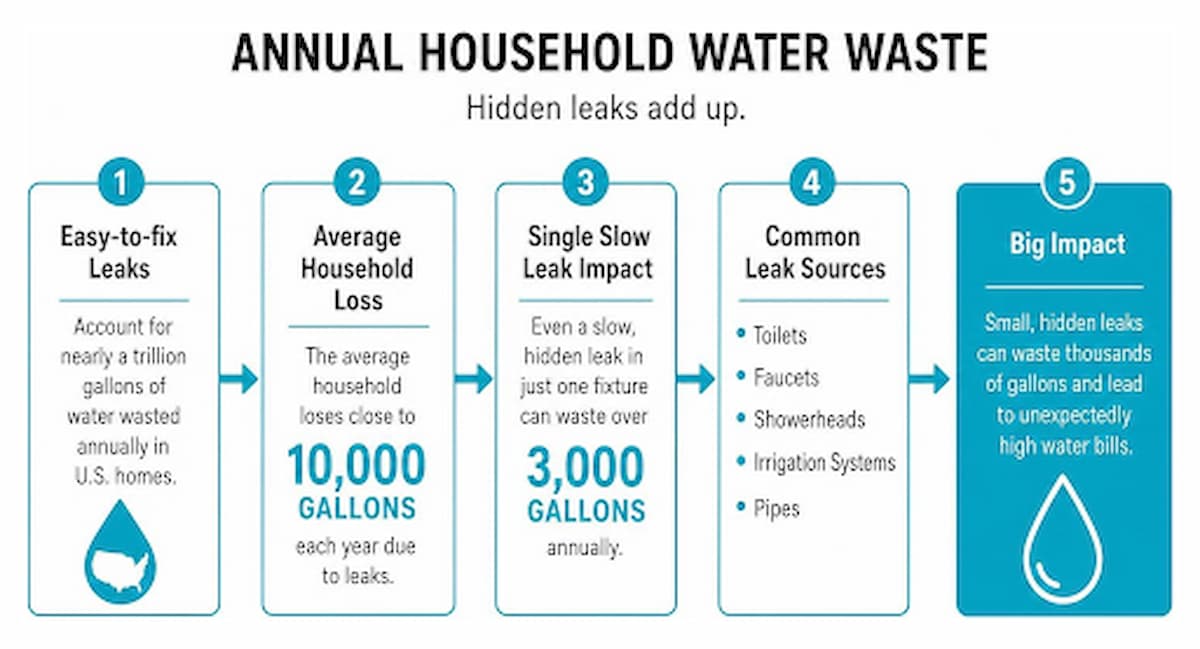
It’s estimated that easy-to-fix water leaks alone account for nearly a trillion gallons of water wasted annually in U.S. homes. The average household loses close to 10,000 gallons each year due to leaks. Even a slow, hidden leak in just one fixture can waste over 3,000 gallons annually. Understanding where these leaks commonly occur is the first step toward addressing your unexpectedly high water bill.
To illustrate the impact, consider the following common leak types and their potential daily water loss:
Leak Type Estimated Daily Water Loss (Gallons) Typical Signs Repair Complexity Silent Toilet Leak 30 – 500+ No visible signs; can hear running water sometimes; dye test positive Low Dripping Faucet (1 drip/second) 5 – 10 Visible drip; water stains in sink Low Appliance Leak (washer/dishwasher) 10 – 200 Dampness near appliance; musty smell; puddles under appliance Medium Water Heater Leak 10 – 500 Puddles around unit; rust stains; reduced hot water pressure Medium Irrigation System Leak 50 – 1000+ Unusually lush or soggy patches in yard; low sprinkler pressure; sinkholes Medium-High Underground Supply Line Leak 100 – 1000+ Unexplained wet spots in yard; meter movement with all water off; sudden drop in water pressure High Slab Leak (under foundation) 100 – 1000+ Warm spots on floor; unexplained mold/mildew; sound of running water; foundation cracks High
Silent Toilet Leaks and Failing Flappers
One of the most notorious culprits behind an unexplained high water bill is the silent toilet leak. These leaks often go unnoticed because they don’t create visible puddles or drips. Instead, water continuously seeps from the toilet tank into the bowl, often due to a faulty toilet flapper or an improperly adjusted fill valve. A running toilet can waste an astounding amount of water, sometimes up to 200 gallons per day, or even more for severe cases. Silent toilet leaks, particularly those involving the flushing system, can collectively waste over 37,850 liters (about 10,000 gallons) annually per dwelling. The constant, subtle flow means your toilet is essentially flushing money down the drain without you ever hearing or seeing it.
Appliance Malfunctions and Water Softener Issues
Beyond toilets, various household appliances can also contribute to a mysteriously high water bill. Washing machines and dishwashers, for instance, can develop leaks in their internal components or flexible hoses, often hidden behind or beneath the units. A corroded water heater or one with a faulty pressure relief valve can also lead to slow, continuous leaks that might not be immediately obvious, especially if the unit is in a basement or utility closet.
Even water softeners, designed to improve water quality, can become a source of excessive water use. If a water softener malfunctions and gets stuck in a continuous regeneration cycle, it can waste hundreds of gallons daily. We’ve seen instances where a faulty water softener significantly inflates a water bill, leaving homeowners puzzled until a thorough inspection is performed. Regularly checking the flexible hoses connected to these appliances for cracks, bulges, or dampness can help catch these issues early.
DIY Diagnostic Tests Before Calling for Plumbing and Drain Services
Before reaching out for professional Plumbing and Drain Services, there are several simple DIY tests you can perform to self-diagnose the source of an unexplained high water bill. These leak detection methods are often quick, require minimal tools, and can help you pinpoint whether a leak is indeed the problem, potentially saving you time and money. Understanding your home’s water consumption patterns and water pressure can also offer valuable clues.
The Water Meter Leak Test
Your water meter is a powerful diagnostic tool for detecting hidden leaks. This test is highly effective for confirming whether water is escaping somewhere in your plumbing system, even if you can’t see it.
- Stop all water use: Ensure no one in your home is using water. This means turning off all faucets, showers, washing machines, dishwashers, and making sure toilets aren’t running.
- Locate your water meter: Your meter is typically located outside your home near the street, or in some cases, in your basement or utility closet.
- Record the reading: Note the exact reading on your water meter’s register. Many meters also have a small leak detection dial (often a red triangle or blue star) or a low-flow indicator that spins even with minimal water movement.
- Wait and re-check: Wait for at least 30-60 minutes, or even a few hours, without using any water. Then, re-check the meter reading.
- Interpret the results: If the meter’s numbers have changed, or if the small leak detection dial is still spinning, it indicates that water is flowing through your pipes, meaning you likely have a leak somewhere on your property.
For more precise identification, you can perform “targeted isolation.” After confirming meter movement, shut off the main water supply valve to your house. If the meter stops moving, the leak is inside your home. If it continues to move, the leak is likely in your service line between the meter and your house.
The Toilet Dye Test and Visual Inspections
The toilet dye test is a classic and highly effective way to detect silent toilet leaks. Simply add a few drops of food coloring (or a dye tablet) to the water in your toilet tank. Wait for 10-15 minutes without flushing. If any colored water appears in the toilet bowl, it means water is leaking from the tank into the bowl, usually due to a worn-out flapper seal. This simple test can quickly confirm if your toilet is one of the culprits behind your high water bill.
Beyond the toilet, a thorough visual inspection of your home can reveal subtle signs of leaks. Check under all sinks for damp cabinetry, water stains, or a musty smell. Inspect the areas around washing machines, dishwashers, and water heaters for any signs of moisture. Even a small, persistent damp spot can indicate a slow leak that’s steadily increasing your water consumption. Don’t forget to check outdoor spigots and garden hoses for drips or puddles.
Identifying Severe Underground and Slab Leaks
While many leaks are detectable with DIY methods, some of the most challenging and damaging leaks occur out of sight, deep within your home’s infrastructure. Underground pipes and foundation leaks, often referred to as slab leaks, can lead to severe structural damage, significant water waste, and even soil erosion if left unaddressed. These types of leaks often require specialized leak detection expertise.
Symptoms of Service Line and Irrigation Leaks
Leaks in your outdoor plumbing, particularly in irrigation systems and service lines, can be notoriously difficult to spot. Your service line, the pipe that brings water from the municipal main to your home, is buried underground. Leaks here can manifest as unusually lush or soggy patches of grass in your yard, especially if the surrounding area is dry. You might also notice sinkholes developing, or a sudden drop in water pressure inside your home.
For irrigation systems, inspect sprinkler heads for low pressure or irregular spraying patterns. Look for areas where water pools long after the sprinklers have run, or where the ground remains perpetually damp. Underground irrigation pipes can crack or separate, leading to continuous water loss. If your water meter test indicates an outdoor leak, systematically shutting off sections of your irrigation system can help isolate the problem area.
Warning Signs of a Slab Leak Under Your Foundation
Slab leaks, which occur in the water pipes embedded within or underneath your home’s concrete foundation, are among the most insidious types of hidden leaks. They can cause extensive damage to your home’s structure and often go unnoticed until the problem becomes severe.
Key warning signs of a slab leak include:
- Warm spots on your floor: If you notice a particular area of your floor that feels unusually warm, it could indicate a hot water line leaking beneath the slab.
- Unexplained mold or mildew: Persistent mold or mildew growth, especially on baseboards or lower walls, can be a sign of moisture seeping up from a slab leak.
- Sound of running water: If you hear the distinct sound of running water when all faucets and appliances are turned off, it’s a strong indicator of a continuous leak, potentially under your foundation.
- Cracks in your foundation or walls: Water undermining your foundation can lead to shifting and cracking in the concrete slab or internal walls.
- Increased humidity: An unexplained increase in indoor humidity can also point to a hidden leak.
Due to the potential for significant structural damage, any suspicion of a slab leak warrants immediate professional attention.
Professional Leak Detection and Prevention Solutions
When DIY methods don’t yield answers, or when the signs point to a more serious, hidden issue, it’s time to call in the experts. Professional plumbers possess the advanced technology and experience needed to accurately diagnose and resolve complex leaks, saving you from prolonged high water bills and potential property damage. They can also help navigate billing disputes or investigate potential utility errors that might be contributing to your unexpectedly high water bill.
When to Escalate to Professional Plumbing and Drain Services
You should consider calling a professional plumber for leak detection when:
- Your water meter test consistently shows movement, but you cannot locate the source of the leak through DIY inspections.
- You observe any of the warning signs for slab or underground leaks, such as warm spots on floors, unexplained mold, or soggy areas in your yard.
- There’s a significant, sudden drop in water pressure without an obvious cause.
- You suspect a leak behind walls or under flooring, indicated by damp drywall, peeling paint, or a persistent musty odor.
- You’ve received an unusually high water bill for several consecutive months, and basic checks haven’t revealed the problem.
Professional plumbers utilize a range of advanced leak detection methods to pinpoint hidden leaks with precision. These include:
- Acoustic listening devices: These sensitive microphones can detect the faint sound of water escaping from pipes behind walls, under floors, or underground.
- Thermal imaging cameras: These cameras can identify temperature differences caused by hot water leaks, even through surfaces.
- Tracer gas testing: A harmless gas is introduced into the pipes, and a specialized detector is used to locate where the gas escapes.
- Video camera pipe inspection: For accessible pipes, small cameras can be snaked through the lines to visually identify cracks, blockages, or breaks.
- Pressure tests: By isolating sections of your plumbing system and monitoring pressure drops, plumbers can identify which lines are leaking.
For comprehensive plumbing, drain, and water heater services, especially when dealing with persistent or elusive leaks in areas like Arlington, VA, or Alexandria, VA, seeking expert assistance is crucial. A skilled professional can not only find the leak but also advise on the most effective and least invasive repair solutions. You can find more detailed information on various plumbing services and leak resolution strategies by consulting resources dedicated to comprehensive plumbing drain water heater solutions.
Preventative Maintenance and Long-Term Plumbing and Drain Services
Beyond fixing existing leaks, proactive preventative maintenance is key to avoiding future high water bills and the headaches of hidden leaks. Regular inspections of your plumbing system, including checking appliance hoses, toilet components, and water heater connections, can help catch minor issues before they escalate.
In July 2026, smart water monitoring technology is becoming increasingly sophisticated and accessible for homeowners. Installing smart water monitors, which often include flow sensors and real-time alerts, can provide invaluable insights into your water usage. These devices can detect unusual flow patterns that indicate a leak, sending immediate notifications to your smartphone. Some systems can even automatically shut off your water supply in the event of a major leak, preventing extensive water damage.
Upgrading to WaterSense labeled fixtures, such as low-flow toilets, showerheads, and faucets, can significantly reduce your overall water consumption, lowering your baseline bill and making it easier to spot anomalies caused by leaks. Regular maintenance, combined with smart technology and water-efficient fixtures, forms a robust strategy for managing your home’s water usage and preventing unexpectedly high bills.
Frequently Asked Questions About Hidden Water Leaks
We understand that discovering an unexplained high water bill can bring up many questions. Here are some frequently asked questions we encounter regarding hidden water leaks, billing errors, and leak adjustments.
How can I tell if my high water bill is due to a leak or a billing error?
First, perform the DIY leak detection tests, especially the water meter test. If these tests confirm a leak, then the high bill is likely due to water loss. However, if no leak is found, your high bill could be due to a billing error or an estimated reading. Many utility companies periodically estimate usage rather than taking actual readings. A series of estimated low readings followed by an actual reading can cause a single bill to appear unusually high.
To investigate a billing error, compare your current bill with past statements and your average usage. Check the billing period and the units of measurement. Contact your water utility provider to inquire if your reading was estimated and request a re-read or meter accuracy check. Document all communications and meter readings with photos and dates to support your case.
What are the risks of leaving a hidden water leak untreated?
Leaving a hidden water leak untreated poses several serious risks beyond just a high water bill:
- Structural Damage: Continuous water seepage can weaken wooden structures, damage drywall, flooring, and even compromise your home’s foundation, leading to costly repairs.
- Mold Growth: Damp environments are ideal breeding grounds for mold and mildew. Mold can spread rapidly, causing unpleasant odors, damaging surfaces, and posing significant health risks, especially for individuals with allergies or respiratory issues.
- Pest Infestations: Leaky areas attract pests like termites, ants, and cockroaches, which thrive in moist conditions.
- Increased Utility Costs: Beyond the water bill, leaks can indirectly increase energy bills, especially if they are hot water leaks, as your water heater works harder to replenish lost hot water.
- Soil Instability: Underground leaks can saturate the soil around your foundation, leading to erosion, ground instability, and potential sinkholes, particularly in sloped areas.
Addressing leaks promptly is essential to protect your property, health, and finances.
How does winter water usage affect my sewer charges?
In many municipalities, sewer charges for residential properties are not based on actual sewer meter readings (which are rarely installed for homes). Instead, they are often calculated using an “average winter water usage” method. This means your water consumption during a specific winter period (e.g., December through February) is averaged, and this average then determines your sewer charge for the entire upcoming year, or until the next winter average is calculated.
The rationale is that during winter, most outdoor water use (like irrigation) ceases, so your indoor water consumption is a more accurate reflection of what goes down the drain. If you have a hidden leak during this crucial winter averaging period, your measured water usage will be artificially high, leading to inflated sewer charges for the next 12 months. This makes detecting and fixing leaks before or during winter particularly important for managing your overall utility costs. Some utilities offer leak adjustments for sewer charges if you can prove a leak was repaired.
Conclusion
An unexplained high water bill is a clear signal that something is amiss, and more often than not, a hidden leak is the culprit. From silent toilet leaks and malfunctioning appliances to insidious underground and slab leaks, these issues can silently drain your wallet and potentially cause significant damage to your home. By performing simple DIY diagnostic tests, you can often pinpoint the problem yourself. However, for complex or persistent issues, or when the signs point to severe hidden leaks, professional expertise in plumbing and drain services becomes indispensable.
Adopting a strategy of proactive maintenance, embracing water conservation habits, and considering smart water monitoring technology can help you stay ahead of potential problems. By understanding the causes of high water bills and knowing when to call for professional assistance, you can protect your home, conserve a vital resource, and ensure long-term savings. Don’t let a mystery high water bill become a costly problem; take action today.