The Role of HVAC Maintenance Plans in Extending System Lifespan
For homeowners in Baton Rouge, Louisiana, few things are as crucial as a reliable air conditioning system, especially during our famously hot summers. But how do you know when your trusty AC unit is nearing the end of its life? The question of “when should you replace your AC” can be daunting, often coming with unexpected repair bills or a complete system breakdown at the worst possible time. We understand the stress this brings. This guide aims to equip you with the knowledge needed to make informed decisions about your cooling system, highlighting the benefits of proactive care, such as an HVAC Maintenance Membership, to avoid those sudden summer surprises.
In this extensive guide, we will explore the critical signs that indicate your AC unit might be failing, from unusual noises to rising energy bills. We will also introduce methods like the ‘$5,000 Rule’ to help you decide between costly repairs and a smart replacement. Understanding the benefits of upgrading to high-efficiency systems and the importance of professional care that installs services and maintains your equipment is essential for long-term comfort and savings. Our goal is to empower you with the knowledge to make the best choice for your home.
A central air conditioning unit is a significant investment, and like any complex machinery, its lifespan is heavily influenced by how well it’s cared for. On average, a central AC unit is designed to last between 10 and 15 years. However, this range isn’t a guarantee; it’s an estimate that assumes regular, professional maintenance. In challenging climates like Baton Rouge, where the AC often runs for extended periods to combat high temperatures and relentless humidity, the internal components experience more wear and tear. Without consistent preventative care, units in such environments might struggle to reach even the lower end of that lifespan estimate.
Regular maintenance isn’t just about fixing things when they break; it’s about optimizing performance, preventing minor issues from escalating into major repairs, and ensuring your system operates as efficiently as possible throughout its operational life. It’s the difference between a system that reliably keeps your home cool for over a decade and one that falters prematurely, leaving you in discomfort and facing unexpected expenses.
How HVAC Maintenance Plans Save Homeowners Money on Energy Bills
One of the most compelling reasons to invest in an HVAC maintenance plan is the direct impact it has on your monthly energy bills. An air conditioning system that isn’t properly maintained has to work harder to achieve the desired temperature, consuming more electricity in the process. This increased effort translates directly into higher utility costs for you. For many households, air conditioning already accounts for a substantial portion of their energy expenses, typically ranging from 12% to 27% of monthly power bills, with figures often higher in hot and humid states like Louisiana.
Modern ENERGY STAR certified air conditioners are designed to be significantly more efficient than older models, capable of saving homeowners up to 20% on heating and cooling costs. However, even the most efficient new unit can lose its edge without proper upkeep. A well-maintained system, regardless of its age, will operate closer to its peak efficiency, ensuring that you’re getting the most cooling for every dollar spent on electricity. Regular tune-ups, filter changes, and system checks performed by professionals who understand how to properly install, service, and maintain your equipment are crucial for realizing these savings and keeping your energy consumption in check.
What is Typically Included in Professional HVAC Maintenance Plans?
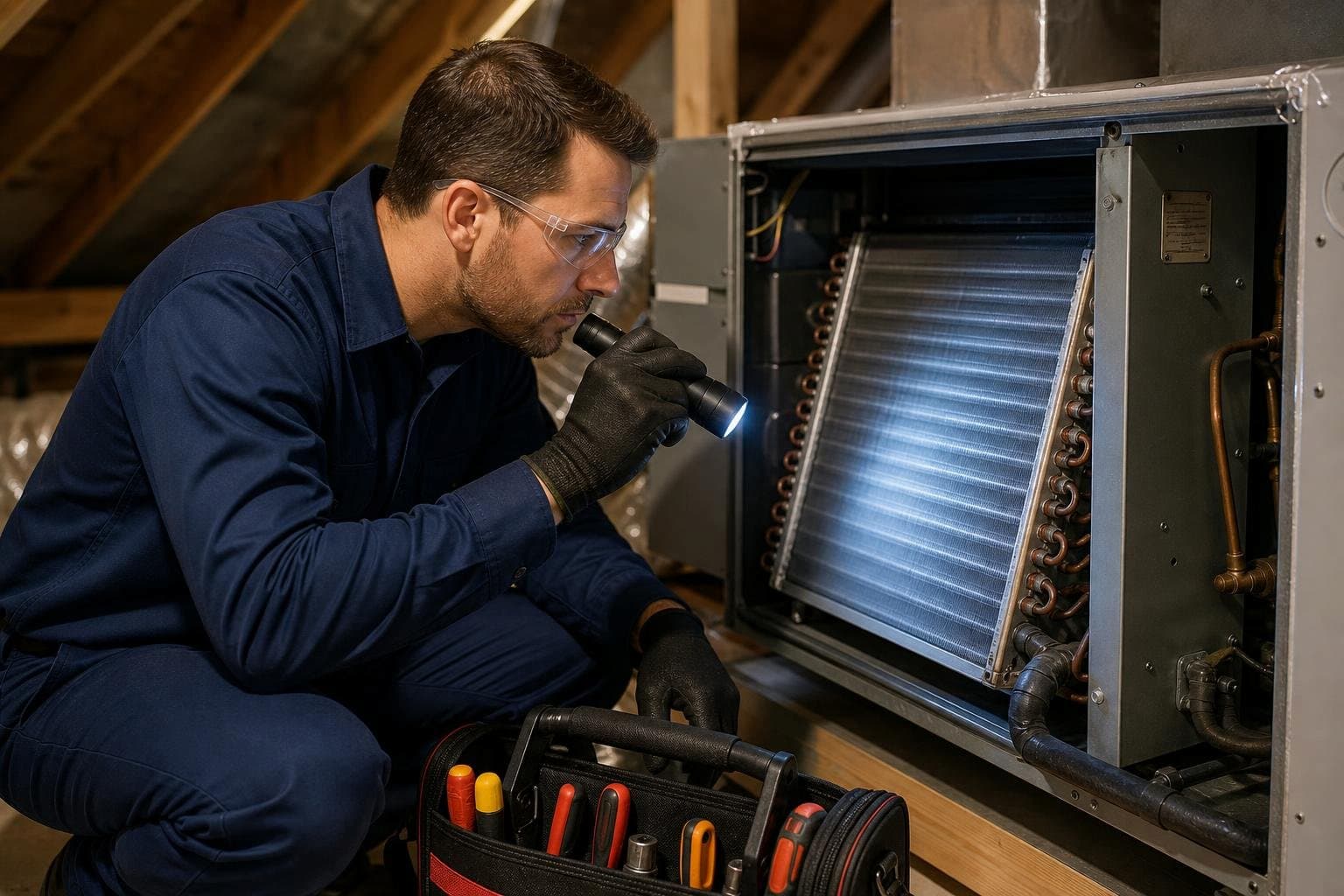
Professional HVAC maintenance plans are designed to provide comprehensive care for your cooling and heating systems, ensuring they run smoothly and efficiently year-round. While specific offerings can vary, most plans include a series of seasonal tune-ups, typically one in the spring for your AC and one in the fall for your furnace. During these visits, a qualified technician will perform a thorough inspection and cleaning of your unit.
Key services often include checking and cleaning the evaporator and condenser coils, which are vital for heat exchange. They will also inspect and tighten electrical connections to prevent hazards and ensure consistent power flow. Airflow optimization is another critical aspect, involving checks on ductwork for leaks, ensuring proper refrigerant levels, and replacing or cleaning air filters. Technicians will also lubricate moving parts to reduce friction and wear, calibrate thermostats for accurate temperature control, and inspect drain lines to prevent clps and water damage. These proactive measures not only enhance energy efficiency but also significantly contribute to system longevity, helping your unit reach its maximum potential lifespan.
Recognizing the Warning Signs of Air Conditioner Decline
Even with the best maintenance, all mechanical systems eventually show signs of wear. Recognizing these early indicators of air conditioner decline can help you plan for replacement rather than being caught off guard by a complete system failure. Beyond the obvious breakdown, subtle changes in your home’s comfort and your unit’s operation can signal that it’s time to consider an upgrade. These might include uneven cooling, where some rooms are noticeably warmer than others, or an increase in household dust despite regular cleaning, which can sometimes be linked to leaky ductwork pulling in outside air.
Understanding these red flags allows you to consult with a professional and assess the situation before your AC unit completely gives out, often during the peak of summer when demand for HVAC services is highest.
Performance Red Flags: Unusual Noises, Odors, and Poor Humidity Control
Your AC unit often communicates its distress through changes in its performance. Unusual noises are a common indicator. While some operational hum is normal, sounds like persistent clicking, screeching, grinding, or rattling can point to serious internal problems. Clicking could indicate a failing relay or control board, screeching often signals a worn-out fan motor bearing, and grinding might suggest issues with the compressor or motor. Rattling could be a loose part or debris within the unit.
Similarly, strange odors emanating from your vents are a cause for concern. A musty smell often indicates mold growth within the air ducts or on the evaporator coil, suggesting your AC isn’t effectively dehumidifying the air. A burning smell, on the other hand, could signal an electrical issue or an overheated motor, which requires immediate attention.
Poor humidity control is another significant red flag, especially in a humid climate like Baton Rouge. If your home feels clammy or sticky even when the temperature is set correctly, your AC unit may be struggling to remove moisture from the air. This not only impacts comfort but can also contribute to mold growth and negatively affect indoor air quality. These performance issues are often signs that your unit is no longer operating efficiently and may be nearing the end of its functional life.
The R-22 Refrigerant Dilemma for Older Units
For homeowners with older air conditioning systems, the type of refrigerant their unit uses is a critical factor in the repair-or-replace decision. Many older units, particularly those manufactured before 2010, rely on R-22 refrigerant, commonly known as Freon. The production and importation of R-22 were completely phased out in the United States as of January 1, 2020, due to its harmful impact on the ozone layer.
This phase-out has created a significant dilemma: if your R-22 system develops a leak or requires a recharge, the cost of sourcing the dwindling supply of R-22 has become prohibitively expensive. In many cases, a repair involving R-22 can be nearly as costly as replacing the entire unit. Furthermore, a unit using R-22 is guaranteed to be at least 15 years old by July 2026, putting it well within or past its average lifespan.
Newer systems use more environmentally friendly refrigerants like R-410A, and the industry is already transitioning to even newer, lower global warming potential refrigerants such as R-32 and R-454B under the American Innovation and Manufacturing (AIM) Act. If your system still uses R-22, it’s not just an environmental concern but a practical and financial one, making replacement a far more economical and forward-thinking solution than continuous, costly repairs.
Deciding Between Repair and Replacement
The choice between repairing a failing AC unit and investing in a new one is often a complex financial decision, fraught with questions about immediate costs versus long-term savings. It’s a moment when homeowners need objective advice and a clear understanding of their options. This is where professional consultation becomes invaluable. A certified HVAC technician can provide a detailed assessment of your current system’s condition, outlining the necessary repairs, their potential costs, and the likely lifespan remaining even after the fix. They can also offer insights into the benefits of upgrading, including energy efficiency improvements and available incentives.
AC repair and replacement involve high-voltage electricity and specialized refrigerants, requiring EPA certification for handling. Attempting DIY repairs or relying on uncertified individuals can be dangerous and may void warranties or lead to further damage. A professional assessment provides the expertise needed to make an informed decision that aligns with both your budget and your comfort needs.
Applying the $5,000 Rule to Your System
To help homeowners navigate the repair-or-replace dilemma, many HVAC professionals utilize a straightforward guideline known as the “$5,000 Rule.” This rule provides a quick mathematical framework to assess the financial feasibility of a repair. Here’s how it works: multiply the age of your AC unit (in years) by the estimated cost of the current repair. If the resulting number is greater than $5,000, replacement is generally recommended as the more financially sound decision.
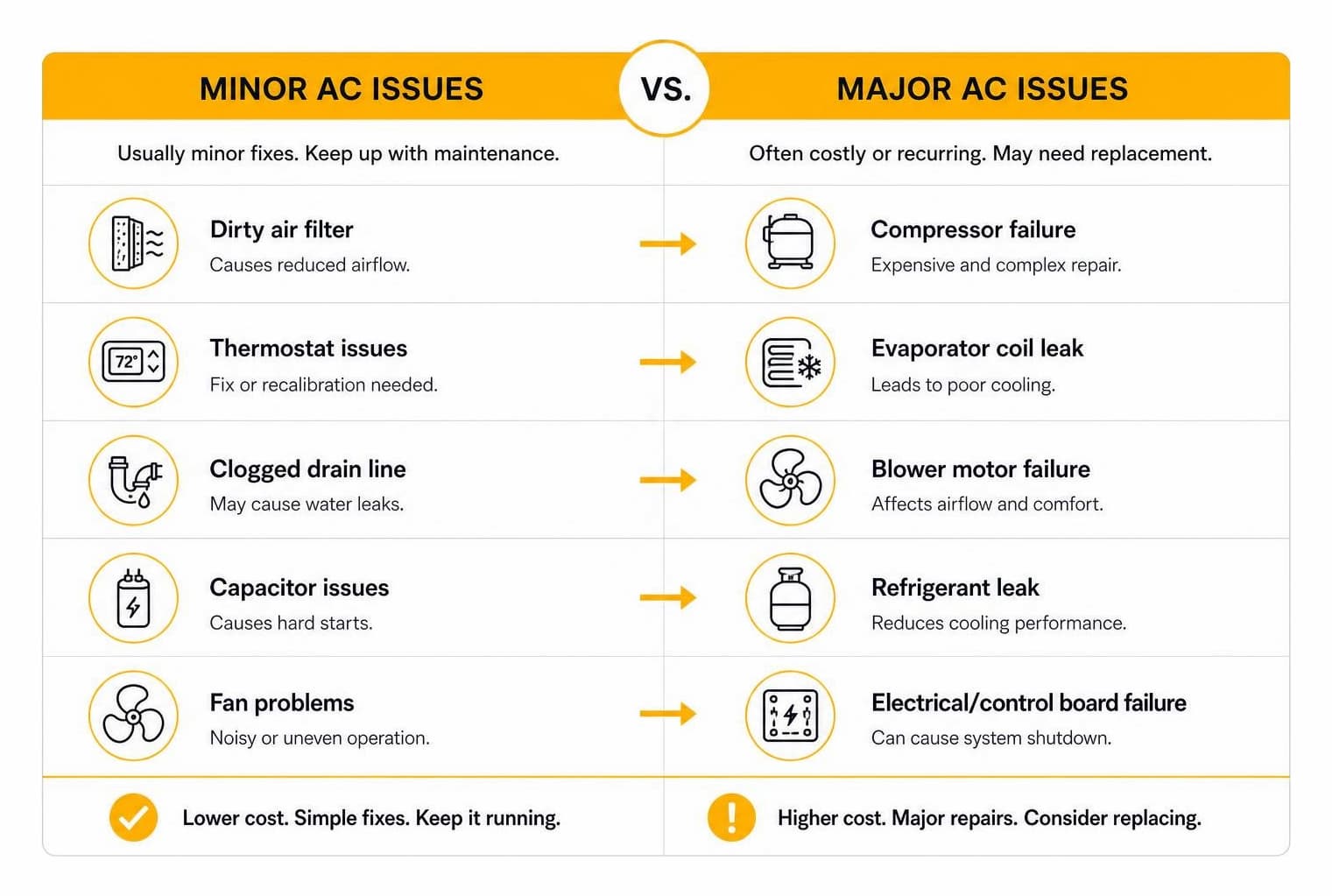
For example, if your 10-year-old AC unit needs a $600 repair, the calculation would be 10 x $600 = $6,000. Since $6,000 is greater than $5,000, the rule suggests replacement. This guideline helps to remove emotion from the decision, especially when faced with significant repairs like a compressor failure or evaporator coil leaks, which can be very expensive. While it’s a rule of thumb and not a hard-and-fast law, it offers a valuable perspective on whether pouring money into an aging system is a wise investment or simply delaying the inevitable.
Why You Should Replace Your Furnace and AC as a Matched System
When considering an AC replacement, a common question arises: should you replace just the air conditioner, or should you also replace the furnace at the same time? While it might seem like a larger upfront investment, replacing both as a “matched system” is often the most cost-effective and beneficial approach in the long run.
Modern HVAC systems are designed to work together seamlessly. An older furnace paired with a brand-new, high-efficiency AC unit can create compatibility issues, reducing the overall efficiency of the new AC. The furnace’s blower motor, for instance, might not be powerful enough or designed to work optimally with the new AC’s airflow requirements, leading to diminished performance and higher energy bills.
Furthermore, many manufacturers and utility companies offer significant rebates and incentives when you install a complete, matched HVAC system. These financial incentives can substantially offset the cost of replacing both units simultaneously, making it a more attractive option. Replacing both components ensures that your entire HVAC system operates at peak efficiency, providing consistent comfort, maximizing energy savings, and extending the lifespan of both units. It also simplifies future maintenance and warranty claims, as you’ll have a single, integrated system from one manufacturer.
Maximizing Your Investment with High-Efficiency Upgrades
When the time comes to replace your AC, it presents a prime opportunity to upgrade to a unit that offers superior energy efficiency and long-term savings. The most significant indicator of an AC unit’s energy efficiency is its Seasonal Energy Efficiency Ratio 2 (SEER2) rating. Since 2023, the U.S. Department of Energy has mandated new minimum SEER2 ratings: 14 for northern states and 15 for southern states like Louisiana. Upgrading to a unit with a higher SEER2 rating means your new system will convert electricity into cooling power much more effectively than older models. Newer air conditioners can reduce cooling costs by 20–40% compared to older 10-SEER units, representing substantial savings over the unit’s lifespan.
Beyond the immediate energy savings, investing in an energy-efficient system can also qualify you for federal tax credits and potential utility rebates. These incentives are designed to encourage homeowners to choose environmentally friendly and energy-saving appliances, further reducing your initial investment. To maximize savings and ensure a smooth installation process, consider scheduling your AC replacement during the off-season, typically spring or fall. During these periods, HVAC contractors often have more flexible schedules and may offer better pricing due to lower demand compared to the peak summer months. This strategic timing can lead to both cost savings on the unit and installation, as well as quicker service.
Frequently Asked Questions About AC Replacement
Understanding the nuances of AC replacement can be overwhelming. Here, we address some of the most common questions homeowners have when facing this significant decision.
What is the best time of year to schedule an AC replacement?
The best time to schedule an AC replacement is generally during the off-season, specifically in the spring or fall. During these months, demand for HVAC services is typically lower than in the peak summer or winter. This reduced demand often translates into several benefits for homeowners:
- Better Availability: Contractors have more flexible schedules, making it easier to book an appointment at your convenience.
- Potential Cost Savings: Some companies may offer discounts or promotions during slower periods.
- Less Urgency: You won’t be rushing to get a new system installed while suffering in extreme temperatures, allowing you more time to research and choose the right unit.
- Preparation: Installing a new AC in the spring ensures your home is ready for the summer heat, while a fall installation can prepare you for the heating season if you’re also replacing your furnace.
How does poor installation affect a new air conditioner’s efficiency?
Poor installation is one of the most critical factors that can undermine the performance and longevity of a new air conditioning system. Even if you invest in a top-of-the-line, high-efficiency unit, improper installation can reduce its efficiency by up to 30%. This means you could be paying significantly more on your energy bills than necessary, negating the very purpose of upgrading to an efficient model.
Beyond just efficiency, poor installation can lead to a host of other problems, including:
- Premature Failure: Components may wear out faster due to improper sizing, incorrect refrigerant charge, or faulty electrical connections.
- Reduced Comfort: The system may struggle to cool your home evenly, leading to hot and cold spots.
- Increased Repairs: You might face frequent breakdowns and costly repairs shortly after installation.
- Voided Warranties: Many manufacturers require professional, certified installation for their warranties to remain valid.
It’s crucial to choose a reputable, licensed, and certified HVAC professional for any installation. Their expertise ensures that the unit is correctly sized for your home, the ductwork is properly sealed, and all connections are secure, allowing your new AC to perform at its optimal level.
Are there financial incentives available for upgrading to a high-efficiency HVAC system?
Yes, absolutely! Upgrading to a high-efficiency HVAC system can often come with significant financial incentives, making the investment more manageable and providing a quicker return. These incentives typically fall into a few categories:
- Federal Tax Credits: The U.S. government often offers tax credits for homeowners who install energy-efficient home improvements, including certain high-efficiency HVAC systems. These credits can reduce the amount of income tax you owe. It’s always wise to check the latest IRS guidelines or consult a tax professional for current eligibility.
- Utility Rebates: Many local utility companies offer rebates to their customers for installing ENERGY STAR certified air conditioners, heat pumps, and furnaces. These programs aim to reduce overall energy consumption in their service areas. Eligibility and rebate amounts vary by location and utility provider, so checking with your local energy company is highly recommended.
- Manufacturer Rebates: HVAC manufacturers frequently run promotional programs that include rebates on specific models or matched systems. These can be combined with other incentives for maximum savings.
- ENERGY STAR Savings: While not a direct incentive, choosing an ENERGY STAR certified unit inherently means it’s designed to be more energy-efficient, leading to lower operating costs and long-term savings on your utility bills.
These incentives can substantially reduce the overall cost of a new, high-efficiency system, making it a more attractive and financially sound decision for homeowners looking to improve their home comfort and reduce their carbon footprint.
Conclusion
Deciding when to replace your AC unit is a significant decision that impacts your home’s comfort, your energy bills, and your peace of mind. While the average lifespan of a central air conditioning unit is 10-15 years, factors like climate, maintenance, and technological advancements can influence this timeline. By recognizing the warning signs of decline—such as unusual noises, persistent odors, poor humidity control, or the presence of outdated R-22 refrigerant—you can proactively plan for a replacement rather than react to an emergency breakdown.
Utilizing tools like the “$5,000 Rule” and understanding the benefits of replacing your furnace and AC as a matched system can help you make financially sound decisions. Furthermore, upgrading to a high-efficiency unit with a higher SEER2 rating offers substantial long-term savings on energy bills, often supplemented by federal tax credits and utility rebates. For homeowners in Baton Rouge, where a reliable AC is not just a luxury but a necessity, proactive maintenance through an HVAC Maintenance Membership is the cornerstone of extending your system’s life and ensuring consistent comfort. By staying informed and partnering with trusted professionals, you can make the best choice for your home, guaranteeing comfort and efficiency for years to come.