Affordable Boiler Repair Company Rockville, MD: Your Extensive Guide to Home Comfort
When winter arrives in Rockville, MD, a reliable heating system isn’t just a convenience; it’s a necessity for your family’s comfort and safety. Unexpected boiler breakdowns can plunge homes into cold, leading to stress and potential health risks. Finding an affordable boiler repair company in Rockville, MD, that you can trust is crucial. We understand the challenges homeowners face, from sudden system failures to escalating energy bills, and how vital professional HVAC installation and repair can be. This extensive guide will walk you through everything you need to know about maintaining your boiler and securing expert repair services, ensuring your home stays warm and your budget stays intact throughout the colder months.
To learn more about maintaining your home’s heating system and preventing costly breakdowns, explore our detailed guide, or contact us today for professional service.
Key Indicators That Heating and Cooling Systems Need Service
A well-maintained heating system is designed to provide consistent warmth and comfort, but even the most robust boilers can develop issues over time. Recognizing the early warning signs of a failing system can save Rockville homeowners from costly emergency repairs and prolonged discomfort, especially during the harsh winter months. If you start hearing strange noises coming from your basement or utility closet, it’s rarely a ghost—it’s usually a cry for help from your heating system.
One of the most common indicators that your boiler needs attention is unusual noises. A distinct banging, whistling, or gurgling sound, often referred to as “kettling,” typically signals a buildup of limescale or sediment on the heat exchanger. This restricts water flow and causes trapped water to overheat, leading to those unsettling sounds. Beyond noise, uneven heating is a clear sign of trouble. If some radiators are cold while others are hot, or if certain rooms remain chilly despite the thermostat being set high, it could indicate issues with zone valves, trapped air within the hydronic system, or a failing circulator pump.
Water leaks and pressure drops are also critical red flags. Any visible moisture around your boiler or piping should be addressed immediately. Persistent drops in boiler pressure, requiring frequent repressurization, often point to a leak somewhere in the system or, more commonly, a failing expansion tank. If the diaphragm within the expansion tank fails, system pressure can spike, causing the pressure relief valve to activate and leak water. Finally, a flickering or frequently extinguishing pilot light (for older models) or error codes on modern digital displays can indicate burner issues or sensor malfunctions. Addressing these symptoms promptly can prevent a complete system shutdown, like waking up at 2 AM in sub-freezing weather to find your breath visible in the bedroom.
Diagnostic Workflows in HVAC Installation and Repair
When a boiler exhibits these symptoms, a professional diagnostic workflow is essential to accurately identify the root cause. This process begins with a thorough visual inspection, checking for obvious leaks, corrosion, or damaged components. Technicians will then use specialized tools to assess the system’s performance. For instance, pressure gauges are used to monitor system pressure and ensure it falls within the manufacturer’s recommended range. A technician might also use a thermal camera to identify cold spots in radiators or piping, indicating blockages or air pockets.
Crucially, safety protocols are paramount during any diagnostic work. This includes meticulously checking for gas leaks using gas sniffers and performing carbon monoxide (CO) risk assessments. Carbon monoxide is an odorless, colorless gas that can be deadly, making these checks non-negotiable before any repair work commences. The integrity of the heat exchanger is also carefully inspected, as cracks can lead to dangerous CO leaks. Modern diagnostic tools allow technicians to quickly pinpoint issues, ensuring that repairs are targeted and effective, restoring your system’s reliability and energy efficiency.
Identifying Hydronic and Radiator Malfunctions
Hydronic heating systems, common in Rockville homes, rely on a network of pipes, radiators, and components to distribute heat. Malfunctions in these systems often manifest in specific ways. A common issue is a failing circulator pump, which is responsible for moving hot water through the system. If this pump malfunctions, heat distribution becomes uneven or ceases entirely. You might notice some radiators are cold while others are warm, or hear unusual noises coming from the pump itself.
Trapped air within the closed-loop hydronic piping is another frequent culprit for uneven heating. Air pockets can prevent hot water from circulating effectively, leading to cold spots in radiators (e.g., top cold, bottom warm). Bleeding radiators to release this trapped air is a common maintenance task. Sediment buildup can also impede flow, particularly in older systems, reducing efficiency and potentially causing kettling sounds. Professional sediment flushing can clear these blockages, improving heat transfer.
Finally, issues with expansion tanks and zone valves can significantly impact system performance. A faulty expansion tank, as mentioned, can lead to pressure fluctuations and leaks. Zone valves, which control the flow of hot water to different areas or “zones” of your home, can fail, resulting in some areas receiving no heat at all. Diagnosing these specific hydronic and radiator malfunctions requires a deep understanding of the system’s intricate workings, highlighting the importance of hiring experienced professionals.
Best Practices for Professional HVAC Installation and Repair
When your boiler needs attention, selecting the right service provider is paramount. In Rockville, MD, homeowners should prioritize companies that demonstrate a commitment to professionalism, safety, and customer satisfaction. The best boiler repair comes down to finding licensed, experienced technicians who offer fast response times, transparent service, and a proven track record with local homeowners. This is particularly true for complex systems requiring specialized knowledge in HVAC installation and repair.
Choosing a reputable company means looking for specific attributes. Licensing compliance is non-negotiable; Maryland state law requires specific licensing for HVAC and hydronic heating work. This ensures technicians have met certain competency standards. Transparent pricing is also key; reputable companies provide clear, upfront estimates before any work begins, avoiding hidden fees. During the colder months, emergency service is a lifesaver. You need a company that offers 24/7 dispatch and has technicians equipped with stocked service vehicles to handle urgent breakdowns, especially during severe winter weather to prevent potential issues like frozen pipes. Finally, strict safety protocols should always be in place, including comprehensive checks for gas leaks and carbon monoxide risks before, during, and after repairs.
Credentials to Verify Before HVAC Installation and Repair
Ensuring your boiler is in capable hands starts with verifying the technician’s credentials. In Maryland, it’s crucial that any heating contractor holds proper Maryland state licensing for HVAC work. This license signifies that the technician has undergone the necessary training, passed rigorous exams, and is legally permitted to perform heating system services. Always ask to see proof of licensing.
Beyond state requirements, look for technicians with NATE certification (North American Technician Excellence). NATE is a leading national certification standard for HVAC professionals, indicating a technician’s expertise in specific areas of heating, ventilation, air conditioning, and refrigeration. A NATE-certified technician has demonstrated a higher level of knowledge and skill, which often translates to more accurate diagnostics and effective repairs. Furthermore, consider a company with significant local Montgomery County experience. Familiarity with local climate conditions, building codes, and common heating system types in the area can be a significant advantage. This ensures they are well-versed in the specific challenges and requirements of homes in Rockville, MD.
Emergency Response Preparedness During Severe Weather
Winter in Rockville, MD, can be unpredictable, with sudden drops in temperature and even blizzards. A boiler breakdown during such times is not just an inconvenience; it can be a serious emergency. This is why a company’s emergency response preparedness is a critical factor when choosing a repair service.
Reliable companies offer 24/7 dispatch services, understanding that heating emergencies don’t adhere to business hours. Their service vehicles should be fully stocked with common boiler parts and diagnostic equipment, allowing technicians to perform most repairs on the first visit. This minimizes downtime and ensures your home returns to warmth as quickly as possible. During severe winter weather, rapid response is crucial not only for comfort but also for preventing secondary issues like frozen pipes, which can lead to extensive water damage. Upon arrival, emergency technicians should always conduct immediate safety checks for gas leaks and carbon monoxide risks, prioritizing the well-being of your household before proceeding with diagnostics and repairs. This level of preparedness reflects a commitment to customer safety and comfort, which is invaluable when facing a sudden heating crisis.
Evaluating Repair Versus Replacement for Aging Equipment
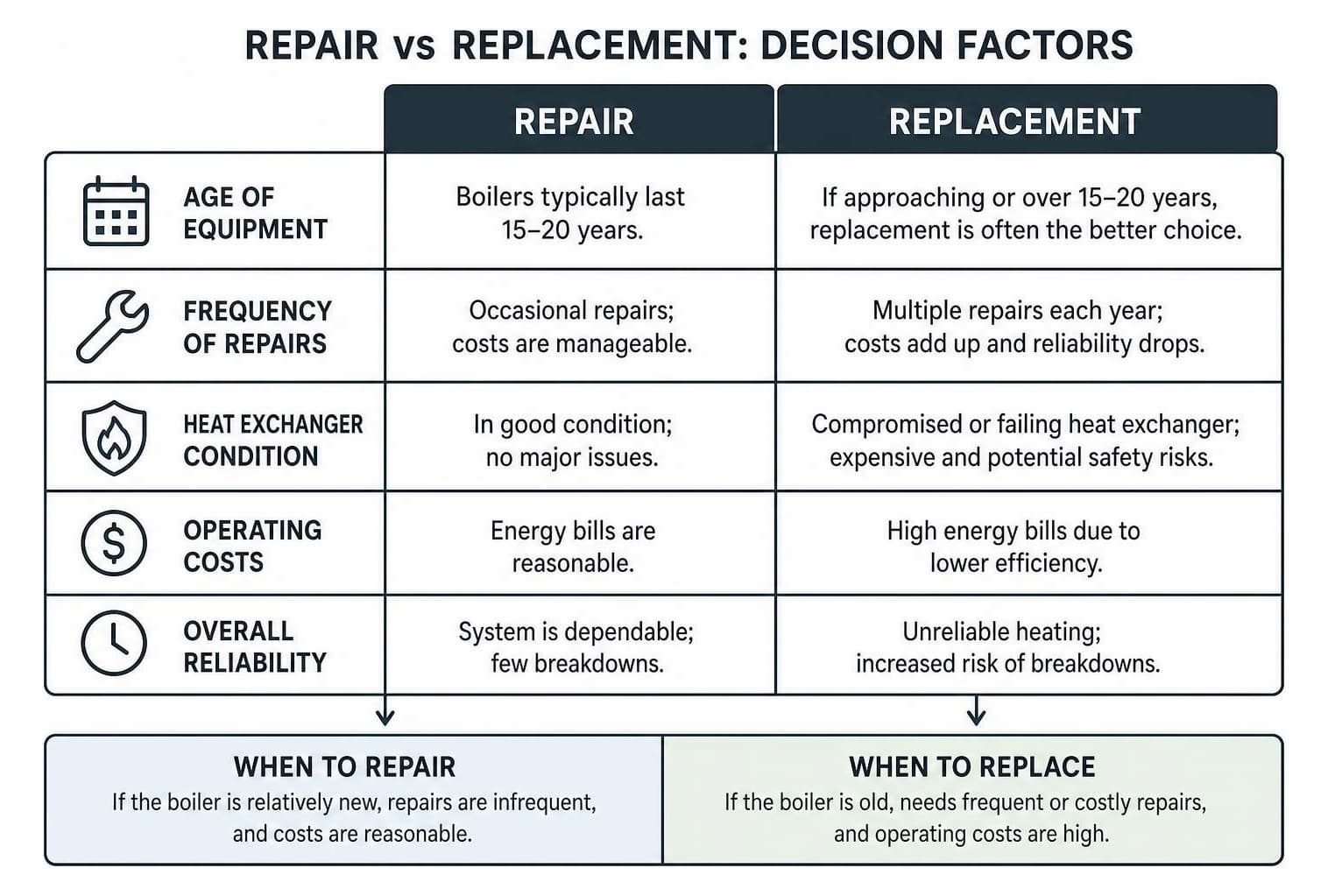
One of the most challenging decisions a homeowner faces is whether to repair an ailing boiler or invest in a complete replacement. This choice often boils down to a careful consideration of the system’s age, the frequency and cost of repairs, and the potential for energy savings with a new unit. Most boilers have a lifespan of 15 to 20 years. If your boiler is approaching or has exceeded this age, the likelihood of needing more frequent and costly repairs increases significantly.
Factors Influencing System Longevity
Several factors influence how long your boiler will last and when repair becomes less economical than replacement. The age of the equipment is a primary consideration; residential heating boilers typically have a service life of 15 to 20 years. For conventional water heaters, the lifespan is generally 10 to 12 years, depending on maintenance. If your boiler is in its golden years, even minor repairs might not be worth the investment if another major component is likely to fail soon.
The frequency of repairs is another key indicator. If you find yourself calling for service multiple times a year, the cumulative cost of these repairs can quickly approach the price of a new unit. Furthermore, constant breakdowns lead to unreliable heating, which is far from ideal during a Rockville winter. The condition of the heat exchanger, a critical and often expensive component, is also vital. A compromised heat exchanger can lead to efficiency losses and, in severe cases, dangerous carbon monoxide leaks. Finally, current operating costs play a role. An older, less efficient boiler might be costing you more in monthly utility bills than a newer, more efficient model would. Replacing an old, inefficient boiler that requires frequent fixes often pays for itself over time through lower monthly utility bills.
Here’s a simplified comparison to help guide your decision:
Efficiency Gains from Modern Heating Solutions
The advancements in heating technology over the past decade have been remarkable, offering significant efficiency gains that can make replacement a financially sound decision. Modern boilers are significantly more efficient than those built even 10 years ago. This improved efficiency translates directly into lower energy consumption and reduced utility bills for Rockville homeowners.
For example, tankless water heaters, while not boilers themselves, demonstrate the potential for energy savings in modern heating. They are more environmentally friendly than tank-type water heaters by saving up to 30% on energy usage. Similarly, modern condensing boilers capture heat from exhaust gases that would otherwise be wasted, achieving efficiencies well over 90%. This means more of the fuel you pay for is converted into heat for your home.
Investing in a new, high-efficiency boiler can lead to substantial long-term savings. These units often feature advanced controls, improved insulation, and more efficient burner technology. While the initial investment might seem significant, the reduced fuel consumption and fewer repair needs can offer a compelling return on investment over the lifespan of the unit. This is especially true as energy costs continue to fluctuate, making fuel efficiency a top priority for many homeowners.
Frequently Asked Questions About Heating and Cooling Performance
Homeowners often have similar questions when it comes to maintaining their heating systems. Understanding these common concerns can help you make informed decisions about boiler care and repairs.
How often should residential heating systems undergo professional maintenance?
Professional boiler maintenance should be scheduled once a year, ideally in late summer or early fall before the heating season begins. This annual tune-up is crucial for several reasons. It allows technicians to clean sensors, inspect burner assemblies, test safety controls, and perform sediment flushing. This proactive approach helps identify minor issues before they escalate into major breakdowns, ensuring your system operates at peak efficiency throughout the winter. Regular maintenance also prolongs the lifespan of your boiler, helping it reach its full 15 to 20-year potential and even extending the life of components like heat exchangers.
What causes hydronic heating systems to make banging or whistling noises?
The banging or whistling noises often heard from hydronic heating systems are commonly referred to as “kettling.” This phenomenon is usually caused by limescale or sediment buildup on the heat exchanger. Over time, minerals in the water can deposit on the internal surfaces of the boiler, creating an insulating layer. This layer restricts heat transfer and water flow, causing the water trapped beneath it to overheat and turn into steam. When this steam collapses, it creates the banging or whistling sound. Professional heat exchanger flushing can remove this buildup, restoring proper water flow and eliminating the noise.
How do homeowners determine if a heating system should be repaired or replaced?
Deciding whether to repair or replace a heating system involves weighing several factors. The first is the system’s age. If your boiler is approaching or has exceeded its typical lifespan of 15 to 20 years, replacement might be more cost-effective in the long run. The frequency of repairs is another key indicator; if you’re experiencing multiple breakdowns each year, the cumulative repair costs can quickly add up. Consider the energy efficiency of your current unit; older boilers are significantly less efficient than modern models, meaning a new installation could lead to substantial savings on utility bills. Finally, evaluate the operating costs—if your monthly energy bills are unusually high, an inefficient boiler could be the culprit. A qualified technician can help you assess these factors and provide a professional recommendation based on your specific situation.
Conclusion
Maintaining a comfortable and safe home in Rockville, MD, especially during the colder months, hinges on a reliable heating system. Understanding the common signs of boiler trouble, knowing what to look for in a professional repair company, and making informed decisions about repair versus replacement are all crucial steps. We’ve explored how proactive care, such as annual maintenance, can prevent costly breakdowns and extend the life of your system. We’ve also highlighted the importance of choosing qualified technicians with proper licensing and certifications, ensuring peace of mind that your heating system is in expert hands.
The best boiler repair comes down to finding licensed, experienced technicians who offer fast response times, transparent service, and a proven track record with local homeowners. By prioritizing timely repairs and considering the energy efficiency of modern solutions, homeowners can ensure their homes remain warm, comfortable, and budget-friendly for years to come. Investing in your home’s heating system is an investment in your family’s comfort and safety, making the choice of a reputable and affordable boiler repair company in Rockville, MD, a decision of paramount importance.