Key Takeaways
- Kindergarten readiness includes social, emotional, physical, and academic growth.
- Purposeful play helps children build early literacy, math, communication, and problem-solving skills.
- Strong preschool programs balance child choice, supportive guidance, routines, and movement.
- Families can encourage readiness at home through simple everyday activities.
Kindergarten Readiness Is More Than Letters and Numbers
Parents often picture kindergarten readiness as knowing the alphabet, counting to 20, or writing a name. Those skills can help, but readiness also includes listening, communicating needs, following routines, managing disappointment, and learning alongside other children. A thoughtful faith-based preschool curriculum can support the whole child by pairing early academic experiences with character, relationships, and age-appropriate discovery.
Play is not a break from learning. For young children, it is often the best way learning happens. When children create, move, talk, pretend, build, and test ideas, they practice the habits that make classroom learning feel less intimidating and more meaningful.
What Play-Based Learning Looks Like
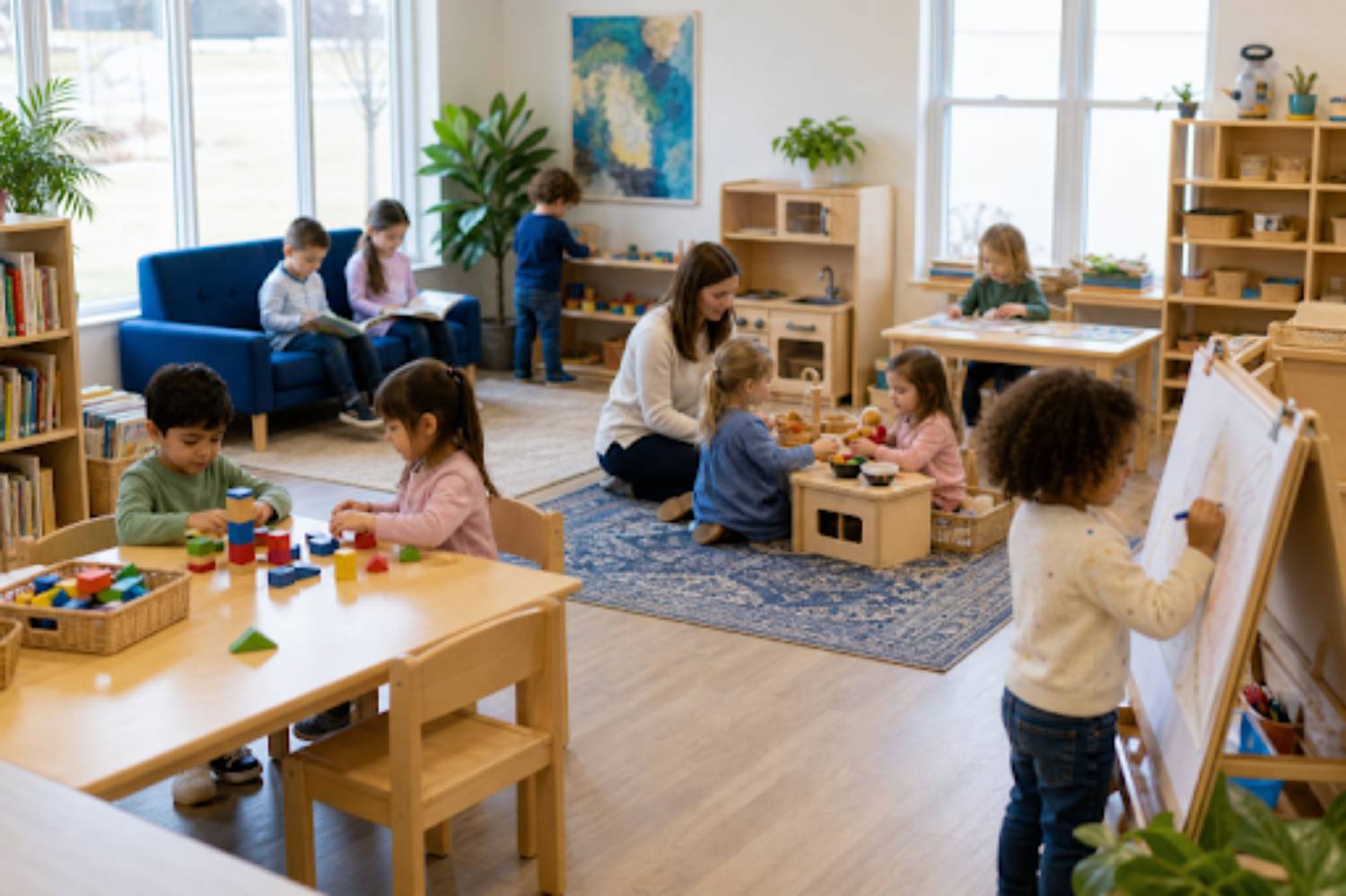
Play-based learning uses a child’s natural curiosity as a path to growth. It does not mean adults step away or leave children without boundaries. Instead, teachers prepare materials, establish routines, observe closely, and offer guidance at useful moments. The principles of developmentally appropriate practice recognize that both self-directed and guided play can build language, thinking, social skills, and early content knowledge.
A healthy learning day can include several types of experiences:
- Free play: Children choose where and how to engage.
- Guided play: An adult adds a question, new word, or manageable challenge.
- Teacher-led learning: Children gather for a story, song, demonstration, or discussion.
- Hands-on practice: Children apply ideas by building, sorting, drawing, moving, and talking.
Families seeking a private Christian school Stafford County can look for an environment where children have room to explore while adults intentionally connect play to meaningful learning goals.
How Play Supports Early Literacy
Language grows when children have reasons to speak and someone who listens. During pretend play, a child may become a chef, veterinarian, builder, or shop owner. Each role encourages vocabulary, conversation, listening, and storytelling. Picture walks, songs, rhymes, and retelling familiar books also help children notice sounds, sequence events, and understand how stories work. Consider a pretend grocery store. A child might make a shopping list, recognize a label, count apples, ask a customer what they need, and explain the price of an item. One playful activity can include early writing, reading awareness, math, and expressive language without feeling like a worksheet.
Early Math and Problem-Solving Through Play
Children use math long before they complete formal math pages. Blocks introduce shapes, balance, size, and spatial awareness. Sorting toy animals or buttons encourages classification. Cooking invites counting and measuring, while simple board games build number recognition and turn-taking. Just as important, play makes room for productive mistakes. A tower that falls, a puzzle piece that will not fit, or a bridge that cannot hold a toy gives children a reason to pause, adjust, and try again. That persistence is a valuable part of kindergarten readiness.
Social and Emotional Skills Matter
Group games and pretend play give children regular practice with sharing, cooperation, patience, empathy, and problem-solving. They learn that another child may have a different idea, that waiting can be hard, and that words can help solve small conflicts. Developing self-control does not mean sitting all day silently. It means gradually learning to recover from frustration, follow a simple direction, and return to an activity.
- Waiting for a turn during a game
- Asking an adult for help when a problem feels too big
- Using words instead of grabbing
- Cleaning up materials after play
- Moving from one activity to the next with support
Movement, Art, and Outdoor Discovery
Readiness also develops through the body. Running, climbing, dancing, balancing, and throwing build coordination and confidence. Fine-motor activities, such as drawing, cutting, molding clay, stringing beads, and using small building materials, strengthen the control children will later use for writing and classroom tasks. Outdoor play can connect science, language, and math. Children can compare leaves, watch insects, count natural objects, talk about the weather, or draw what they observe. These experiences teach children to notice details and ask questions about the world around them.
What Skilled Adults Do During Play
Adults have an important role, but they do not need to take over. Effective teachers watch for children’s interests, offer materials that deepen exploration, introduce useful vocabulary, and ask open questions such as, “What could you try next?” They also give children time to think before supplying an answer. Rather than turning every activity into a quiz, adults can document progress through brief notes, work samples, conversations, or photos when appropriate. This helps families see growth in attention, communication, creativity, persistence, and independence.
Easy Play Ideas for Home
- Story basket: Put a few household objects in a bag and invite your child to create a story using each one.
- Building challenge: Use blocks or recycled boxes to make a bridge, tower, or animal home.
- Kitchen math: Count ingredients, compare sizes, and talk through each step of a recipe.
- Neighborhood hunt: Look for colors, shapes, letters, numbers, or signs on a walk.
- Feelings theater: Use puppets to act out a problem and practice kind solutions.
Short, regular moments are often more helpful than long lessons. Follow your child’s interest, keep the tone encouraging, and stop before frustration takes over.
How to Evaluate a Preschool Learning Environment
When visiting a preschool, look beyond attractive furniture and colorful displays. Notice whether children have access to books, art supplies, blocks, dramatic-play materials, sensory activities, movement, and outdoor time. Ask how teachers connect play with literacy and math goals, support friendship skills, and share progress with families. Most importantly, watch how adults respond when a child makes a mistake, feels upset, asks a question, or approaches learning differently. Warm, responsive guidance helps children feel safe enough to participate and grow.
Common Parent Questions
Is play-based learning too relaxed?
No. A strong play-based classroom still has routines, expectations, clear goals, and intentional teaching. The difference is that children often learn through active, meaningful experiences rather than worksheets alone.
Will children still learn letters and numbers?
Yes. Books, songs, games, signs, counting tasks, sorting, patterns, and meaningful writing all support early literacy and numeracy.
What if my child is shy?
Children develop socially at different rates. Predictable routines, small-group activities, caring adults, and low-pressure invitations can help a shy child participate without being forced.
A Balanced Path to Kindergarten Readiness
Kindergarten readiness grows through repeated daily experiences. Children need chances to talk, move, create, wonder, cooperate, and solve small problems. When caring adults pair purposeful play with warm relationships and thoughtful guidance, children gain more than isolated academic skills. They build the confidence, curiosity, and resilience to enter kindergarten ready to learn and enjoy the process.
Conclusion
A play-based preschool approach can help children develop the academic, social, emotional, and physical skills they need for kindergarten. Through purposeful play, movement, stories, hands-on activities, and supportive guidance, children can build confidence while learning naturally. Families can reinforce these skills at home through simple everyday activities that encourage curiosity, communication, problem-solving, and independence. The goal is not to rush children into formal academics, but to give them a strong, balanced foundation for continued learning.