Key Takeaways
- Restorative dentistry addresses damaged or missing teeth, improving both function and appearance.
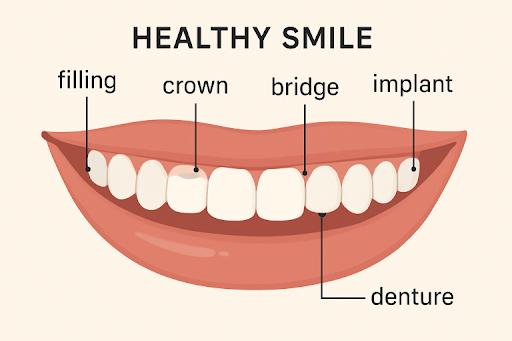
- Options range from simple fillings for cavities to crowns, bridges, inlays, onlays, dentures, and implants.
- Dental implants offer a permanent solution that preserves jawbone health and looks natural.
- Bridges and resin-retained options help maintain bite alignment while replacing missing teeth.
- Endocrowns provide durable restorations for molars with extensive damage.
- Early intervention is important for preventing further dental problems and maintaining oral health.
- Treatment choice depends on tooth condition, location, and individual patient needs.
Dealing with damaged or missing teeth presents not only cosmetic challenges but can also affect your bite and oral health. Modern dentistry offers a variety of restorative options tailored to different needs and degrees of damage, helping patients reclaim a healthy, confident smile. Early intervention is important because untreated dental problems can escalate and impact the stability of remaining teeth. For those noticing increased mobility or discomfort, resources on loose teeth can help them understand the urgency of seeking professional care.
The right restorative solution depends on several factors, including the type and location of the dental damage and your individual health needs. By understanding the available treatment options, you can make informed decisions in consultation with your dentist to restore function and aesthetics. Whether you are dealing with a minor cavity or significant tooth loss, there is likely a restorative approach that fits your situation.
Dental Fillings: A Simple Solution for Cavities
Cavities are among the most common dental problems, resulting from decay that creates small holes in the teeth. Dental fillings are a straightforward treatment where the dentist removes the decayed area and fills the space with materials such as composite resin or amalgam. Composite resin is often preferred today because it matches the color of natural teeth, making repairs virtually invisible. Fillings are a fundamental solution, both restoring the tooth’s structure and stopping the spread of decay.
Crowns: Reinforcing Damaged Teeth
When a tooth is weakened by large fillings, breakage, or advanced decay, a dental crown becomes necessary. Crowns are custom-made caps placed over the tooth to restore its strength, structure, and appearance. Crowns can be made from porcelain, zirconia, metal, or combinations of these materials, offering durable coverage while blending with neighboring teeth. This solution is particularly effective after root canal treatment or when substantial restoration is required.
Bridges: Spanning the Gap of Missing Teeth
If you are missing one or more adjacent teeth, a dental bridge can restore your smile and chewing ability. Bridges consist of artificial teeth (pontics) anchored to natural teeth or dental implants on either side of the gap. By filling the space, bridges prevent neighboring teeth from shifting, thus preserving your bite alignment. They can be made of porcelain, ceramics, or metal, creating a seamless appearance in the mouth.
Dental Implants: A Permanent Replacement
Dental implants are widely regarded as the gold standard for replacing missing teeth. An implant involves surgically placing a biocompatible titanium post in the jawbone to serve as a secure anchor. Once the post integrates with the bone (a process called osseointegration), an artificial tooth is attached to restore form and function. Implants preserve jawbone density and look and feel remarkably natural.
Inlays and Onlays: Preserving Natural Tooth Structure
Some dental damage falls between the scope of a simple filling and a full crown. Inlays and onlays offer a conservative solution for teeth with moderate decay or fractures. Inlays fit inside the top edges of the tooth, while onlays extend over one or more cusps. Crafted from durable materials such as porcelain or gold, these restorations are custom-fit to the affected tooth, providing strength while preserving healthy tissue.
Dentures: Restoring Multiple Missing Teeth
When several teeth or all teeth are missing, dentures provide an affordable and effective way to restore oral function and aesthetics. Modern dentures are designed for comfort, stability, and a natural appearance. Full dentures replace an entire arch, while partial dentures fill gaps left by some missing teeth. Properly fitted dentures improve speech, support facial muscles, and help restore confidence in daily life.
Resin-Retained Bridges: A Minimally Invasive Option
A resin-retained bridge, sometimes referred to as a Maryland bridge, is a conservative choice to replace missing teeth, particularly in the front of the mouth. This approach uses metal or ceramic wings bonded to the back of adjacent teeth, allowing the artificial tooth to “bridge” the gap without significant tooth preparation. It preserves healthy tooth structure and is often preferred in areas with lower biting pressure.
Endocrowns: An Alternative for Severely Damaged Molars
For molars that have undergone root canal treatment and have little remaining structure, endocrowns provide a robust restorative strategy. Made from high-strength ceramics, endocrowns are fabricated as a single-piece restoration that fits over the prepared tooth. They combine the durability of a crown with the anchoring benefits needed for endodontically treated teeth, often requiring less invasive preparation compared to traditional crowns.
Final Thoughts
Choosing the best restorative dentistry option depends on your specific needs and goals. A dental professional will assess the extent of damage, bone density, and location of the affected tooth or teeth before recommending the ideal restoration. Prompt treatment not only enhances your smile but also promotes long-term oral health and function.