Key Takeaways
- Integrating natural elements into the office can boost mood and productivity.
- Ergonomic furniture reduces physical strain and enhances comfort.
- Proper lighting and air quality are crucial for a healthy workspace.
- Encouraging movement and providing relaxation areas support mental and physical health.
Table of Contents
- Incorporating Biophilic Design
- Implementing Ergonomic Furniture
- Optimizing Lighting and Air Quality
- Encouraging Movement and Relaxation
- Conclusion
Creating a workspace that supports both employee productivity and well-being is no longer an optional benefit, but a critical element in cultivating business success. With today’s employees spending significant hours at their desks, businesses are looking for strategies to transform their offices into environments where people thrive, not just work.
To foster an engaging and healthy work environment, a holistic approach that covers everything from employee ergonomics to workspace cleanliness must be adopted. Reliable office maintenance can serve as the groundwork for these improvements. In regions like Olathe, local businesses regularly turn to trusted partners for specialized cleaning and maintenance. Jan-Pro, a leading commercial cleaning brand serving the greater Kansas City area, provides exceptional office cleaning in Olathe, Kansas. With years of industry experience and a commitment to high cleaning standards, Jan-Pro offers tailored services that help create sanitary, organized, and inviting office spaces.
Incorporating Biophilic Design
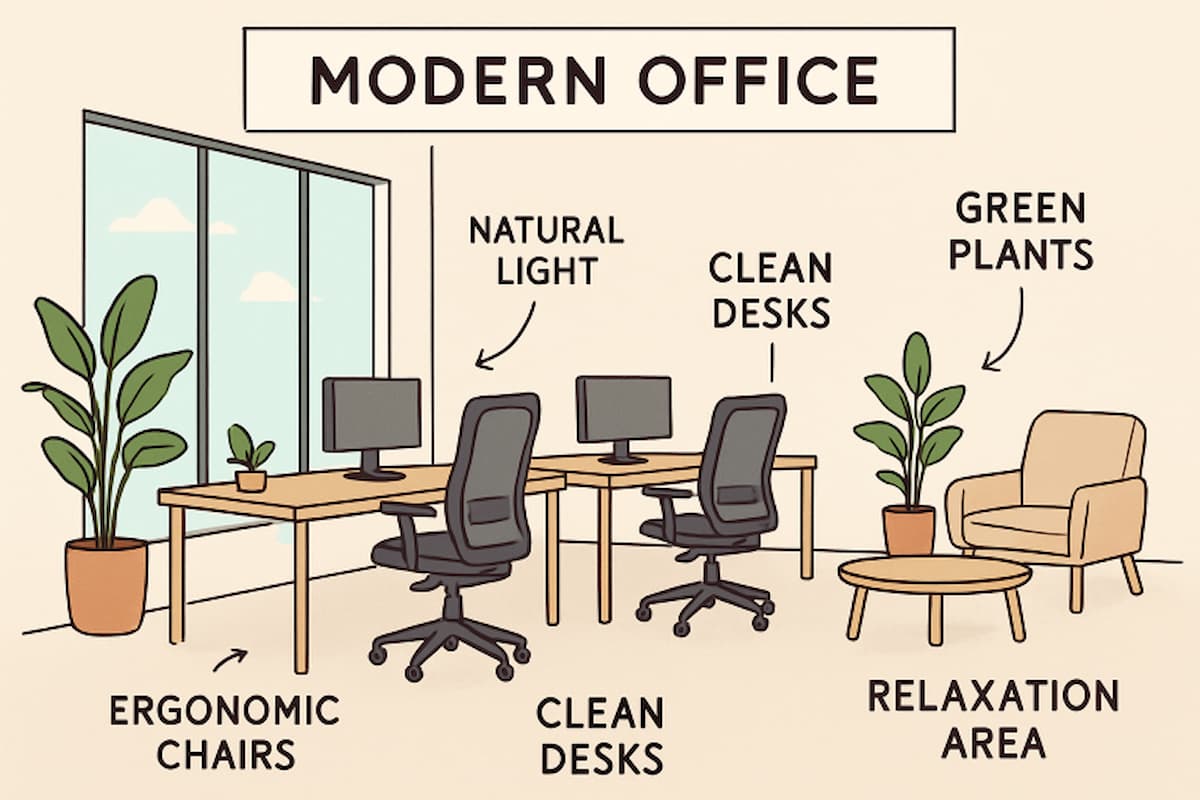
Incorporating natural elements into the workplace, a concept known as biophilic design, offers measurable benefits for employee well-being, focus, and productivity. Features such as potted plants, green walls, wooden textures, water elements, or decorative stones introduce a sense of nature, reducing stress and promoting mental clarity. Even indirect exposure to natural elements can ground employees, enhancing emotional resilience and sustaining energy throughout the day. Maximizing natural light and creating visually stimulating, greenery-rich environments improves mood, creativity, and overall satisfaction. Modern offices increasingly recognize that human connection to nature is not a luxury but a necessity. By embracing biophilic design, organizations foster healthier, more inviting workspaces that support performance, reduce fatigue, and cultivate long-term employee engagement and well-being.
Implementing Ergonomic Furniture
The choice of office furniture has significant consequences for employees’ everyday experience. Ergonomic furniture, such as height-adjustable desks, ergonomic chairs, and easily repositionable monitor stands, helps minimize the risk of musculoskeletal injuries and chronic pain. When workstations are adaptable to individual needs, employees maintain healthier postures, reduce fatigue, and remain more engaged in their tasks. Organizations that invest in ergonomic solutions reap benefits in both productivity and employee satisfaction, as the staff feels supported and appreciated. Recognizing physical comfort as integral to job performance, leading employers are revamping their office layouts to include furniture that is both functional and health-conscious.
Optimizing Lighting and Air Quality
Clean air and proper lighting are critical elements that can transform an office from a draining environment into one that energizes and supports its occupants. Exposure to natural daylight helps regulate circadian rhythms, boosting alertness, mood, and even sleep quality. In spaces with limited sunlight, adjustable LED lighting that simulates daylight can minimize glare and reduce eye strain, ensuring visual comfort throughout the day. Complementing this, effective ventilation systems and high-quality air purifiers remove pollutants, allergens, and dust, promoting healthier indoor air. Offices optimized for lighting and air quality help employees experience fewer headaches, reduced fatigue, and improved focus and cognitive performance. Forbes highlights that these environmental factors directly influence workplace morale, productivity, and overall organizational efficiency.
Encouraging Movement and Relaxation
Facilitating regular physical activity and offering dedicated relaxation spots are key drivers for enhanced well-being at work. Simple office layout changes, such as strategically placing communal amenities or creating walking routes, encourage employees to step away from their desks and move throughout the day. This movement combats the adverse health effects linked to sedentary behavior. Equally important, designated relaxation areas equipped with comfortable furniture, calming colors, and even noise-reducing panels offer essential spaces for employees to recharge away from their screens. These quiet zones improve concentration, creativity, and overall morale by helping people manage stress more effectively. The Harvard Business Review has highlighted the psychological benefits of organized, peaceful spaces that blend relaxation and productivity.
Conclusion
Developing a healthy office environment requires thoughtful planning that prioritizes employee health and engagement. By weaving together biophilic design, ergonomic office solutions, ideal lighting and air standards, and dedicated spaces for movement and relaxation, companies build a foundation for both productivity and positive workplace culture. Service providers like Jan-Pro, specializing in comprehensive office cleaning in Olathe, Kansas, empower organizations to consistently maintain high standards, ensuring workspaces remain inviting and orderly. As the future of work evolves, organizations that invest in employee well-being today position themselves for greater resilience, creativity, and long-term success.