Key Takeaways
- Advanced HVAC systems are essential for high indoor air quality in commercial buildings.
- Smart controls and automation, paired with regular maintenance, optimize both efficiency and occupant health.
- Following rigorous industry standards ensures that the HVAC system contributes to the safety and productivity of everyone in the space.
Maintaining optimal indoor air quality (IAQ) in commercial buildings is increasingly recognized as a foundation for occupant health, comfort, and productivity. With rising concerns about airborne pollutants and occupant well-being, integrating advanced HVAC systems with strategic IAQ management can transform indoor environments. Building owners and facilities managers who want the most effective solutions can learn more about specialized products and best practices in this area.
As climate concerns and new wellness standards reshape how business leaders view their workplaces, ensuring clean air is more than just a regulatory requirement. It delivers immediate business benefits by supporting healthier, more productive employees and reducing operational risks tied to poor air circulation or contaminants in indoor environments.
The Importance of Indoor Air Quality in Commercial Buildings
Indoor air quality directly influences cognitive function, work performance, and the overall well-being of building occupants. Research published by the U.S. Environmental Protection Agency notes that even common contaminants, such as mold spores, dust, and chemical emissions, can cause symptoms such as headaches, fatigue, and respiratory discomfort. When IAQ is compromised, commercial spaces may experience elevated absenteeism, increased employee complaints, and a higher likelihood of worker turnover.
Business leaders who prioritize clean indoor air unlock better organizational outcomes, including improved employee engagement and decreased liability. Especially in environments such as offices, healthcare facilities, and educational institutions, IAQ is an essential component of risk management and a competitive differentiator for tenant retention.
Role of HVAC Systems in Air Quality Management
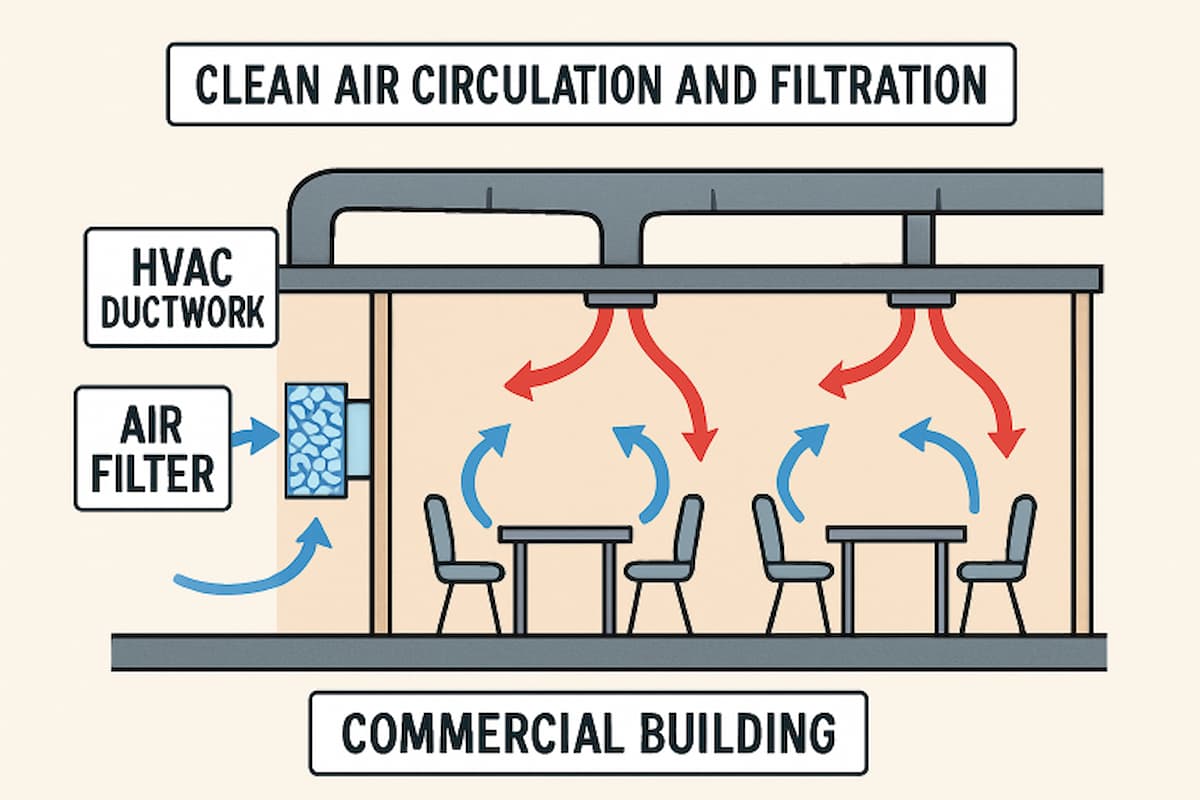
Modern HVAC systems do more than regulate temperature. Through ventilation management, humidity control, and air filtration, these systems actively shape indoor air quality. Today, innovative HVAC infrastructure incorporates multispeed fans, heat recovery ventilators, and precise control systems to balance energy efficiency with purification needs. Central to these efforts is the understanding that pollutants must be captured and exhausted from the building efficiently to meet IAQ goals.
 Advanced Filtration Technologies
Breakthroughs in filtration play a significant role in the quality of air circulated within commercial buildings. Installing high-efficiency filters, such as those rated MERV-13 or higher, allows HVAC systems to trap fine particulate matter that contributes to allergies and respiratory irritation. For settings that require a higher degree of cleanliness, such as medical facilities or laboratories, advanced options like HEPA filters and ultraviolet germicidal irradiation further lower the risk of airborne disease transmission.
Smart HVAC Controls and Automation
With the adoption of intelligent controls, commercial buildings can dynamically adjust ventilation levels based on real-time occupancy data from sensors. Smart thermostats and integrated building management systems improve precision, ensuring that air quality is not sacrificed for energy savings. Automation tools now support sophisticated demand-controlled strategies that drive down operational costs while safeguarding occupant health.
Regular Maintenance and Compliance
Even the most advanced systems lose effectiveness when neglected. Scheduled inspection and servicing of filters, ductwork, and humidifiers helps prevent the buildup of contaminants and extend system longevity. Facilities that follow best practices outlined in standards such as ASHRAE Guideline 36 are better positioned to pass compliance inspections and minimize breakdowns. Adhering to these standards also ensures consistency in air quality regardless of seasonal changes or shifts in occupancy.
Integrating AI and IoT for Enhanced IAQ
The next frontier in IAQ management is the combination of artificial intelligence (AI) and Internet of Things (IoT) devices. By analyzing data from air quality monitors, temperature gauges, and occupancy counters, AI-driven building management systems can automatically recalibrate airflow, filter efficiency, and energy usage to preemptively address issues before they escalate. Predictive maintenance is another AI benefit, reducing costly downtimes by signaling when components need replacement or repair.
Considering Occupant Experience and Feedback
One often overlooked but crucial aspect of IAQ and HVAC integration is the role of occupant feedback in ongoing system improvements. Facility managers are increasingly implementing digital platforms or mobile applications that collect real-time feedback from building occupants. Whether it’s temperature discomfort, stuffy air, or reports of persistent odors, this information helps target emerging problems early, ensuring quick response and continuous improvement. Incorporating feedback mechanisms empowers employees, students, or patients to be active participants in their own well-being and ensures facilities remain responsive to the changing needs of users.
Regular communication and visible air quality monitoring displays can also provide reassurance, reinforcing occupant confidence in the measures being taken. Transparency in reporting air quality scores or upcoming maintenance periods contributes to a feeling of safety and organizational trust—both vital in high-traffic spaces and environments with sensitive populations.
Future Trends in HVAC and IAQ Integration
Looking ahead, the fusion of renewable energy sources with HVAC systems is poised to further improve both IAQ and energy efficiency. For example, integrating solar-powered ventilation units or adopting geothermal heating and cooling solutions can reduce dependency on traditional grid energy, decrease emissions, and maintain healthy air exchange rates. Additionally, ongoing research in air purification, such as bipolar ionization and green-certified building materials, promises further breakthroughs in minimizing indoor pollution without sacrificing operational efficiency.
Conclusion
Integrating advanced HVAC systems with proactive air quality management strategies is the cornerstone of safer, healthier, and more productive commercial environments. By taking a modern approach that blends high-performance filtration, intelligent controls, routine maintenance, and emerging technologies such as AI and IoT, building owners and managers maintain both comfort and operational excellence. As public expectations around workplace safety and wellness continue to rise, investing in these solutions is vital for long-term business resilience and occupant well-being.