Table Of Contents
- Why The First Minutes Matter
- Check For Immediate Danger
- Get Medical Care Even If Injuries Seem Minor
- Report The Crash And Exchange Information
- Preserve Evidence Before It Disappears
- Identify Possible Causes Without Jumping To Conclusions
- Insurance Questions To Ask
- Common Mistakes To Avoid
- A Simple Safety Checklist For Future Rides
- Frequently Asked Questions
- Protecting Your Health And Your Options After A Crash
An e-scooter crash can leave you shaken, injured, and unsure of what to do next. Whether the crash involved a car, a pedestrian, a road hazard, or a malfunctioning rental scooter, your priorities should be safety and medical care. If you need guidance about your legal options after a collision in Decatur or Metro Atlanta, an e-scooter injury lawyer Atlanta can help you understand the next steps based on the facts of your situation.
This checklist explains how to protect your health, document what happened, and preserve information that may become important later. It is not a substitute for medical care or individualized legal advice, but it can help you respond calmly and effectively in the hours and days after a crash.
Why The First Minutes Matter
Immediately after a collision, it is easy to focus on who caused it. Start with your safety instead. Adrenaline can mask pain, and injuries such as concussions, wrist fractures, neck strain, and soft-tissue damage may not be obvious at the scene. The actions you take early can also help medical providers, responding officers, and insurers understand what happened.
For example, you may initially believe you only suffered scrapes, then later notice dizziness, worsening headache, hand pain, or lower-back stiffness. Taking the crash seriously does not mean assuming the worst. It means allowing yourself to receive appropriate care and create an accurate record.
Check For Immediate Danger
Move Out Of Traffic Only If It Is Safe
If you can move without worsening an injury, get yourself out of traffic and away from the scooter, vehicle, or roadway hazard. Ask a bystander to alert approaching drivers if necessary. Do not move someone with a suspected head, neck, back, or spinal injury unless an immediate danger, such as active traffic or fire, makes it necessary.
Call 911 When Injuries Or Hazards Are Serious
Call 911 for signs of a serious or potentially life-threatening injury, such as heavy bleeding, trouble breathing, confusion, loss of consciousness, numbness, weakness, or possible spinal injury. Police assistance can also be valuable when a motor vehicle is involved, someone leaves the scene, property is damaged, or a dangerous roadway condition may have contributed to the crash.
Get Medical Care Even If Injuries Seem Minor
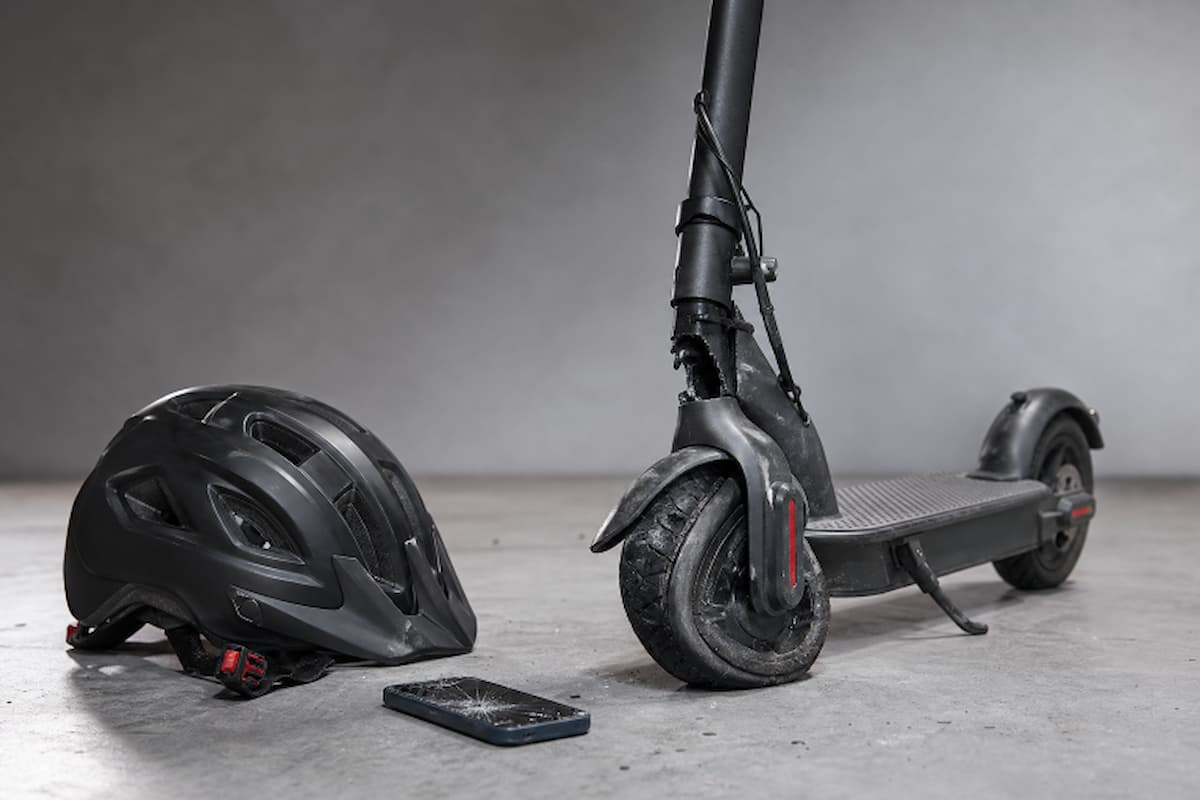
Prompt medical evaluation is important after an e-scooter crash, particularly when you hit your head or are thrown onto pavement. Seek urgent care or emergency treatment for worsening headache, vomiting, unusual sleepiness, confusion, chest or abdominal pain, severe swelling, or weakness in an arm or leg. A qualified medical professional should diagnose and treat your injuries.
Follow through with recommended appointments, therapy, imaging, and prescriptions. Keep copies of discharge instructions, medical records, receipts, prescriptions, work restrictions, and bills. These documents can help you track your recovery and explain how the crash affected your daily life.
Report The Crash And Exchange Information
When possible, collect basic information before leaving the scene. If a driver was involved, obtain the driver’s name, contact details, license plate number, insurance information, and vehicle description. Also get the names and phone numbers of witnesses, passengers, and responding officers.
If you used a shared scooter, save the trip receipt, ride identification number, app screenshots, and any confirmation number from a crash report submitted through the app. Keep your account of events short and factual. Describe where you were traveling, traffic conditions, and what happened immediately before impact. Avoid guessing about speed, distance, or fault, and avoid arguing at the scene.
Preserve Evidence Before It Disappears
Photograph The Scene And Damage
Use your phone to take wide and close-up photographs. Capture the intersection, roadway, bike lane, sidewalk, lighting, traffic signs, parked cars, weather, debris, potholes, construction areas, and sight lines. Photograph the scooter, helmet, damaged clothing, visible injuries, and damage to any involved vehicle.
Save Digital And Physical Records
Preserve original videos from your phone, dashcam, smartwatch, helmet camera, or nearby security footage. Ask nearby businesses or property owners whether their cameras may have recorded the incident. Save original files before editing or sharing anything.
Document the scooter and protective gear before returning, repairing, discarding, or altering them, and preserve any available photographs or records of their condition. Store the helmet, lights, clothing, and any broken scooter components safely. Physical evidence may help clarify whether the crash involved a vehicle’s actions, a maintenance issue, or an unsafe road condition.
Identify Possible Causes Without Jumping To Conclusions
E-scooter collisions often involve more than one contributing factor. Possible causes include a driver failing to yield, distracted driving, an unsafe turn, a vehicle door opening into your path, poor lighting, uneven pavement, gravel, standing water, blocked signs, brake problems, worn tires, or limited visibility.
Your own actions may also be reviewed, including speed, route choice, distraction, and compliance with traffic rules. Georgia law establishes rules for certain micromobility devices, while local ordinances and scooter-provider rules may also affect where and how a device can be operated. Review the applicable local requirements rather than relying on a general social media post or outdated summary.
Insurance Questions To Ask
Coverage after an e-scooter crash depends on the facts, available policies, and Georgia law. Consider whether a car, truck, motorcycle, bicycle, pedestrian, or another scooter was involved. Ask whether the other driver has liability coverage and whether your own auto policy includes uninsured or underinsured motorist coverage.
Your health insurance may help with immediate treatment, but that does not answer every question about responsibility. Rental agreements, employer-provided scooters, delivery platforms, and personal policies can contain important terms. Avoid assuming that an auto policy, credit card benefit, or scooter company will automatically cover the loss.
Common Mistakes To Avoid
- Leaving before collecting contact, vehicle, and witness information.
- Delaying medical care because the pain seems manageable.
- Throwing away a damaged helmet, clothing, or scooter part.
- Posting detailed comments, photos, or videos about the crash online.
- Giving a recorded statement to an insurer before you understand the facts and your obligations.
- Accepting a quick payment before you know the full extent of your injuries.
- Waiting too long to learn about reporting requirements or legal deadlines.
A Simple Safety Checklist For Future Rides
Before your next ride, inspect the brakes, tires, steering, lights, and battery. Wear a properly fitted helmet, use lights or reflective clothing in low-light conditions, keep both hands available for steering, and avoid using your phone while moving. Slow down near intersections, driveways, parked vehicles, and crowded paths.
Georgia law does not treat every micromobility device identically, so the rules that apply after an e-scooter crash can depend on the type of device involved, how it is classified under state law, and where it was being operated. State requirements may address issues such as where a device may be ridden and how it must be operated, while local ordinances and scooter-provider rules may add other requirements.
For that reason, do not assume that a rule governing one category of electric device automatically applies to every stand-up rental scooter or other micromobility device. If the legal classification of the scooter is unclear, review the applicable Georgia statutes and local rules or seek advice about the specific circumstances of the crash. The University of Georgia’s micromobility safety guidance also emphasizes following traffic rules, watching for pedestrians, and using appropriate roadway or bike-lane space when available.
Frequently Asked Questions
Should You Call the Police After A Minor E-Scooter Crash?
A report may be helpful when someone is injured, a vehicle is involved, property is damaged, the other person disputes what happened, or the other person leaves the scene. Reporting requirements can vary, so act promptly.
What If The Other Driver Leaves?
Call 911, write down the vehicle description and direction of travel, ask witnesses for contact information, and look for nearby cameras. Do not chase the vehicle.
How Long Do You Have To Act In Georgia?
Many Georgia personal injury claims are subject to a two-year filing deadline under O.C.G.A. § 9-3-33. Still, exceptions and shorter notice requirements may apply, especially when a government entity is involved. Do not wait until medical treatment is complete to learn which deadline applies to your circumstances.
Can You Still Have A Claim If You Made A Mistake?
Possibly. Georgia generally reduces damages by a party’s percentage of fault when more than one party contributed to an injury. However, a person who is found to be 50% or more responsible generally cannot recover damages under O.C.G.A. § 51-12-33. The specific application of comparative fault depends on the facts of the crash, so do not assume that making a mistake automatically prevents you from pursuing a claim.
Protecting Your Health And Your Options After A Crash
After an e-scooter crash, focus on a straightforward plan: get safe, seek medical care, report the event, collect reliable information, and preserve the evidence. Taking these steps can support your recovery and help ensure that important details are not lost in the days that follow.