

Key Takeaways
- Choose one main neighborhood instead of crossing San Francisco for every meal.
- Set a per-person budget before selecting restaurants.
- Match the route to the group’s mood, energy, schedule, and dietary needs.
- Plan three main food stops, then leave room for spontaneous discoveries.
- Support local businesses while respecting shared sidewalks and dining spaces.
A memorable food day in San Francisco, California does not require chasing every viral reservation across the city. Start by deciding how you want the day to feel, then use a guide to the best places to eat in San Francisco to narrow your options to a few stops that work together.
The city rewards a slower approach. A bakery breakfast, a walk through a neighborhood, one satisfying main meal, and a final coffee or dessert can feel far more enjoyable than a packed list of restaurants separated by steep hills, traffic, and long waits.
Why a Food Day Needs a Simple Plan
San Francisco has exceptional variety in a relatively compact city, but compact does not always mean quick. A short distance on a map may include a hill, a transit transfer, limited parking, or a line outside a popular counter-service spot. Without a simple plan, a visitor can spend an afternoon hurrying from the Mission to North Beach to the Richmond, arriving hungry and too rushed to enjoy any stop.
A better food day balances eating with walking, browsing, resting, and conversation. Give each meal a purpose. One stop may be about trying a neighborhood specialty, while another may simply offer a comfortable place to sit and recharge.
Start With the Mood, Not the Menu
Before comparing menus, decide what kind of day you are planning. The mood should guide the pace, price range, and type of restaurant.
- Casual day: Pick quick meals, shared plates, coffee, and easy snack stops.
- Date day: Allow time for a scenic walk, a relaxed meal, and one memorable dessert.
- Family day: Favor short travel distances, flexible menus, early dining, and backup snacks.
- Group day: Look for shareable dishes, straightforward ordering, and room to talk.
- Solo day: Choose counter seating, smaller portions, markets, cafés, or places where lingering feels natural.
- Celebration: Build the day around one special reservation and keep the other stops lighter.
Pick a Neighborhood That Fits the Day
Choose an area that offers more than one place to eat. A compact neighborhood lets you change plans if a line is long, a menu does not suit the group, or someone spots a bakery worth trying. Consider whether you want waterfront views, time in the park, bookstores, galleries, shopping, or a quieter residential atmosphere between meals.
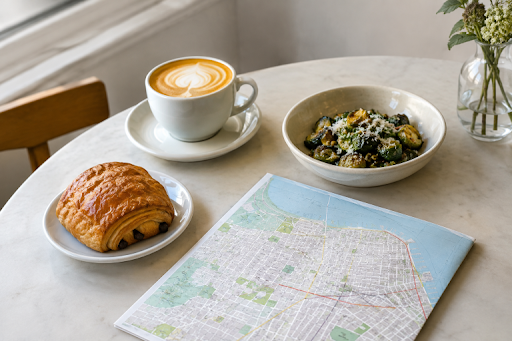
Check the route before leaving. Hills, weather, strollers, mobility needs, and parking can change what feels practical. If you plan to use transit, the Muni trip planner can help you compare a walk with a short bus, rail, or streetcar ride.
Build the Budget Before Booking
A food budget should make choices easier, not make the day feel restrictive. Set a total amount per person, reserve the largest share for the meal that matters most, and account for drinks, taxes, service charges, transit, and dessert. Lunch, happy-hour menus, and shared dishes can create variety without turning every stop into a full meal.
- Choose a total spending limit.
- Decide whether the main meal is lunch or dinner.
- Set aside a small amount for an unplanned coffee, pastry, or snack.
- Save one lower-cost backup nearby.
Use a Three-Stop Food-Day Structure
Three main stops are usually enough: a morning coffee or small breakfast, a planned lunch, and a final dinner, dessert, or late snack. This structure leaves space for an attraction, a park bench, a market visit, or a pause when the weather turns cool and foggy.
Do not treat every stop as a full meal. A pastry, a shared appetizer, or a scoop of ice cream can be the right bridge between larger meals.
Balance Familiar Favorites With New Flavors
A good group plan includes something comfortable for cautious diners and at least one opportunity to try a new dish or cuisine. Ask about spice levels, allergens, ingredients, and portion sizes before ordering. Look for menus that reflect the neighborhood’s people and history, and approach locally owned restaurants as places to enjoy on their own terms, not merely as inexpensive options.
Plan for Waits, Reservations, and Easy Routing
Reserve the most important meal first. For casual spots, arrive outside the busiest hours whenever possible and identify a nearby alternative beforehand. Leave at least 30 minutes between major stops, especially when your route includes hills or transit.
- Start near your hotel, home, or first activity.
- Keep the next stops within a reasonable walk or short ride.
- Place the longest meal near a place to rest afterward.
- End near a transit connection or the route home.
- Confirm same-day hours, menus, reservation policies, and accessibility details.
Questions to Ask Before Choosing a Restaurant
- Does the menu work for everyone, including diners with allergies or dietary restrictions?
- Are prices, fees, and portion sizes clear enough to fit the budget?
- Will the seating work for children, older adults, or mobility needs?
- Does the restaurant take reservations, operate a waitlist, or accept walk-ins only?
- Is there another appealing option within a few blocks?
Sample San Francisco Food-Day Plans
A Low-Cost Day
Start with coffee and a small breakfast, choose a filling lunch with shared sides, then walk through a market, park, or shopping area. Finish with a modest dessert or snack rather than another large meal.
A Date-Day Plan
Begin at a relaxed café, take a scenic walk, and make one unhurried dinner reservation. Sharing dessert can keep the evening special without overloading the schedule.
A Family-Friendly Plan
Choose a neighborhood with short distances and broad menus. Start early, keep snacks on hand, and avoid building the day around a single restaurant without a backup plan.
Support the Neighborhood Along the Way
Spend time in more than one local business when you can, whether that means a bakery, market, café, bookstore, or small shop. Respect dining-room rules, avoid blocking sidewalks while waiting, and remember that outdoor seating shares space with pedestrians. San Francisco’s sidewalk dining rules are designed to keep those public paths usable for everyone.
Common Mistakes to Avoid
- Booking meals in neighborhoods that are too far apart.
- Forgetting drinks, fees, transportation, and tips in the budget.
- Scheduling every minute with no time for lines or detours.
- Choosing a restaurant only because it is popular online.
- Ignoring hours, weather, accessibility, and dietary needs.
Final Checklist Before the Day Begins
- Confirm the main reservation and opening hours.
- Review menus and note dietary needs.
- Check the weather, route, and transit plan.
- Set the budget and save one backup option.
- Leave room for an unexpected favorite.
Conclusion
The best San Francisco food day has a clear neighborhood, a realistic budget, and enough flexibility to enjoy the city between bites. Plan the important meal, keep the route simple, and let one bakery window, market stall, or neighborhood café become part of the story.