Key Takeaways
- Rain and wet pavement lead to the majority of weather-related car accidents due to reduced traction.
- Snow and ice further increase risks, causing loss of control and extended stopping distances.
- Fog and low visibility conditions, though less frequent, are especially deadly due to the potential for high-impact crashes.
- Strong winds present unseen risks, particularly to larger vehicles.
- Driver adaptation and preparation are crucial to minimizing risks associated with adverse weather.
Weather conditions have a profound influence on both the safety of our roads and the behavior of drivers behind the wheel. From light drizzle to heavy snow, understanding how weather affects accident risk is essential for anyone looking to travel safely year-round. For those involved in weather-related collisions, consulting a car accident attorney in Boston can help protect rights and navigate the complexities of recovery.
Not only can weather alter pavement conditions in an instant, but it also requires drivers to adapt their usual habits to stay safe. Failing to do so often increases the potential for dangerous accidents that can cause significant injuries and losses.
Rain and Wet Pavement: A Leading Hazard
Rain is one of the most prevalent factors in weather-related crashes. Statistics indicate that wet pavement is a factor in roughly 70 percent of these incidents, while rain alone accounts for nearly half. When water accumulates on the road, even in small amounts, it reduces tire grip and increases the chances of hydroplaning, a frightening scenario where tires lose contact with the road surface. Light rain can also combine with leftover oil on roadways to form an unexpected slippery film, further heightening the danger. To improve safety, it is critical to reduce speed, avoid abrupt maneuvers, and maintain a safe following distance.
Moreover, drivers should be cautious on multi-lane roads as water can pool unevenly, raising the risk of losing control, particularly when changing lanes. Advanced vehicle technologies, such as anti-lock braking systems and electronic stability control, can provide extra aid, but they do not replace prudent, focused driving. Regularly checking windshield wipers and ensuring your windshield washer reservoir is filled can also help maintain clear vision during rainstorms. Taking these steps ensures you are as prepared as possible for rapidly changing wet weather conditions.
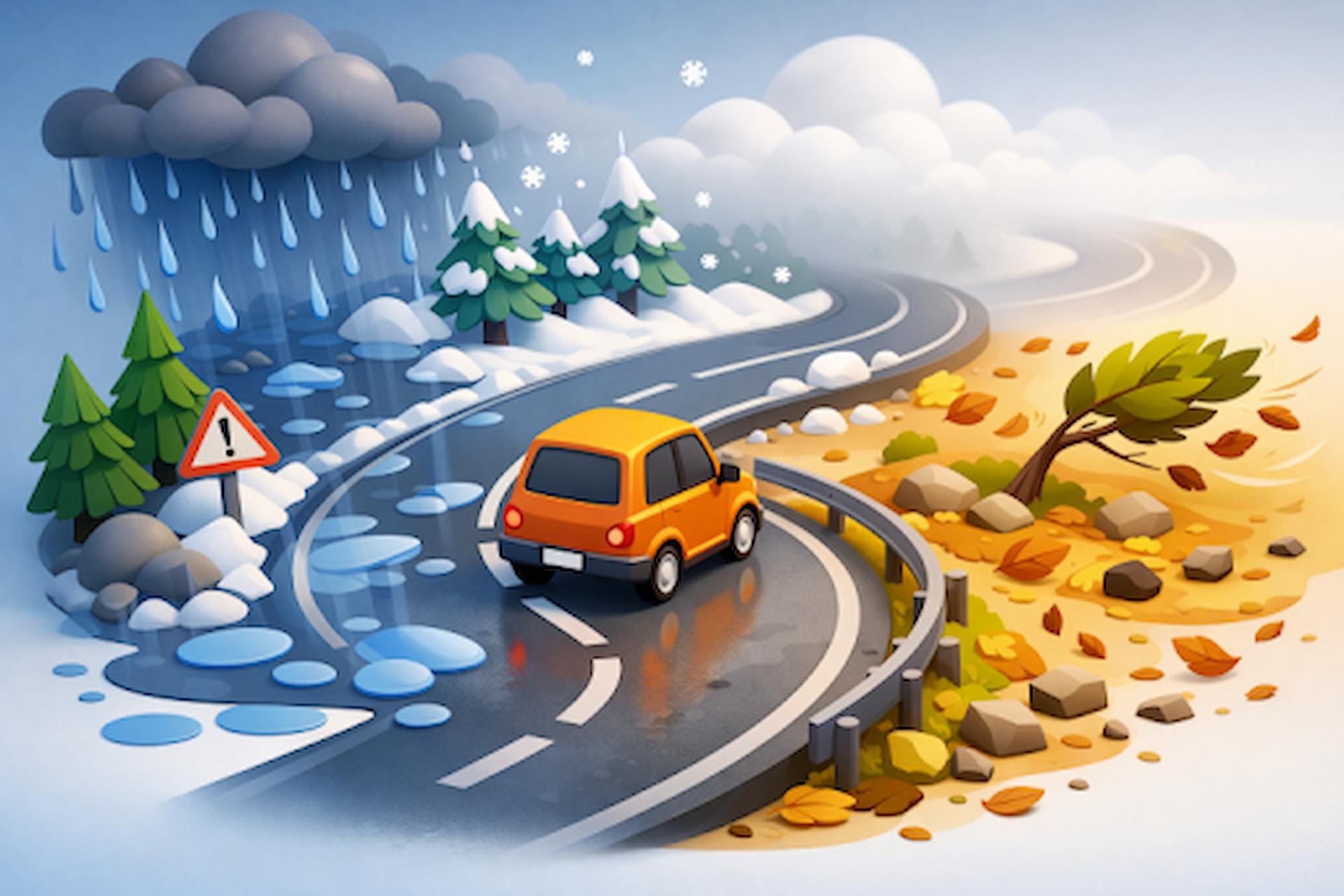
Snow and Ice: Winter’s Unforgiving Obstacles
Winter creates unique road safety challenges. About 18 percent of weather-related accidents involve snow or sleet, and icy surfaces are responsible for another 13 percent. The presence of snow and ice significantly reduces a vehicle’s ability to grip the road, causing drivers to lose control when braking or turning. One of the most hazardous winter phenomena is black ice—a thin, nearly invisible layer of ice that makes roads treacherous even when conditions appear mild. Drivers can combat these dangers by opting for winter tires, lowering speeds, and steering gently to avoid sudden movements that could trigger a skid.
Preparation for winter driving involves more than just altering your speed. Consider keeping emergency supplies on hand, such as a blanket, ice scraper, and small shovel in your trunk. Even planning your route can be crucial. Some roads are more heavily treated with sand or salt, making them safer than untreated backroads. Listen for local advisories about plow activity or travel bans and heed warnings, as authorities base these recommendations on data regarding crash likelihood and roadway clearance. For those living in snow-prone regions, investing in professional vehicle inspections to ensure your battery, brakes, and cooling system are ready for winter is a proactive safety step.
Fog and Low Visibility: Navigating the Invisible
Although fog accounts for just 3 percent of crashes caused by weather, it is often linked to disproportionately severe accidents with higher fatality rates. Visibility can drop in seconds, leaving drivers little time to react to other vehicles, unexpected obstacles, or changes in traffic. To stay safe during foggy conditions, experts recommend using low-beam headlights, reducing speed, and doubling the distance kept behind other cars. More visibility tips can be found on NHTSA’s winter driving safety page.
When driving in dense fog, avoid using cruise control, as quick reactions are necessary if conditions shift suddenly. If visibility becomes severely restricted, pull over safely and wait for conditions to improve, turning on your hazard lights so that others can see your vehicle. Drivers should also be wary of other road users, such as pedestrians or cyclists, who may be difficult to spot. Staying patient and avoiding risky overtaking maneuvers in low-visibility environments goes a long way toward reducing accident risks.
Strong Winds: The Subtle Saboteur
Strong gusts rarely make headlines but can have a dramatic impact on driving safety, especially for trucks, vans, and buses. Winds of 25 miles per hour or higher can destabilize these vehicles, affecting handling and potentially causing rollovers on highways and bridges. Open areas, mountain passes, and exposed overpasses are most susceptible. If driving in windy conditions, slow down, keep both hands on the wheel, and maintain awareness of commercial vehicles nearby. Additional guidance for coping with strong winds can be found in the National Weather Service’s wind safety resources.
Wind can also turn road debris into hazardous projectiles, especially after storms or during periods of high gusts. Watch for fallen branches, garbage bins, or construction signs that may have blown into the roadway, and be cautious when exiting your vehicle, as high winds can slam doors suddenly. For those driving high-profile vehicles, anticipate gusts when passing through wind-prone corridors, and be extra vigilant when weather alerts are issued for your area.
Adapting Your Driving to the Weather
- Slow down to minimize your risk of losing control, no matter how lightly it may be raining or snowing.
- Allow for longer stopping distances, especially if you are driving on wet or frozen pavement.
- Utilize low-beam headlights when visibility is compromised by fog or heavy rain.
- Check that your tires are appropriately rated and in good condition to handle seasonal hazards.
- Monitor weather reports before and during your trip, and if possible, delay travel when forecasts indicate hazardous conditions.
Another essential adaptation is adjusting your driving mindset when the weather takes a turn for the worse. Remaining calm, avoiding distractions, and actively scanning the road ahead will help you spot danger early. Even seasoned motorists benefit from reminding themselves to increase caution during adverse weather. Consider taking a defensive driving course specialized for slick or icy conditions, which can offer valuable techniques and boost confidence. For families, discussing weather safety with new drivers and ensuring everyone knows how to respond to changing road conditions can prevent accidents before they happen.
Conclusion
Weather is an unpredictable but undeniable force on the road. By understanding how rain, snow, ice, fog, and wind contribute to car accidents and responding with appropriate driving strategies, motorists have the power to safeguard not only themselves but everyone they share the road with. Consistent vigilance and preparation remain the best defenses against nature’s hazards, helping to ensure every trip ends safely.