Table of Contents
- Definitions
- Legal Grounds
- Procedures
- Financial Implications
- Effects on Children
- Duration and Timing
- Conclusion
When a marriage is coming to an end, understanding the legal options available is not only necessary but can profoundly shape the course of your life moving forward. Many individuals facing marital breakdown are unsure whether it is best to pursue an annulment or a divorce, often because their functions in the law can seem so similar on the surface. However, an annulment and a divorce are fundamentally distinct legal proceedings that carry very different implications for your marital status, finances, emotional future, and even your family dynamics. Divorce is generally the path most people consider, but in some cases, an annulment may be a more suitable option. Reaching out to an experienced divorce firm Red Bank, NJ can provide the essential clarity and experienced support necessary during this pivotal and life-changing time. An attorney reviews your unique situation and guides you toward the most suitable legal option.
While both annulment and divorce can legally sever the ties between two lives that were once joined together, the legal distinction between them affects everything from the division of marital property to religious considerations and social standing. Knowing these differences enables individuals to make informed, future-focused decisions and offers practical insight as they prepare for the path ahead. Furthermore, understanding both options can help you avoid unnecessary delay or confusion as you begin to rebuild your life after a marriage ends.
Definitions
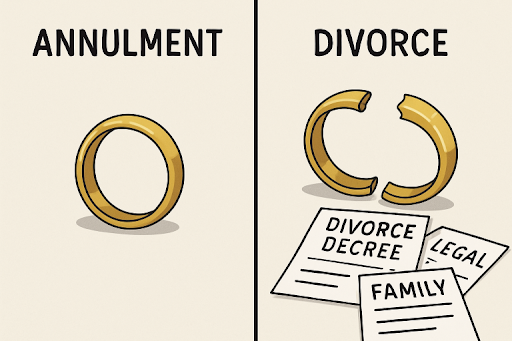
An annulment is a legal pronouncement that a marriage was never technically valid and therefore never existed in the eyes of civil law. This means that the law treats the union as void or voidable, essentially erasing the record of the marriage, as if it never took place. In contrast, a divorce officially ends a recognized marriage but does not dispute or invalidate its existence up to that point. Divorce acknowledges that there was a legally binding marital relationship, but one or both parties have chosen to terminate it for various reasons. Understanding the distinction and which outcome most accurately reflects your circumstances or best serves your needs is vital before filing, as the choice can have lasting implications for your legal record, property division, and future relationships.
Legal Grounds
The criteria for annulment and divorce are distinct and serve different legal purposes. Annulment applies when the marriage is deemed fundamentally flawed from its inception, with common grounds including fraud, misrepresentation, bigamy, concealment of material facts, impotence, failure to consummate, illegal relationships, mental incapacity, intoxication, or underage marriage. Conversely, divorce covers a broader range of reasons such as irreconcilable differences, incompatibility, abandonment, or mutual consent. Many U.S. states offer “no-fault” divorces, allowing couples to end their marriage without proving wrongdoing, making the process more accessible.
Procedures
The steps for annulment of a marriage and obtaining a divorce differ, starting with the evidentiary requirements. Annulments often require the petitioner to submit clear evidence, such as affidavits or documentation, supporting grounds like fraud or incapacity from the outset. Many jurisdictions have strict time limits, and hesitation can result in the forfeiture of the opportunity to file. Annulments are rarely granted without compelling evidence.
Divorces typically follow a standard process: one spouse files, serves notice, and negotiates issues such as property and custody, either independently or through mediation. If no agreement, a judge resolves contested issues. High-asset or complex case divorces can be lengthy and emotionally charged, but the process is generally familiar, with fewer restrictions on when or why to file.
Financial Implications
The financial outcomes of annulment versus divorce differ significantly and influence the choice of legal route. An annulment treats the marriage as if it never happened, aiming to restore each party’s original financial position, often avoiding the division of assets or debts, and rarely awarding support outside of extreme cases. In contrast, divorce involves fair division of marital property—assets and debts acquired during marriage—such as the home, vehicles, retirement accounts, and liabilities. Courts may also order alimony to support a lower-earning spouse, impacting long-term financial stability. Understanding these outcomes helps individuals prepare and protect their interests.
Effects on Children
Having children doesn’t shield a marriage from annulment, but it does add legal considerations. Children born to an annulled marriage are still legitimate, protecting their rights. Both annulments and divorces require courts to decide on custody, visitation, and support, prioritizing the child’s best interests. Judges must consider the child’s needs and safety. Custody and support decisions are often complex and contentious, but aim for stability and loving parental involvement. Parents should work together or mediate to create a co-parenting plan, minimizing disruption and supporting the child’s well-being.
Duration and Timing
Annulments often face strict statutory deadlines based on the grounds claimed. For instance, if annulment is due to fraud or concealment, it must usually be filed promptly after the fraud is discovered. Missing this window can mean losing the chance for annulment forever. This contrasts with divorces, which generally have no deadlines and can be pursued at any time during marriage, whether it lasts months or decades. Processing times also vary; some annulments are resolved quickly if uncontested and well-supported, but complex cases or resistance can prolong the process. Divorce timelines vary significantly due to factors such as the complexity of assets, emotional conflict, and court delays. Both can take longer than expected, so consulting a qualified attorney early is advisable to understand your options and avoid missing deadlines or making procedural errors.
Conclusion
Deciding between an annulment and a divorce is a deeply personal and complex process with significant legal, financial, and emotional consequences. From understanding the legal grounds and procedural requirements to navigating the impact on children, finances, and religious beliefs, it is crucial to approach this major life transition with clear information, support, and appropriate legal guidance. Engaging experienced counsel is essential; skilled attorneys help protect your rights, advise on your best options, and support you throughout an emotionally challenging process, ultimately ensuring that the most suitable and beneficial legal path is chosen for your unique circumstances.