Key Takeaways
- Exposure to trees and green spaces is linked with measurable reductions in stress, depression, and anxiety.
- Landscaping choices in urban areas can lead to stronger, more resilient community health.
- Green elements indoors provide restorative effects for homes, schools, and workplaces.
- Caring for existing trees and plant life supports everyone’s well-being year-round.
Our environments shape not only our physical health but also our psychological resilience and happiness. Incorporating landscaping and trees into city streets, backyards, and community spaces has a significant and well-documented impact on mental health. Efforts to enhance our surroundings through thoughtful planting and ongoing tree care services go far beyond the visual; they help create restorative, healthy spaces for everyone.
Urban forestry professionals, city planners, and mental health experts all recognize the profound relationship between nature and well-being. Community members who interact with green spaces often report feeling more relaxed, connected, and motivated. Research continues to show that exposure to well-maintained landscapes can play a pivotal role in reducing stress, anxiety, and depression.
Not only are these effects seen out in parks and greenways, but even modest indoor greenery can help foster calm. The benefits extend across all age groups, making landscaping decisions a key component of sustainable, health-minded urban development.
This article examines how trees and strategic landscaping, both outdoors and indoors, are foundational to vibrant, mentally healthy communities. Integrating greenery enriches our daily experiences and promotes lasting psychological well-being.
Stress Reduction Through Natural Environments
Stress is an almost universal experience, particularly for people living in cities. The pace of modern life, excessive noise, and crowded spaces can intensify feelings of tension and fatigue. Nature counteracts these effects. A study from Stanford University shows that even short walks in parks or time spent under tree canopies can lower cortisol, the body’s main stress hormone. Access to greenery is increasingly seen as a vital piece of urban design for public mental health, not just a luxury.
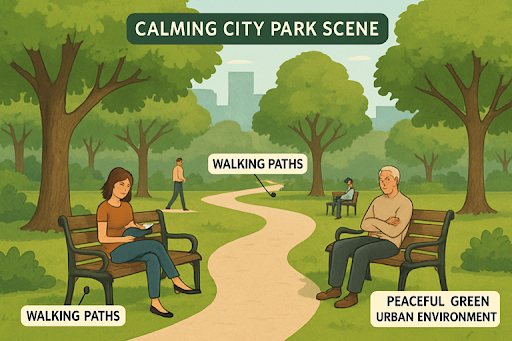
The stress-buffering power of trees is so well recognized that many cities are investing in tree-planting initiatives for long-term health gains and climate resilience. Strategic placement of trees along streets, in neighborhoods, and in schoolyards provides relief from harsh cityscapes and creates opportunities for relaxation and mindfulness.
Mitigating Depression and Anxiety
The relationship between green space and mental illness is one of the most compelling reasons to focus on landscaping. Research published by the World Economic Forum details how access to nature is linked to significantly lower rates of depression and anxiety. People living in neighborhoods with tree-lined streets or community gardens consistently report fewer symptoms of psychological distress.
The presence of mature trees and thriving greenery is also connected to positive emotional states. Simply having a view of outdoor nature from a window can enhance mood and concentration. The impacts are particularly strong for children and older adults, groups that are sometimes at higher risk for mental health struggles.
Enhancing Community Well-Being
Landscaping affects much more than the individual. Strong neighborhoods often have abundant parks, well-kept greenways, and robust tree canopies. These features create environments where social interaction flourishes. According to Harvard Health Publishing, communities with accessible green spaces benefit from tighter social ties and increased outdoor engagement, leading to a widespread sense of belonging and mutual support.
New residents and visitors are often drawn to well-landscaped areas, sparking opportunities for friendships and support networks. When green spaces are safe, well-lit, and maintained, they become valuable communal assets that support both physical activity and mental wellness.
Indoor Greenery and Mental Health
The importance of biophilic design, that is, bringing elements of the natural world into our buildings, cannot be overstated. A study from Stanford University found that the presence of living plants in offices or homes can reduce anxiety symptoms and lift mood. While it is possible to have too many plants, which can add clutter and stress, a handful of thoughtfully placed potted plants or a small living wall can create a more balanced atmosphere.
Schools, hospitals, and workplaces benefit from adding low-maintenance greenery to entryways, common rooms, and workstations. These changes not only improve air quality but also create reminders of the natural world in even the most urbanized settings.
Practical Steps to Integrate Green Spaces
Plant Native Trees and Shrubs
Native species require less maintenance and support local wildlife. These choices reduce costs and environmental impacts while ensuring healthy long-term growth.
Create and Nurture Community Gardens
Community gardens bring neighbors together to share in the work and bounty. These programs can build food security, foster educational opportunities, and promote mental health.
Bring Greenery Indoors
Introducing plants into interior spaces does not require a major renovation. Simple potted ferns or succulents are easy to care for and provide a quick mood lift for most people. Living walls or herb planters in kitchens can create a direct connection with nature.
Maintain Existing Landscapes
Regularly caring for city parks, greenways, and private landscapes ensures these spaces stay healthy, attractive, and inviting. Well-kept greenery remains available for everyone’s benefit, year after year.
Final Thoughts
The science is clear: trees and well-maintained landscapes are powerful allies in improving mental health. By integrating more trees and thoughtful landscaping into both communal and individual environments, we can significantly reduce stress, support recovery from anxiety and depression, and create more connected, vibrant communities. Prioritizing nature is essential for building happier, healthier cities and neighborhoods for generations to come.