Key Takeaways
- Integration of advanced technologies such as 3D printing, robotics, and artificial intelligence is transforming how custom plastic parts are manufactured.
- Sustainable practices involving bioplastics, recycled materials, and reduced energy consumption are setting new industry standards.
- Enhanced customization options and greater manufacturing precision are fulfilling the specialized needs of a variety of sectors.
Table of Contents
- Advanced Technologies in Custom Plastic Manufacturing
- Sustainable Practices and Materials
- Enhanced Customization and Precision
- Future Outlook
In today’s rapidly advancing industrial landscape, custom plastic parts manufacturing is undergoing a remarkable transformation. With the integration of new technologies, novel materials, and stronger commitments to sustainability, the industry is experiencing a shift in how components are designed, engineered, and produced. If you want to explore what leading-edge solutions are available and what these changes might mean for your business, click here to discover opportunities in custom plastic manufacturing services.
The ongoing influence of digitization, eco-friendly practices, and a demand for customized solutions is prompting manufacturers to revise their strategies. Agile companies that adapt to these trends can enhance efficiency, minimize environmental impact, and fulfill the need for specialized products. Key industries such as automotive, healthcare, consumer goods, and electronics are driving the adoption of advanced methods and materials. The focus has shifted from producing generic plastic parts to prioritizing quality, precision, and sustainability, underscoring the importance of embracing innovation for long-term competitive success.
Advanced Technologies in Custom Plastic Manufacturing
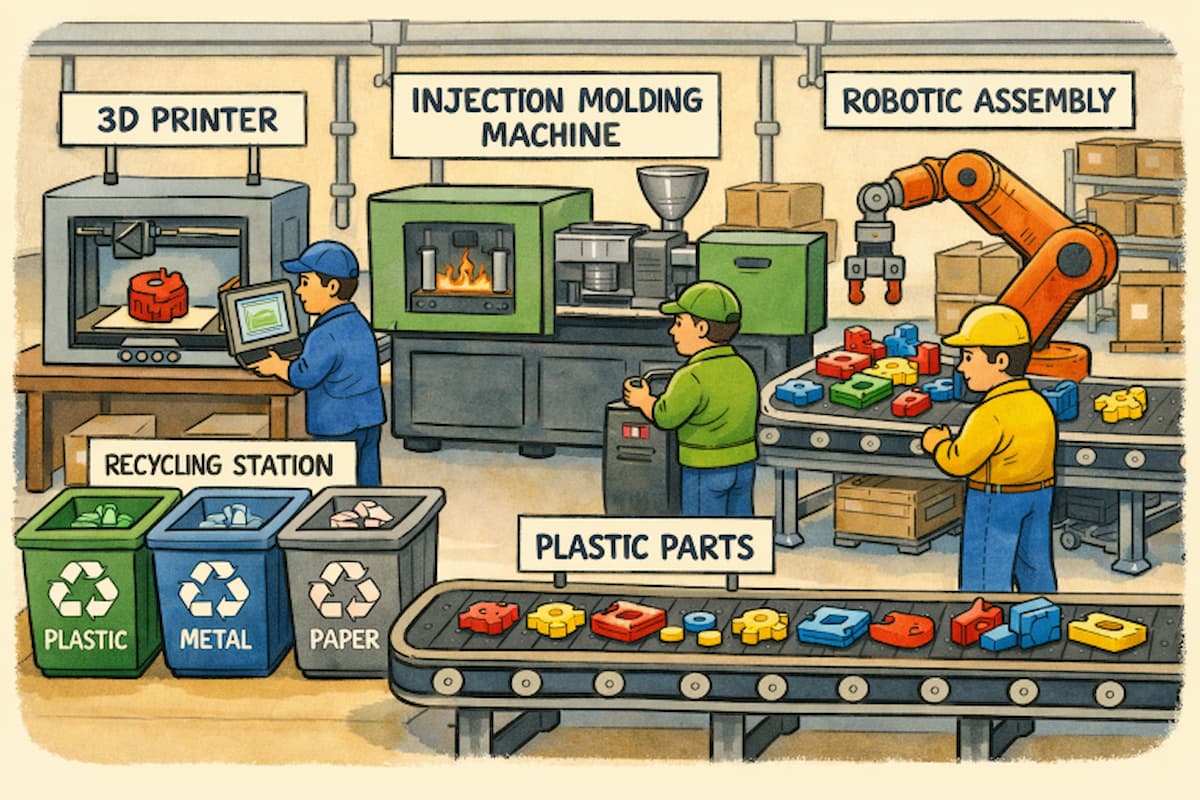
The digital transformation of manufacturing is dramatically boosting the capabilities of custom plastic parts production. 3D printing, also known as additive manufacturing, allows for the rapid creation of complex prototypes and detailed end-use parts. This technology not only shortens product lead times but also enables the on-demand production of low-volume, highly customized components. In addition, artificial intelligence (AI) and machine learning are now widely used to optimize workflows and improve quality control, as these systems can identify inconsistencies and recommend corrective actions in real time.
Meanwhile, advances in plastic injection molding and precision machining, combined with sensor-based monitoring, help manufacturers maintain tight tolerances and deliver consistent results. As TechRadar points out, improvements in CNC machining and automation enable manufacturers to achieve intricate designs with minimal waste, leading to both economic and environmental benefits.
Sustainable Practices and Materials
Sustainability is no longer a secondary consideration in plastic manufacturing. Bioplastics, derived from renewable sources such as corn starch or sugarcane, are increasingly used as alternatives to traditional petroleum-based plastics. Recycled polymers are systematically integrated into production, reducing the need for virgin materials and minimizing landfill waste. With stricter global regulations and greater consumer awareness around pollution and resource depletion, the industry is focusing on energy-efficient molding processes and closed-loop recycling systems that reclaim and reuse scrap material.
Industry leaders are investing in greener practices, such as adopting water- and energy-saving technologies during manufacturing and developing biodegradable or more easily recyclable materials. The commitment to eco-friendly manufacturing was highlighted in a recent TechRadar article, which underscores how environmental innovation is driving market differentiation and customer loyalty for many businesses.
Enhanced Customization and Precision
The ability to produce highly tailored and precise plastic components is rapidly expanding, propelled by advances in design software, AI-driven quality control, and flexible production methods. Manufacturers can now meet the unique needs of clients across demanding sectors with products that adhere to strict tolerances and specialized requirements. For instance, healthcare companies often require components with complex geometries and specific material properties for use in medical devices, and automotive manufacturers depend on custom plastic parts that meet rigorous performance and safety standards.
The use of advanced inspection equipment, such as laser scanners and automated measuring systems, ensures that every batch meets exacting specifications, reducing the likelihood of defects and costly recalls. Customization is further enhanced by the advent of digital twins and simulation tools, which allow for virtual prototyping before physical production begins. This results in fewer design errors, faster iteration cycles, and products that better match customer needs.
Future Outlook
The future of custom plastic parts manufacturing is exceptionally promising. The convergence of digital manufacturing, data-driven quality assurance, and an unwavering focus on sustainability is expected to dominate industry developments in the coming years. Manufacturers that successfully embrace these trends, streamline their supply chains, and prioritize continuous improvement will be best equipped to capitalize on emerging opportunities.
As industries demand greater product complexity, reduced lead times, and environmentally responsible manufacturing, innovation will remain at the heart of progress. Companies that invest in workforce training, advanced R&D, and next-generation materials will help shape a market defined by adaptability, reliability, and sustainability.