Table of Contents
- Evolution of Barcode Technology
- Benefits of 2D Barcodes
- RFID Inventory Solutions
- NFC Inventory Control
- Real-World Applications
- Future Trends
- Conclusion
In today’s fast-paced business environment, having a streamlined inventory management process is no longer a necessity. Traditional methods often result in human errors, misplaced stock, and costly inefficiencies. As companies search for ways to improve accuracy and speed, the use of barcode labels for inventory has become one of the most significant advances in recent years. With newer technologies now available, businesses are revolutionizing their approach to inventory management and setting new benchmarks for operational excellence.
Manual systems are increasingly becoming obsolete as organizations seek better ways to optimize their processes. Automating inventory control with modern barcode and scanning technology enables faster, more accurate data collection while reducing staff burden. These systems play a major role not only in cutting costs but also in improving customer satisfaction by helping businesses maintain accurate stock levels and minimize fulfillment delays.
Adopting automated systems has not only become essential for businesses with complex or large-scale inventories but is also a smart strategic move for small and medium-sized enterprises (SMEs) seeking to scale. Industry analysts at Forbes note that supply chain automation, often powered by advanced barcode and labeling systems, can help companies operate more resiliently in times of economic uncertainty and global disruption.
If you are interested in a broader look at supply chain trends and how automation impacts business recovery and resilience, resources such as Forbes’ analysis of supply chain automation offer valuable perspectives.
Evolution of Barcode Technology
Barcodes have evolved markedly since their introduction. Early one-dimensional (1D) barcodes, typically seen at supermarket checkouts, are limited in the amount of information they can contain and require precise alignment for scanning. As business needs expanded, these restrictions became increasingly problematic, driving the shift to two-dimensional (2D) barcodes like QR codes. These codes can store far more data and are less demanding in terms of scan orientation and print quality. This evolution has made scanning faster, more reliable, and better suited to today’s dynamic business environments.
Benefits of 2D Barcodes
The introduction of 2D barcodes has been a boon for warehouses, distribution centers, and retailers. According to GS1 US research, 2D barcodes can reduce operational costs by over 60 percent and deliver annual savings exceeding $500,000 per facility. These savings come from fewer scan failures, decreased relabeling needs, and lower shipment error rates, making the system not just faster but also more dependable in high-volume settings. With more data encoded in each scan, such as product attributes, expiration dates, or batch numbers, mistakes are minimized, and efficiency is maximized.
RFID Inventory Solutions
Radio Frequency Identification (RFID) technology is now considered a standard in advanced inventory management systems. Unlike barcodes, RFID tags do not require direct line of sight to be read and can be scanned in bulk, significantly streamlining the inventory process. This technology provides real-time visibility across supply chains, particularly in industries where tracking, authenticity, and timing are critical. For example, partnership initiatives between SK&T and Zebra Technologies demonstrate how RFID is increasing efficiency and accuracy in pharmaceutical supply chains by enabling real-time medication tracking.
NFC Inventory Control
Near Field Communication (NFC) technology represents another leap in inventory control. NFC tags, which work at short range, are tough, secure, and less susceptible to physical damage than traditional barcode labels. These properties make them exceptionally useful for managing inventory of irregularly shaped goods or high-value assets where durability and data integrity are paramount. A recent study emphasizes how NFC enhances inventory security and tracking, making it suitable for industries with stringent quality and traceability requirements.
Real-World Applications
Businesses across sectors are adopting advanced inventory technologies to improve operational efficiency. One illustrative example is Dynamic Systems Inc., whose mobile inventory application for the meat and poultry industry utilizes barcode-based tracking to manage receiving, warehousing, and shipping of stock. This solution also integrates directly with accounting and ERP systems, providing companies in regulated industries with an efficient way to comply with traceability and reporting requirements.
Future Trends
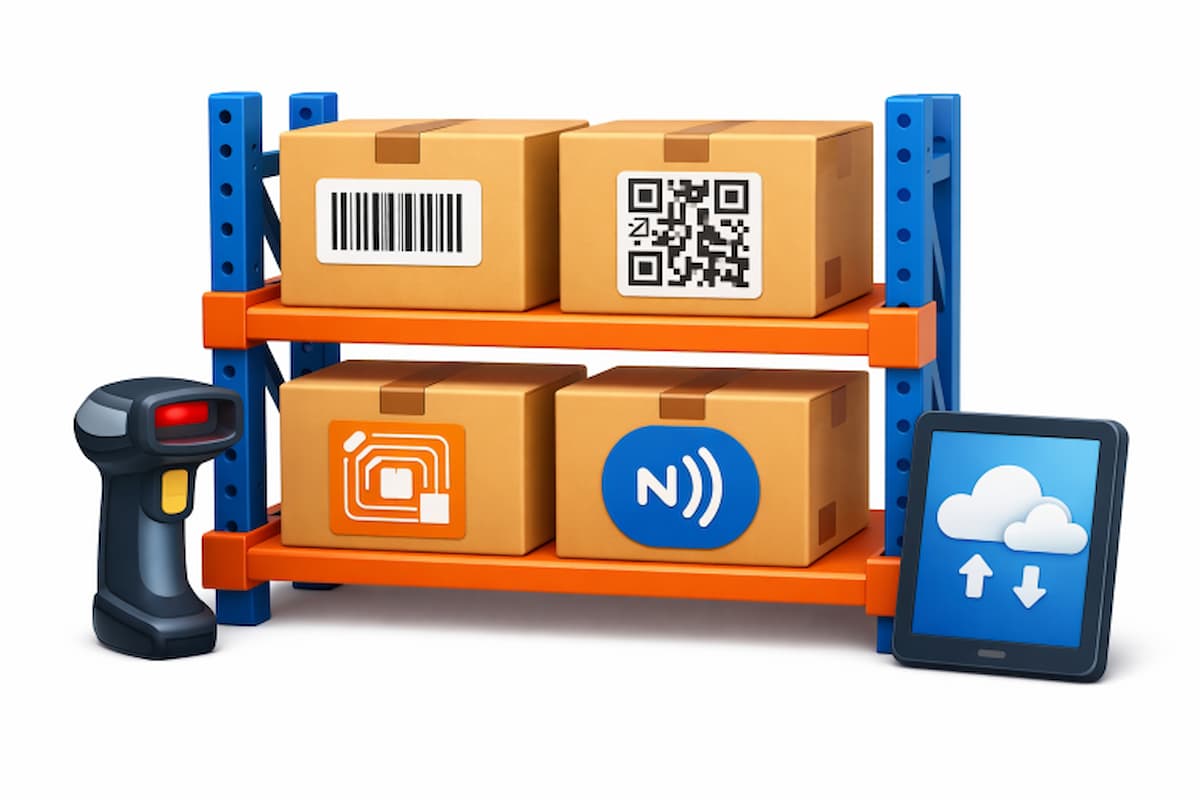
The next frontier for inventory management lies in seamlessly integrating labeling, scanning, RFID, and NFC solutions with cloud-based platforms. Sensormatic Solutions is leading in this area by offering a Platform-as-a-Service (PaaS) version of its TrueVUE Cloud inventory intelligence tool. This allows retailers to easily add RFID-based inventory tracking to existing digital infrastructures, supporting real-time analytics and advanced reporting. As these systems are further linked to artificial intelligence and the Internet of Things (IoT), the potential for business intelligence and predictive analysis is bound to grow.
Conclusion
The integration of advanced barcode technology, including 2D barcodes, RFID, and NFC, is transforming how organizations manage inventory. These innovations offer significant increases in accuracy and efficiency, substantial cost savings, and enhanced resilience in uncertain times. By investing in automated inventory management solutions, companies are well-positioned to meet the evolving demands of the modern marketplace and deliver exceptional value to their customers and stakeholders.