The Intersection of Home Exteriors and Core Systems
Maintaining a comfortable and energy-efficient home in Thousand Oaks, CA, is a year-round priority. Many homeowners focus on visible upkeep, but the true value and comfort of a property deeply depend on its hidden core systems, especially the heat pump. Overlooking regular care for these systems can lead to unexpected breakdowns, higher utility bills, and a less comfortable living environment. This guide explores the critical role of proper heat pump maintenance in Thousand Oaks, CA, in protecting your home’s integrity, maximizing efficiency, and ensuring lasting comfort, particularly given our local climate. We will discuss why proactive maintenance is key to preventing costly repairs and extending your system’s lifespan.
The concept of a home’s exterior and its core systems working in harmony is fundamental to property value and occupant well-being. While a pristine facade enhances curb appeal, it’s the efficient operation of internal mechanisms—like a well-maintained heat pump—that truly secures long-term comfort and financial benefits. Understanding this symbiotic relationship allows homeowners to make informed decisions that protect their investment.
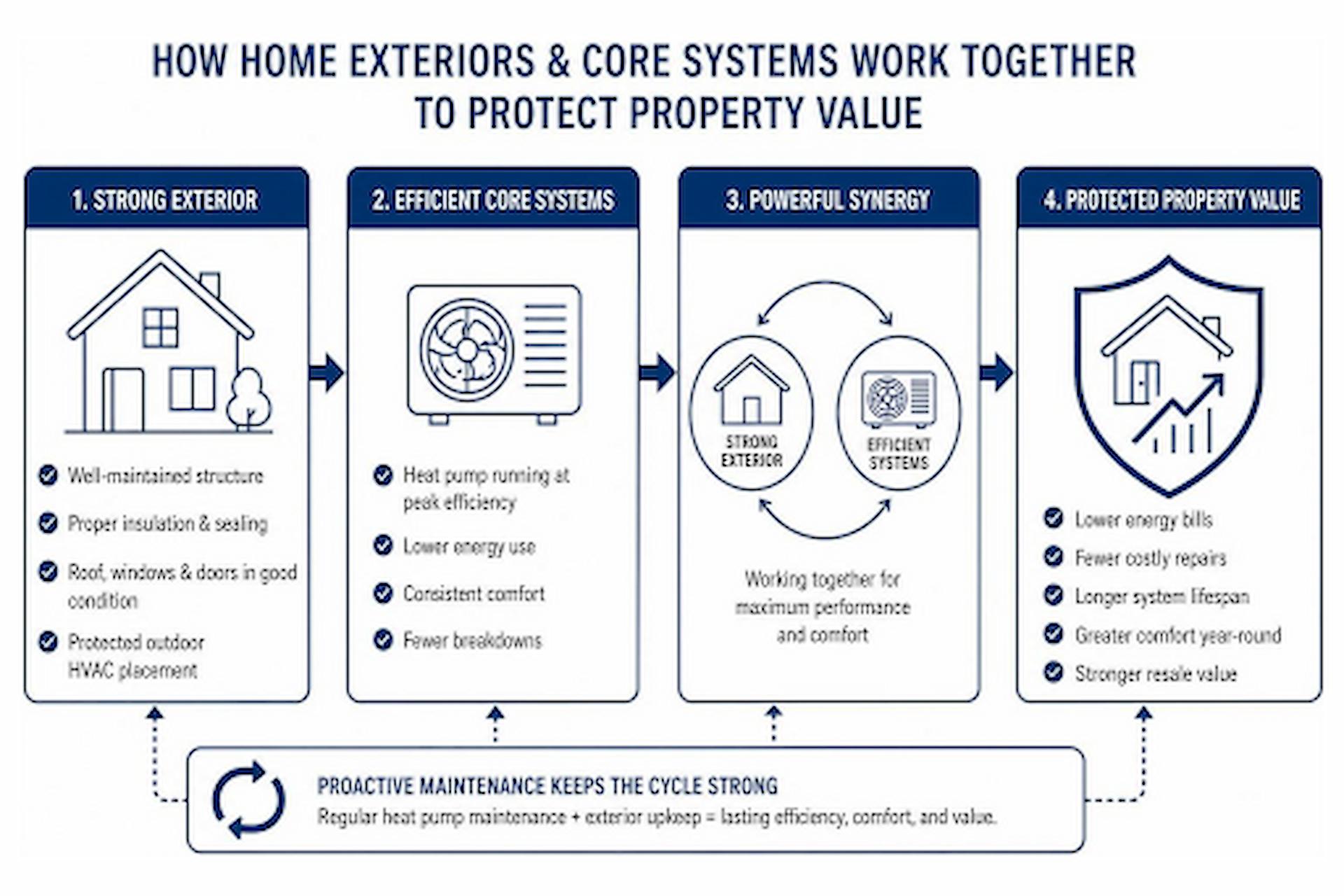
The exterior of your home, from its structural envelope to its ventilation, plays a significant role in how effectively your core systems, such as your heat pump, perform. In Thousand Oaks, where we experience mild summers and winters, the interaction between these elements is crucial for maintaining consistent indoor comfort and efficiency. Outdoor HVAC units, while robust, are exposed to the elements, making their placement and protection vital for system longevity and performance.
The structural integrity of your home’s exterior directly influences the workload of your heat pump. A well-sealed and insulated home acts as an effective thermal barrier, reducing heat gain in summer and heat loss in winter. This, in turn, allows your heat pump to operate more efficiently, consuming less energy to maintain desired indoor temperatures. Conversely, a compromised exterior with drafts or inadequate insulation forces the system to work harder, leading to increased energy consumption and premature wear.
Balancing Aesthetics and Core System Ventilation
When planning your home’s exterior aesthetics, consider your heat pump’s functional requirements. Adequate airflow clearance around the outdoor condenser unit is paramount. Shrubs, fences, or other landscaping elements placed too close can obstruct airflow, forcing the unit to work harder and reducing its efficiency. We recommend maintaining at least 18 inches of clearance around the outdoor unit to ensure optimal performance and prevent debris from accumulating. This not only protects the condenser but also ensures the system can efficiently exchange heat with the outside air, which is fundamental to its operation. Thoughtful landscaping can enhance curb appeal while still providing the space your heat pump needs to breathe, contributing to both the beauty and efficiency of your home.
Weatherproofing Your Home Exteriors and Core Systems
The climate in Ventura County, including Thousand Oaks, is generally mild, but we still experience seasonal variations that can affect your heat pump’s efficiency. Effective weatherproofing of your home’s exterior creates a vital thermal barrier, protecting your indoor environment and allowing your heat pump to perform optimally. This involves ensuring proper insulation in attics and walls, as well as meticulous draft sealing around windows and doors with quality weatherstripping. These measures prevent conditioned air from escaping and unconditioned air from entering, reducing the strain on your heat pump. Furthermore, managing moisture control is critical. Proper exterior drainage and roofing prevent water intrusion, which can lead to humidity issues indoors, requiring your heat pump to work harder to mitigate them. By fortifying your home’s envelope, you’re not just protecting the structure; you’re directly enhancing your heat pump’s ability to provide consistent comfort with less energy.
Maximizing Efficiency with Professional Heat Pump Maintenance
For homeowners in Thousand Oaks, ensuring your heat pump operates at peak efficiency is not just about comfort; it’s about significant energy savings and extending the life of a crucial home system. Professional heat pump maintenance is the cornerstone of achieving these goals. Regular tune-ups are a proactive measure that prevents minor issues from escalating into costly repairs, much like routine car service keeps your vehicle running smoothly. A well-maintained heat pump can deliver consistent performance, maintain excellent indoor air quality, and operate reliably year-round.
The benefits of professional maintenance are clear: properly maintained systems are reported to consume 10% to 25% less energy than those that are not. This directly translates to lower utility bills for you. Moreover, having your heat pump professionally maintained can increase your system’s energy efficiency by up to 25%, making it a highly worthwhile investment. To gain a deeper understanding of how these systems function and the comprehensive care they require, we encourage you to consult a core system heat pump guide that outlines best practices for maintenance and troubleshooting.
Why Thousand Oaks Climate Demands Dedicated Heat Pump Care
Thousand Oaks enjoys a Mediterranean climate characterized by warm, dry summers and mild, wet winters. While this climate is often considered ideal, it places a unique, year-round demand on heat pumps. Unlike traditional furnaces or air conditioners that specialize in one function, heat pumps in our region are constantly switching between heating and cooling modes to maintain comfortable indoor temperatures. This continuous operation means they accumulate wear and tear more rapidly than systems in more extreme climates that might only be used seasonally.
The mild nature of our climate, however, also makes heat pumps exceptionally efficient here. They excel at transferring heat, rather than generating it, which is highly effective in moderate temperature ranges. This efficiency, however, can only be sustained with dedicated care. Regular maintenance ensures the system can seamlessly transition between heating and cooling, preventing inefficiencies caused by minor component issues. Furthermore, while Thousand Oaks is not directly on the coast, residual coastal air can introduce certain particulates that may affect outdoor coils, necessitating regular cleaning to maintain optimal performance and prevent corrosion. Proactive maintenance is thus not merely a recommendation but a necessity for harnessing your heat pump’s full potential in our specific environment.
The Core System Heat Pump Maintenance Checklist
A professional heat pump tune-up involves a thorough, multi-point inspection and service designed to optimize performance and catch potential issues early. Our comprehensive checklist ensures every critical component is addressed:
- Thermostat Calibration: We verify that your thermostat accurately reads and controls temperatures, ensuring your system doesn’t overwork or underperform.
- Coil Cleaning: Both the indoor evaporator and outdoor condenser coils are meticulously cleaned. Dirt and debris on coils impede heat exchange, forcing the system to work harder and consume more energy.
- Refrigerant Levels: We check refrigerant levels to ensure they are within the manufacturer’s specifications. Incorrect levels can severely reduce efficiency and even damage the compressor.
- Electrical Connections: All electrical connections are inspected and tightened. Loose wiring can be a safety hazard and lead to system malfunctions.
- Reversing Valve Test: The reversing valve, crucial for switching between heating and cooling modes, is tested to ensure seamless operation, especially vital for year-round comfort in Thousand Oaks.
- Blower Motor Lubrication: Moving parts, particularly the blower motor, are lubricated to prevent friction, reduce wear and tear, and ensure quiet, efficient operation.
- Condensate Drain Inspection: The condensate drain line is cleared to prevent clogs that can cause water leaks, mold growth, and system shutdowns.
- Air Filter Replacement: We inspect and replace air filters, which are critical for maintaining airflow, system efficiency, and indoor air quality.
This detailed approach ensures your heat pump is ready to meet the demands of our local climate, delivering reliable comfort and maximizing energy savings.
Recognizing When Your Core Systems Need Professional Repair
Even with diligent maintenance, heat pumps, like any complex mechanical system, can sometimes develop issues that require professional attention. Recognizing the early warning signs of a malfunction can save you from more extensive and costly repairs down the line. It’s easy to overlook subtle changes, but being observant of your system’s performance is a key part of responsible homeownership. Indicators such as a noticeable reduction in airflow from your vents, unusual noises emanating from the unit, or unexpected spikes in your energy bills are red flags that your heat pump may be struggling and may need expert diagnosis. Ignoring these signals can lead to a complete system breakdown, often at the most inconvenient times, such as during a summer heatwave or a cold spell.
A heat pump that isn’t performing optimally isn’t just a comfort issue; it’s an efficiency drain. When your system struggles, it consumes more energy to maintain the same level of comfort, which directly impacts your monthly utility costs. Furthermore, persistent issues can place undue stress on critical components, potentially shortening your unit’s lifespan. We always advise homeowners in Thousand Oaks to contact a professional HVAC technician as soon as they notice any irregularities in their heat pump’s operation. Early intervention can often resolve problems quickly and prevent minor faults from escalating into major system failures.
Common Indicators of Heat Pump Malfunctions
Several specific symptoms can point to a heat pump in need of repair. Being aware of these common indicators allows you to act quickly:
- Frozen Evaporator Coils: If you notice ice buildup on the indoor evaporator coil, it often signals a problem with airflow, low refrigerant levels, or a dirty filter. This prevents the system from effectively absorbing heat.
- Blocked Condenser Coils: The outdoor condenser coil can become blocked by dirt, leaves, or other debris. When this happens, the unit struggles to both release and absorb heat, leading to reduced efficiency and potential component overheating.
- Short Cycling: A heat pump that frequently turns on and off, rather than completing a full cycle, is “short cycling.” This can be caused by an improperly sized unit, a faulty thermostat, or issues with refrigerant levels, leading to inefficient operation and increased wear.
- Inconsistent Temperatures: If some rooms in your Thousand Oaks home are significantly warmer or cooler than others, or if the system struggles to maintain a set temperature, it suggests a problem with airflow, ductwork, or the heat pump’s ability to condition air effectively.
- Ice Buildup on the Outdoor Unit: While some frost is normal during defrost cycles in winter, excessive or persistent ice buildup on the outdoor unit can indicate a problem with the defrost cycle, low refrigerant, or restricted airflow.
These issues, if left unaddressed, can lead to decreased efficiency, higher energy bills, and eventually, a complete system failure.
The Risks of Delaying Core System Inspections
Procrastinating on heat pump inspections and repairs can have significant repercussions for your home and your wallet. One of the most immediate risks is accelerated component wear. When a system operates with an underlying issue, components such as compressors, fan motors, and electrical components are forced to work harder, leading to premature failure. This often results in more expensive repairs than if the problem had been caught early.
The most critical component, the compressor, is particularly vulnerable. A failing compressor can be one of the costliest repairs, sometimes even necessitating a full system replacement. Delaying inspections also significantly increases the likelihood of emergency breakdowns. Imagine your heat pump failing during a peak heatwave in Thousand Oaks or on a chilly winter night. These unexpected failures are not only inconvenient but also typically incur higher service charges for urgent repairs.
Furthermore, a malfunctioning heat pump can degrade indoor air quality. Issues like clogged filters or dirty coils can circulate dust, allergens, and other particles throughout your home, affecting your family’s health and comfort. Finally, neglecting regular professional maintenance and timely repairs can void your manufacturer’s warranty. Many warranties require proof of annual servicing to remain valid, leaving you responsible for the full cost of major repairs if you haven’t maintained your system. Proactive inspection is an investment in your peace of mind and your home’s long-term health.
Frequently Asked Questions About Home Exteriors and Core Systems
Homeowners often have specific questions about maintaining their heat pumps and how these systems integrate with their overall home care. Here, we address some of the most common inquiries to provide clarity and guidance.
How often should I schedule professional heat pump maintenance in Thousand Oaks, CA?
Given the mild climate and year-round use of heat pumps in Thousand Oaks, we highly recommend scheduling professional maintenance at least once a year. However, for optimal performance and efficiency, especially if your heat pump is your sole heating and cooling source, semi-annual tune-ups are ideal. This means scheduling service before the heating season (typically in the fall) and again before the cooling season (in the spring). This ensures your system is properly prepared for the specific demands of each period, addressing any wear and tear that accumulated during the previous season. Regular servicing helps to identify potential issues early, improve efficiency, and extend the lifespan of your system, ensuring it’s always ready to provide comfort.
What is the typical lifespan of a well-maintained residential heat pump?
The lifespan of a residential heat pump can vary significantly based on several factors, including the unit’s quality, usage, and, most importantly, the consistency of its maintenance. Generally, with proper care and regular professional tune-ups, a heat pump can last anywhere from 10 to 15 years. However, systems that receive premium, consistent care—such as semi-annual servicing and prompt attention to minor repairs—have been observed to last even longer, often reaching 15 to 20 years. The impact of maintenance is undeniable; neglecting regular service can significantly shorten a heat pump’s operational life, leading to premature replacement and increased long-term costs. Investing in routine maintenance is a direct investment in your system’s longevity.
How does regular maintenance help reduce monthly household energy bills?
Regular heat pump maintenance plays a crucial role in significantly reducing your monthly household energy bills by ensuring your system operates at peak efficiency. Properly maintained heat pumps consume less energy because all their components are clean, calibrated, and working in harmony. For instance, clean air filters and unobstructed coils allow for optimal airflow and heat exchange, preventing the system from overworking. Systems that are properly maintained are reported to consume 10% to 25% less energy than those that are not. This efficiency boost means your heat pump doesn’t have to work as hard to reach desired temperatures, directly translating into lower energy consumption and noticeable savings on your utility bills each month. It’s a proactive step that pays dividends in energy savings over the life of your unit.
Conclusion
The synergy between your home’s exterior and its core systems, particularly your heat pump, is fundamental to creating a comfortable, efficient, and valuable living space in Thousand Oaks. Viewing your home as a holistic investment means understanding that proactive care for your heat pump is as vital as maintaining your roof or landscaping. Regular, professional heat pump maintenance is not merely an expense; it is an essential investment that secures long-term comfort, enhances energy efficiency, and protects your home’s structural integrity by preventing unexpected issues.
By prioritizing professional HVAC partnerships, you ensure your heat pump receives the expert attention it needs to perform optimally year after year. This commitment to maintenance helps to extend the lifespan of your system, reduce costly emergency repairs, and consistently lower your energy bills. A well-maintained heat pump contributes significantly to your peace of mind, ensuring consistent indoor comfort year-round.