Table of Contents
- Why Seasonal Plumbing Attention Matters in Rogers
- Complete This Fall Plumbing Check
- Protect Pipes During a Cold Snap
- Prepare Drains and Sewer Lines Before Heavy Rain
- Watch for Hidden Leaks and Water Heater Problems
- Create a Storm and Freeze Emergency Plan
- When to Call a Plumbing Professional
- Residential and Commercial Needs Are Different
- Common Questions From Rogers Property Owners
- Final Checklist
Rogers property owners deal with more than routine drips and clogged sinks. Northwest Arkansas weather can move from hot, humid conditions to hard freezes, while heavy rain can overwhelm weak drainage, expose sewer problems, and send water toward foundations. Older homes, crawl spaces, garages, exterior walls, and busy commercial buildings often have plumbing components that need extra attention before the weather changes.
Using a seasonal checklist is a practical way to find small problems before they become expensive damage. When repairs, drainage concerns, or system inspections require professional help, plumbing Rogers, AR services from Trade Pro Plumbing provide a local option for residential and commercial properties in Rogers and throughout Northwest Arkansas. The company handles work including leak repairs, drain cleaning, water heater service, pipe repair and replacement, inspections, and backflow prevention, giving it relevant experience with the needs of homes, restaurants, offices, and retail spaces.
Why Seasonal Plumbing Attention Matters in Rogers
Temperature swings can place stress on exposed supply lines, outdoor faucets, water meters, and irrigation connections. A severe rain event can reveal clogged floor drains, blocked sewer lines, poor downspout placement, or outdoor drain grates covered by leaves and mulch. Construction and continued growth can also make it important to watch for changing drainage patterns around a property.
The goal is not to predict every problem. It is important to know where water enters the building, where it drains, and how to shut it off quickly if something goes wrong.
Complete This Fall Plumbing Check
- Inspect outdoor faucets for drips, cracks, loose handles, and damaged connections.
- Disconnect, drain, and store garden hoses before freezing weather arrives.
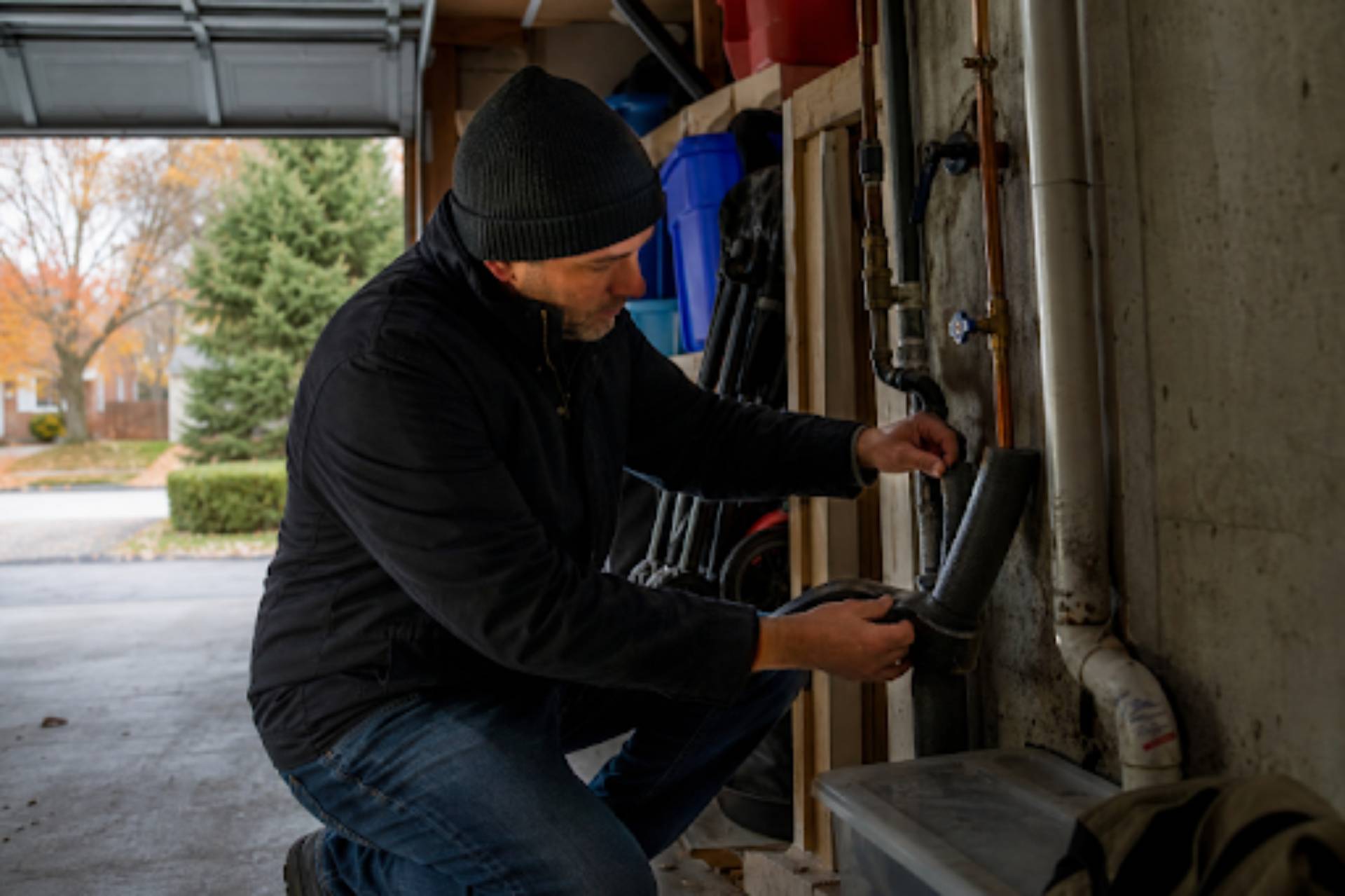
- Look at exposed pipes in garages, crawl spaces, attics, and utility rooms.
- Replace missing pipe insulation and seal openings that allow cold air inside.
- Test the main water shutoff valve carefully, then make sure household members know its location.
Local winter preparation should also include the meter area. Protecting water meters and exposed pipes from freezing is especially important when below-freezing temperatures last for several days. Keep the meter lid intact, protect vulnerable pipes, and address damaged outdoor connections before a cold snap arrives.
Protect Pipes During a Cold Snap
Keep indoor temperatures steady, including when a property is vacant. Open sink cabinet doors where pipes run along exterior walls, and close garage doors fully when supply lines pass through the garage. For a pipe known to be vulnerable, a small trickle from an indoor faucet may help keep water moving during an unusually severe cold.
Never use an open flame to thaw plumbing. A frozen pipe may not visibly leak until temperatures rise and the ice releases. If a pipe is cracked, bulging, or leaking, shut off the water supply if it is safe to do so and arrange repairs promptly.
Prepare Drains and Sewer Lines Before Heavy Rain
Rainwater should move away from the building, not collect against the foundation or enter low spots near doors and crawl spaces. Clear leaves from area drains, keep outdoor grates visible, and direct downspouts away from the structure. Check floor drains and crawl-space drains for slow flow before a major storm.
Gurgling fixtures, sewage odors, repeated clogs, and backups are warning signs that deserve attention. Property owners planning drainage changes or reporting flooding can use the City of Rogers stormwater information and reporting resources to understand local drainage and flood-related concerns.
Watch for Hidden Leaks and Water Heater Problems
A hidden leak can waste water long before it becomes obvious. Check whether the water meter moves when every fixture is off. Also look for water stains, damp or soft flooring, warm spots on floors, musty odors, unexplained pressure changes, and higher water bills without a matching increase in use.
Water heaters deserve a simple seasonal inspection as well. Look for puddles, rust, corrosion, unusual noises, loose connections, or inconsistent hot water. Keep stored items away from the unit, avoid adjusting gas controls without proper knowledge, and have older or leaking equipment evaluated by a qualified professional.
Create a Storm and Freeze Emergency Plan
- Locate and label the main water shutoff valve.
- Save contact information for the water utility and a plumbing professional.
- Keep towels, buckets, pipe insulation, and basic tools accessible.
- Identify fixtures and pipes located along exterior walls.
- Photograph existing plumbing conditions for insurance documentation.
- Consider shutting off water before leaving during a severe freeze, when appropriate for the property and its heating system.
When to Call a Plumbing Professional
Professional help is appropriate for burst pipes, active leaks, water heater failures, sewer backups, recurring drain clogs, low pressure, or any issue where the source cannot be safely identified. Fast action can limit damage to drywall, flooring, insulation, inventory, and building systems.
Residential and Commercial Needs Are Different
- Homes: Prioritize frozen pipes, fixture leaks, water heaters, drains, and sewer lines.
- Restaurants: Monitor grease traps, floor drains, hot water availability, and backup risks.
- Offices: Inspect restrooms, supply lines, utility rooms, water heaters, and shutoff locations.
- Retail properties: Check public restrooms, entrance drainage, utility closets, and systems that could interrupt customer access.
Common Questions From Rogers Property Owners
How cold does it need to be for pipes to freeze?
Exposed or poorly insulated pipes can freeze when temperatures remain below 32 degrees Fahrenheit. Wind, insulation quality, pipe location, and the duration of cold weather all affect the risk.
Should every faucet drip during a freeze?
No. A small drip can help protect especially vulnerable lines, but it does not replace insulation, winterization, or repairs.
Can heavy rain cause a sewer backup?
Yes. Blocked drains, damaged sewer lines, root intrusion, and overloaded drainage systems can all contribute. Repeated backups require inspection.
Final Checklist
- Protect faucets, meters, hoses, and exposed pipes.
- Inspect shutoff valves, drains, cleanouts, and water heaters.
- Clear drainage areas before major rainfall.
- Watch for unexplained water use, odors, slow drains, and moisture.
- Schedule service when a problem returns or worsens.
A few minutes spent checking insulation, hoses, drains, shutoff valves, and water heaters can help Rogers homes and businesses avoid a much larger repair. The best time to find a weak point is before the next hard freeze or heavy Arkansas storm puts the plumbing system to the test.