Key Takeaways
- Flooring should be selected based on each room’s moisture, traffic, comfort, and cleaning needs.
- Wet areas, bedrooms, entryways, and below-grade rooms often require different performance features.
- Subfloor preparation, product specifications, and installation details affect how well a floor performs over time.
- Samples should be reviewed in the actual room, under changing daylight and indoor lighting.
- A coordinated whole-home plan can use several materials without making rooms feel disconnected.
Choosing new flooring is about more than finding a color that looks good in a showroom. Bentonville homeowners need surfaces that can handle active households, muddy shoes after rain, pet traffic, family gatherings, and the daily demands of each individual room. A thoughtful plan for Bentonville flooring installation begins by matching the material to the way the space is actually used.
One flooring type can create a consistent look across an open layout, but it is not always the right practical choice for every area. A soft carpet that feels inviting in a bedroom may be difficult to maintain near an exterior door, while a water-resistant floor may make more sense near a kitchen sink or laundry appliances.
Five Questions To Ask Before Choosing A Floor
- How much traffic does the room receive? Busy spaces benefit from surfaces designed to resist scratches, dents, and visible wear.
- Will the floor face moisture? Kitchens, bathrooms, laundry rooms, and basements need careful attention to water exposure and edge protection.
- Does comfort matter most? Bedrooms and offices may benefit from softer, quieter materials or area rugs.
- How much upkeep is realistic? Choose a floor that fits the household’s cleaning habits rather than an ideal routine that may be hard to maintain.
- What is beneath the existing floor? An uneven, damp, or damaged subfloor can create problems even when the finished material is high quality.
Homeowners comparing materials, finishes, and installation requirements can also get a clearer sense of available options by visiting a local flooring store before committing to a product based on a small online image.
Best Flooring for Kitchens and Dining Areas
Kitchens and dining rooms need flooring that withstands spills, dropped cookware, chair movement, food stains, and regular cleaning. Luxury vinyl, porcelain tile, ceramic tile, engineered wood, and some laminate products can all be considered, depending on the product’s stated moisture limitations.
Tile is durable and simple to wipe clean, although grout requires attention, and hard surfaces can feel tiring during long meal preparation. Luxury vinyl offers a resilient surface and many wood- or stone-look styles. Engineered wood can add warmth, but homeowners should review manufacturer guidance before placing any wood-based product near sinks, dishwashers, or refrigerator water lines. Anti-fatigue mats can improve comfort in frequently used work zones.
Bathrooms, Laundry Rooms, and Moisture-Prone Areas
Porcelain tile, ceramic tile, waterproof vinyl, and luxury vinyl tile are common choices for bathrooms and laundry rooms. In these spaces, surface material is only part of the decision. Seams, transitions, baseboards, toilet connections, and the condition of the subfloor all matter when a leak occurs.
Water-resistant and waterproof are not interchangeable descriptions. A water-resistant product may tolerate routine spills when cleaned promptly, whereas a waterproof product is designed to resist water penetration under stated conditions. Neither label eliminates the need to address leaks, standing water, or moisture beneath the floor.
Living Rooms, Bedrooms, and Home Offices
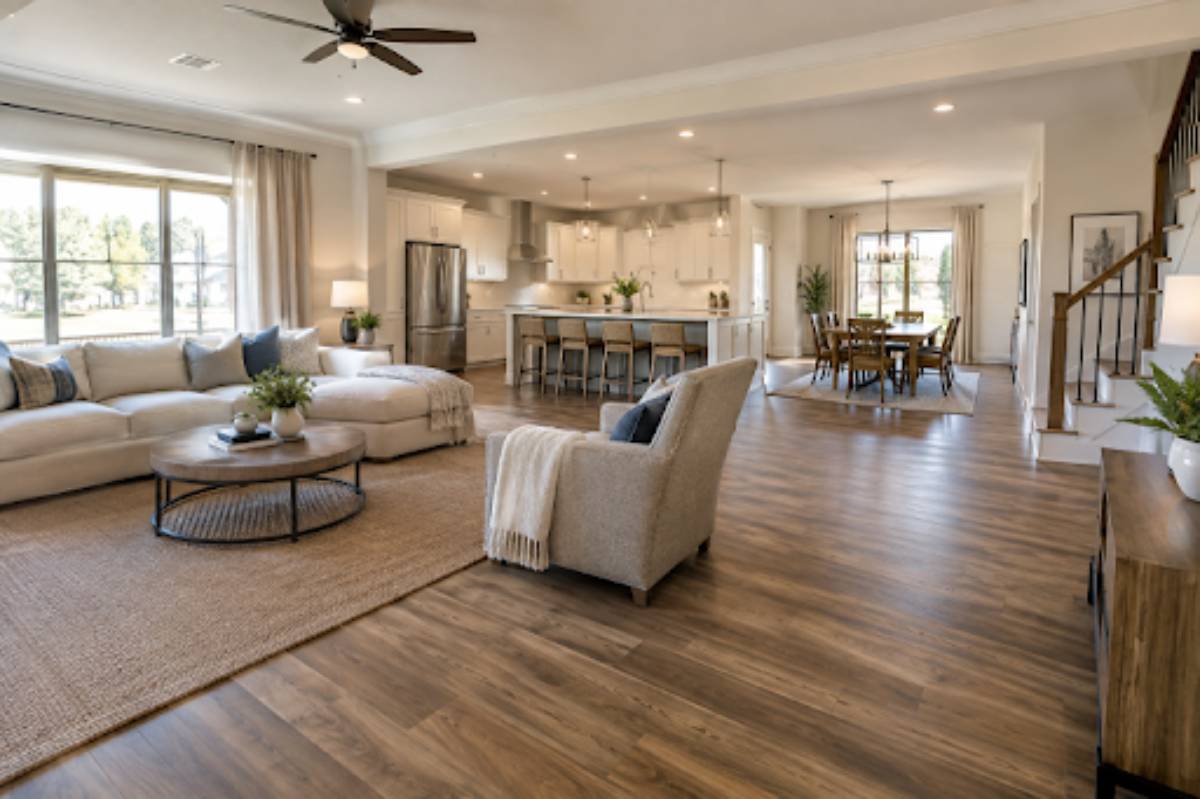
Living rooms and connected gathering spaces often balance appearance with durability. Hardwood and engineered wood provide a classic look, while luxury vinyl and laminate may offer practical alternatives for homes with pets, children, or frequent visitors. Tile can work well in certain designs, but area rugs can soften the feel and reduce sound.
For bedrooms, carpet remains a strong option for warmth, quiet footsteps, and underfoot comfort. Engineered wood, hardwood, laminate, or luxury vinyl paired with rugs can also work well. In a home office, consider how rolling chairs will move across the surface and select a carpet pad or chair mat appropriate for the traffic level. Independent flooring evaluations can help shoppers compare common materials for durability-related characteristics such as scratching, staining, and moisture performance.
Entryways, Hallways, Mudrooms, and Basements
Entryways and hallways experience heavy foot traffic and can accumulate grit, rainwater, and mud. Porcelain tile, ceramic tile, luxury vinyl, laminate, and properly sealed wood may all be viable choices. Textured finishes, doormats, routine sweeping, and patterns that disguise minor marks can make these areas easier to manage. Before choosing a thicker material or underlayment, measure door clearances and transitions.
Basements require a moisture-first approach. Inspect concrete for signs of dampness, leaks, or unevenness before selecting flooring. Luxury vinyl, sheet vinyl, tile, and products specifically rated for below-grade use may be appropriate. Traditional solid hardwood is often less suitable where moisture and temperature changes are concerns. Fixing underlying water issues should come before installation.
Quick Comparison of Common Flooring Materials
- Hardwood: Warm, repairable, and visually enduring, but more vulnerable to dents and moisture.
- Engineered wood: A real wood surface with layered construction, though it still has product-specific moisture limits.
- Luxury vinyl: Often useful for busy or moisture-prone spaces and available in many visual styles.
- Laminate: Can provide a decorative, durable surface, but exposed edges and moisture requirements deserve close review.
- Tile: A durable choice for wet and high-traffic locations, although it can feel hard or cool underfoot.
- Carpet: Soft and quiet, but best placed away from regular moisture and maintained with vacuuming and prompt spot treatment.
Installation and Indoor Air Quality Details
An attractive floor can still fail prematurely when installed over an uneven, damp, or unstable surface. Ask whether the estimate includes removal, leveling, moisture testing, underlayment, transitions, trim work, and disposal. Follow product instructions for acclimation, adhesives, cleaning, and warranty care.
During a remodeling project, dust control and ventilation deserve attention. The EPA recommends maximum ventilation during flooring installation and for at least 72 hours afterward, when work may release pollutants. Containing the work area and following adhesive or finish instructions can also help protect occupied parts of the home.
Review Samples Before Buying
- Place samples beside cabinets, trim, walls, and furniture.
- View them during morning, afternoon, and evening lighting.
- Compare texture, sheen, plank variation, grout color, and transitions.
- Confirm waste allowances, replacement availability, and care requirements before ordering.
- Keep extra material for future repairs when practical.
Conclusion
The best flooring choice for a Bentonville home should reflect daily use rather than simply follow a trend or display sample. By considering moisture, traffic, comfort, maintenance, subfloor conditions, and installation details, homeowners can create a cohesive flooring plan that performs well. For personalized recommendations based on your specific needs, consult professionals experienced in flooring installation and design.