

Understanding Florida VPK and Eligibility in Brevard County
Florida’s Voluntary Prekindergarten (VPK) program is a state-funded initiative designed to provide free early education for all eligible four-year-olds residing in Florida. This program is a significant investment in our children’s future, aiming to equip them with the foundational skills necessary for success in kindergarten and beyond. Unlike some other early learning programs, VPK is universally accessible, meaning eligibility is not based on family income.
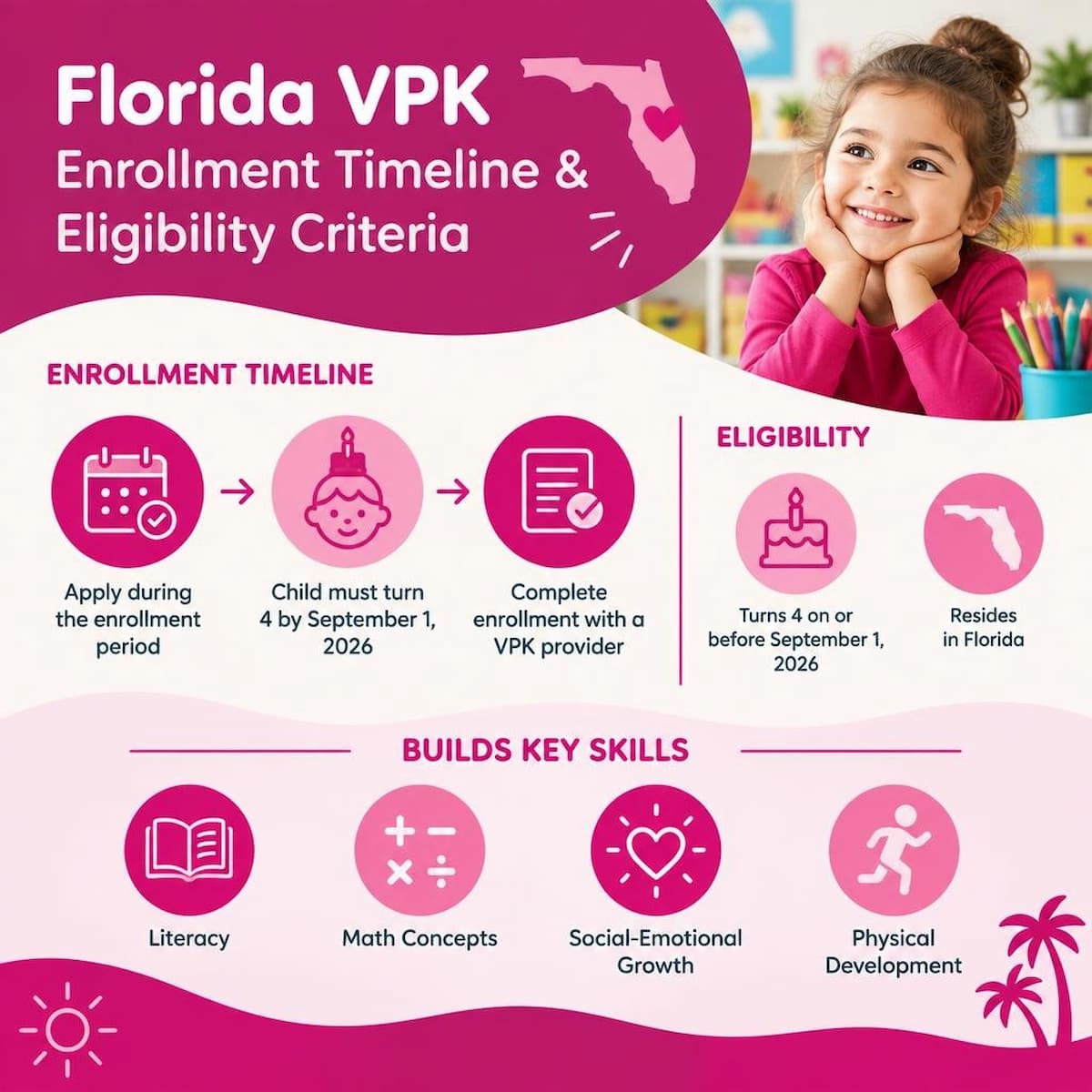
For your child to be eligible for the free VPK program in the 2026-2027 school year, they must turn four years old on or before September 1, 2026. This age cutoff is strict, but there are provisions for children with fall birthdays, which we’ll discuss later. Residency in Florida is also a key requirement. The program covers the cost of instruction, ensuring that every qualifying child in Brevard County has access to quality early learning experiences.
VPK programs focus on developing essential skills across various domains, including literacy, math concepts, social-emotional growth, and physical development. This comprehensive approach helps foster a love of learning and prepares children for the academic and social demands of elementary school.
Understanding the timeline and criteria is crucial for a smooth enrollment process.
How to Choose a Quality Pineapple Cove Free VPK Provider
Selecting the right VPK provider for your child is one of the most important decisions you’ll make in their early educational journey. While all VPK programs must meet state standards, the quality of implementation, teaching staff, and learning environment can vary. When searching for a “free VPK near me” in Brevard County, consider factors beyond just proximity. Look for indicators of quality such as a provider’s kindergarten readiness rates, teacher credentials, student-to-teacher ratios, and the overall classroom atmosphere. For instance, exploring options like Pineapple Cove free VPK can give you a benchmark for what a high-quality program offers.
Evaluating Curriculum Standards and Kindergarten Readiness
A strong VPK program will align its curriculum with Florida’s Early Learning and Developmental Standards. These standards cover a broad range of developmental areas, including:
- Language and Literacy: Phonological awareness, vocabulary development, early reading skills.
- Mathematical Thinking: Number sense, patterns, problem-solving.
- Social-Emotional Development: Self-regulation, cooperation, empathy.
- Physical Development: Fine and gross motor skills.
- Scientific Inquiry and Creative Expression.
Providers should be able to articulate how their daily activities and instructional support contribute to these standards. Many programs use assessments like the Florida Assessment of Student Thinking (FAST) for early learners to track progress and ensure children are on track for kindergarten. Don’t hesitate to ask about a provider’s kindergarten readiness rates, often available through the Florida Department of Education’s VPK site, as this can be a strong indicator of program effectiveness.
Comparing Wrap-Around Care and Schedule Flexibility for Pineapple Cove Free VPK
While the VPK instructional hours are free, many families require additional childcare beyond the core VPK schedule. This is where “wrap-around care” comes into play. Providers often offer extended-day programs, before-school care, and after-school care for an additional tuition fee. When comparing providers, inquire about:
- Schedule Options: How are the VPK hours structured (e.g., five 3-hour days, three 6-hour days)?
- Availability of Wrap-Around Care: Do they offer care that aligns with your working parent schedule?
- Costs of Extended Care: Understand the optional tuition fees for these additional services, including holiday coverage or meal plans.
- Flexibility: Can you adjust wrap-around care hours as needed?
Understanding these options upfront will help you budget and ensure the program fits your family’s needs.
Step-by-Step Guide to Applying for Your VPK Certificate of Eligibility
The first crucial step to enrolling your child in a free VPK program in Brevard County is to obtain a Certificate of Eligibility (COE). This certificate verifies your child’s eligibility and is required by any VPK provider you choose. The application process is managed through the Florida Early Learning Family Portal, overseen by the Office of Early Learning.
Required Documentation and Application Portals
To apply for your VPK Certificate of Eligibility, you will need to gather several key documents. Having these ready before you begin the online application will streamline the process:
- Valid Photo ID: A current driver’s license or state ID for the parent or legal guardian.
- Child’s Birth Certificate: An original or certified copy of your child’s birth certificate.
- Florida Proof of Residency: Documentation showing your physical address in Florida. Acceptable forms include a utility bill (electric, water, gas), a residential lease agreement, a mortgage statement, or a Florida driver’s license with your current address. A P.O. Box is not sufficient.
Once you have these documents, you will upload digital copies through the Florida Early Learning Family Portal. We recommend applying early in the enrollment year, typically starting in January, as this gives you ample time to secure your COE and choose a provider.
Partnering with Local Coalitions and Pineapple Cove Free VPK Centers
After submitting your application online, the Early Learning Coalition of Brevard County (ELC Brevard) plays a vital role in assisting families. ELC Brevard is your local resource for VPK information and support. They can help with:
- Application Assistance: If you encounter any issues with the online portal or require help uploading documents, their team can provide guidance. You can contact their CCR&R Parent Line at 321-637-1800 ext. 8573 or visit their offices in Rockledge or Melbourne.
- Provider Directory: ELC Brevard maintains a comprehensive list of approved VPK providers in the county, which you can use to find centers near you.
- Developmental Screenings: They can also provide information on developmental screenings for your child if needed.
Once your application is approved, you will receive your Certificate of Eligibility. You will then need to present this COE to your chosen VPK provider to complete your child’s enrollment.
Comparing Program Formats, Schedules, and Attendance Policies
Florida’s VPK program offers flexibility in how instructional hours are delivered, primarily through two main formats: the School-Year Program and the Summer Program. Understanding these differences, along with attendance requirements, is crucial for parents.
School-Year vs. Summer VPK Formats
The two primary VPK program formats cater to different family needs and learning paces:
Feature School-Year VPK Summer VPK Instructional Hours 560 hours 300 hours Duration Typically August/September to May/June Intensive, usually June to August Daily Schedule Often 3-4 hours/day, 5 days/week More intensive, often 6-7 hours/day, 5 days/week Eligibility Children turning 4 by Sept 1, 2026 Children turning 4 by Sept 1, 2026, and not yet enrolled in kindergarten Pace Spread out, allowing for gradual learning Condensed, learning The School-Year Program provides 560 instructional hours, typically spread over the traditional academic year. This often translates to about 3 to 3.5 hours per day, five days a week. Some providers may offer alternative schedules, such as three longer days per week, to accommodate family needs. This format allows for a more gradual and consistent learning experience.
The Summer Program offers 300 instructional hours delivered over an intensive six to eight-week period during the summer months. This option is ideal for children who may have missed the school-year enrollment, or for families who prefer a condensed learning experience before kindergarten. These programs often run for longer daily hours, sometimes 6-7 hours per day.
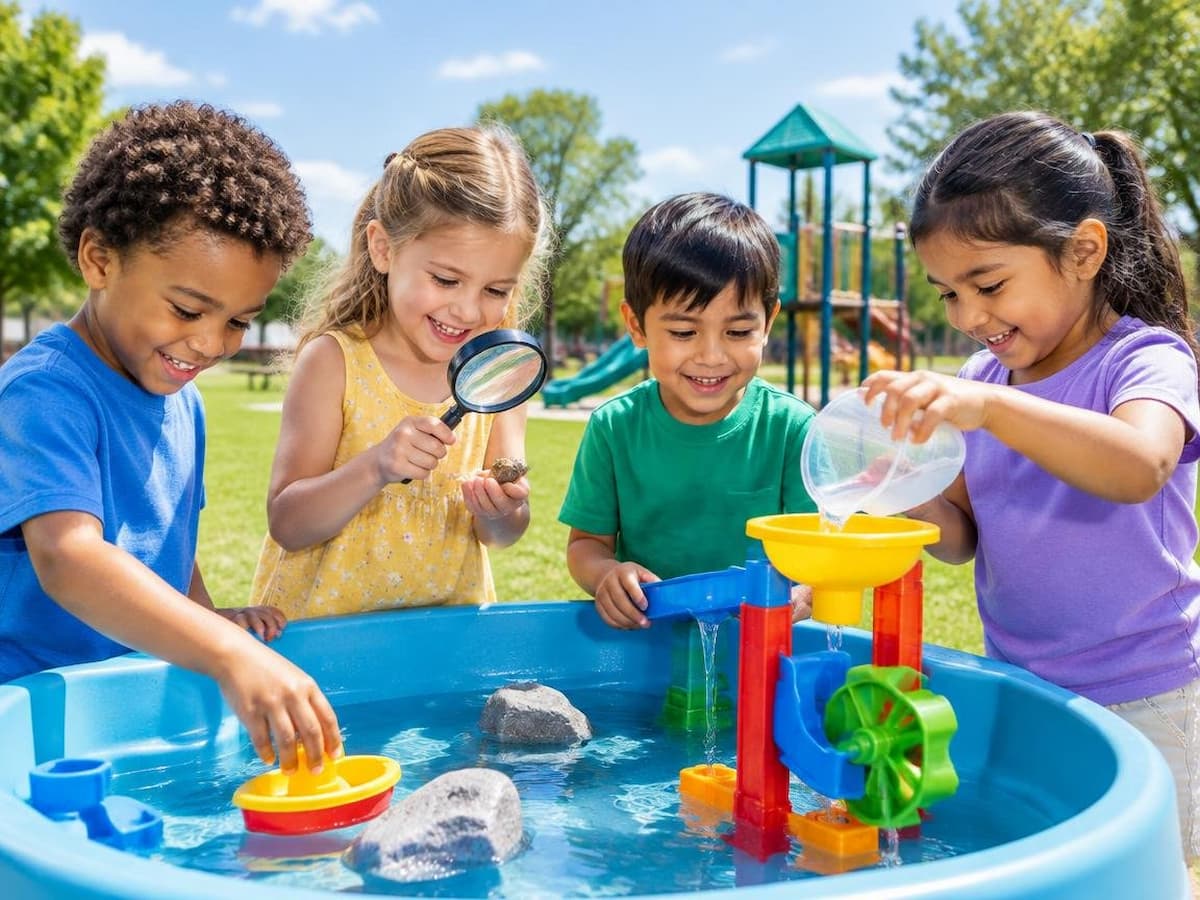
Both formats are taught by certified instructors and aim to deliver a high-quality curriculum. When choosing, consider your child’s learning style and your family’s schedule.
Managing the 80 Percent Attendance Rule and Extended Care Fees
VPK programs have strict attendance requirements because state funding is tied to student participation. Parents must ensure their child attends a minimum of 80% of the contracted instructional hours. If a child’s attendance falls below this 80% threshold, the state may reduce payments to the provider for the missed time.
While occasional absences due to illness or family emergencies are understood, consistent absenteeism can lead to concerns. Providers track attendance diligently, and if a child misses more than 20% of their scheduled VPK hours without documented medical excuses, it can impact the program’s funding and potentially your child’s continued enrollment. Open communication with your VPK provider about any anticipated absences is always the best practice.
While VPK instruction is free, any wrap-around care (before/after school care, extended day) comes with additional fees. These costs are separate from the VPK program and are billed directly by the provider. Always clarify the payment policies for these extended services before enrolling.
Specialized Options: SIS Programs, Age Exceptions, and Alternative Pre-K
While Florida VPK is a fantastic option, it’s important to be aware of specialized programs and alternative pre-K options that might better suit certain children or family situations.
Program Eligibility Criteria Costs Service Model Florida VPK 4 years old by Sept 1, Florida resident Free (instructional hours) State-funded, school-year or summer, universal VPK Specialized Instructional Services (SIS) 4 years old by Sept 1, Florida resident, documented IEP Free (instructional hours) State-funded, tailored for special needs, therapy-focused Head Start 3-5 years old, income-eligible (federal poverty guidelines) Free Federally funded, comprehensive services (health, nutrition, family support) District Title I Pre-K Varies by district, often income-based or at-risk criteria Free Public school district-funded, often full-day The VPK Specialized Instructional Services (SIS) Education Program is specifically designed for four-year-olds with special needs who have an Individualized Education Program (IEP). This program offers tailored services such as speech therapy, occupational therapy, and other specialized instruction, aiming to address the unique developmental needs of these children within a VPK framework.
For children whose birthdays fall after the September 1 cutoff, or for those who may benefit from an extra year of development before kindergarten, Florida offers an age flexibility rule. Parents can choose to postpone VPK enrollment for children born between February 2nd and September 1st, allowing them to participate in VPK as a five-year-old. This can be a valuable option for children who might need more time to mature socially or academically.
Beyond VPK, other free or low-cost preschool options exist:
- Head Start: A federally funded program for children from birth to age five from low-income families. Head Start offers comprehensive services, including early learning, health, nutrition, and family support. Eligibility is primarily income-based.
- Public School Pre-K Programs (Title I): Many public school districts in Florida offer their own pre-kindergarten programs, often funded through Title I. These programs typically target children from low-income families or those identified as being at risk for school failure. Eligibility criteria vary by district.
It’s worth exploring these alternatives if your child has specific needs or if your family’s circumstances align with their eligibility requirements.
Frequently Asked Questions About Florida Pre-K Programs
Navigating early childhood education can bring up many questions. Here are some of the most common inquiries about Florida’s VPK program:
Is Florida VPK completely free for all four-year-olds regardless of household income?
Yes, Florida’s Voluntary Prekindergarten (VPK) program is completely free for all eligible four-year-olds, regardless of family income. The state fully funds the instructional hours (560 for school-year, 300 for summer). There are no registration fees or tuition costs for the core VPK program. However, as discussed, parents are responsible for any additional costs associated with wrap-around care or extended hours beyond the free VPK instructional time.
What happens if a child misses more than 20 percent of contracted VPK hours?
If a child misses more than 20 percent of their contracted VPK instructional hours, the state reduces the payment to the VPK provider for those missed hours. This policy is in place to ensure accountability and maximize the benefits of the program for enrolled children. While providers understand that children will have some absences, consistent or excessive absences can impact the program’s funding and may lead to discussions about the child’s continued enrollment. It’s essential for parents to communicate any prolonged absences with their VPK provider and to provide documentation for medical reasons when possible.
Can parents postpone VPK enrollment if a child’s birthday falls between February and September?
Yes, Florida law includes an age flexibility rule that allows parents to postpone VPK enrollment for children born between February 2nd and September 1st. This means that if your child turns four by September 1st, 2026, but you feel they would benefit from an extra year of development before starting VPK, you can defer their enrollment. They would then be eligible to participate in the VPK program as a five-year-old in the 2027-2028 school year, before entering kindergarten. This option provides valuable flexibility for parents who want to ensure their child is truly ready for the academic and social demands of early schooling.
Conclusion
Choosing the right VPK program is a significant step in supporting your child’s early childhood milestones and ensuring a smooth transition to kindergarten. Florida’s free VPK program offers an incredible opportunity for all eligible four-year-olds in Brevard County to gain a strong educational foundation, fostering their cognitive, social, and emotional development.
By understanding the eligibility criteria, navigating the application process for your Certificate of Eligibility, and carefully evaluating provider quality and program formats, you can make an informed decision that best suits your family’s needs. Investing in early learning is an investment in your child’s long-term academic success and overall well-being. Take advantage of this valuable resource to give your child the best possible start on their exciting educational journey.