Key Takeaways
- Compare cannabis products by format first, then review potency using the measurement that fits that format.
- For edibles, beverages, and capsules, THC per serving is usually more useful than the total THC listed for the package.
- Check ingredients, cannabinoids, dates, batch details, seals, and laboratory information before buying.
- A QR code connected to a Certificate of Analysis can help confirm information for a specific batch.
- Choose a serving size and product format that fit your experience level, plans, and comfort level.
In New York City, cannabis shoppers have more choices than ever, from flower and pre-rolls to beverages, gummies, vapes, tinctures, and concentrates. That variety can make a shelf comparison feel confusing, especially when packages highlight bold strain names or large THC numbers. A careful label check at Budega NYC or any licensed New York retailer can make the decision clearer.
The best product is not necessarily the one with the highest number on the front. A useful comparison considers the product type, serving size, total package potency, ingredients, freshness, and batch-specific testing. In a city where plans may range from a quiet evening at home to a long subway ride across boroughs, understanding those details helps consumers make more deliberate choices.
Why Cannabis Labels Deserve a Closer Look
Strain names and package design can be useful reference points, but they do not provide a complete picture. Two products with similar THC amounts may differ substantially in serving size, CBD content, terpene profiles, flavoring ingredients, and the amount of product in the package.
New York requires regulated cannabis labels to include key potency and serving information. The state’s packaging and labeling guidance explains that non-inhalable products must display total THC per serving and per package, along with the number of servings and a recommended serving size. Those details give shoppers a more reliable starting point than a product name alone.
Start With the Product Type
Before comparing strength, identify the format. Labels use different measurements because each category is packaged and used differently.
- Flower and pre-rolls: Often list cannabinoid content as a percentage, such as total THC percentage.
- Vape products: May show cannabinoid percentages, total milligrams, or both.
- Edibles and beverages: Commonly list milligrams of THC per serving and per package.
- Tinctures: May list milligrams per bottle and per measured dropper or serving.
- Concentrates: Often use percentages and total cannabinoid amounts.
- Topicals: May list cannabinoids by milligrams per container, but are not directly comparable to inhaled or edible products.
A flower label showing 22 percent THC should not be compared directly with a gummy labeled 5 milligrams of THC. Each figure describes potency differently.
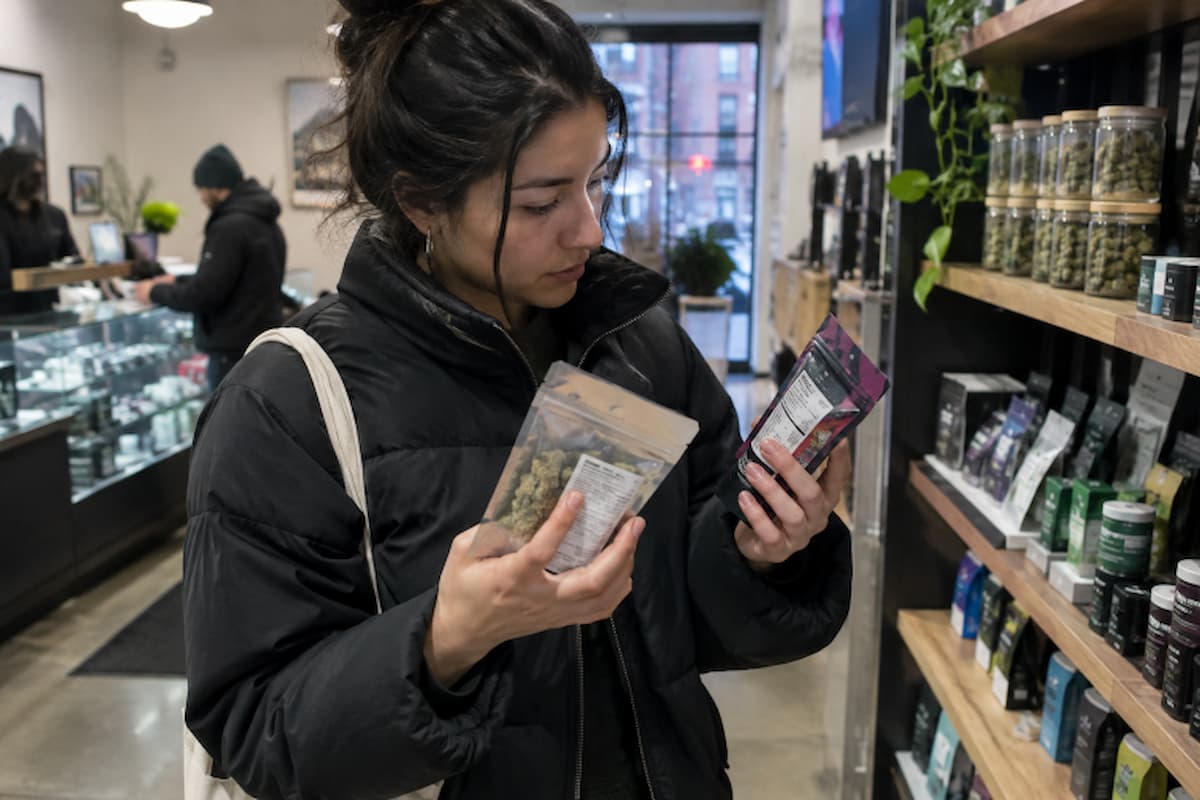
How to Read THC and CBD Numbers
THC is the cannabinoid primarily associated with cannabis intoxication. CBD does not produce intoxication in the same way. Labels may also list cannabinoids such as CBG, CBN, or CBC, particularly when a brand markets those compounds as part of a product’s profile.
For inhalable products, the percentage indicates concentration. For example, a flower product labeled 20 percent THC has a different measurement framework from an edible labeled 5 milligrams per serving. When comparing products, keep the comparison within the same category whenever possible.
Higher THC is not automatically better quality or a better fit. Aroma, ingredients, cannabinoid balance, freshness, and a person’s prior experience with similar products can all matter more than one headline number.
Serving Size Matters More Than Package Size
Edible packages can contain multiple servings, even when the item appears to be a single snack or drink. Read both the serving line and the total-package line before deciding how much to use.
- A package contains 10 servings.
- Each serving contains 5 milligrams of THC.
- The complete package contains 50 milligrams of THC.
This distinction is especially important for gummies, chocolates, capsules, and beverages. Follow the labeled serving guidance, and give an edible adequate time before considering another serving. Taking too much too soon is a common, avoidable mistake.
Look Beyond THC
A complete label review includes more than potency. Look for THC-to-CBD ratios, other listed cannabinoids, and terpene information when available. A 1:1 ratio, for example, indicates equal amounts of THC and CBD.
For food-style products, read the ingredient panel as carefully as the cannabinoid panel. Check for allergens, sweeteners, flavorings, gelatin, oils, and botanical ingredients that may affect your purchase decision. This is particularly relevant when comparing infused products designed to resemble ordinary candy or snacks.
Check Dates, Batch Details, and Package Condition
Locate the lot or batch number, along with any package, harvest, expiration, or best-by date. These details help identify the specific product in your hand. Also check that the child-resistant seal is intact and that the package is not leaking, swollen, torn, or otherwise damaged.
A newer date alone does not guarantee quality. Storage conditions, exposure to heat or light, and the product format can affect a product over time. Follow the storage directions on the package, especially in a New York summer apartment where heat and sunlight can be difficult to avoid.
What a Certificate of Analysis Can Tell You
A Certificate of Analysis, often called a COA, is a laboratory report connected to a product batch. New York regulates the use of QR codes or links to provide access to testing information. A COA may include cannabinoid results and contaminant test outcomes, depending on the product and applicable testing requirements.
- Match the batch or lot number on the COA to the package.
- Check the laboratory report date.
- Review the reported cannabinoid amounts.
- Look for clear pass/fail results for relevant test categories.
- Be cautious if the report is incomplete, unreadable, or does not match the product.
Label accuracy is worth taking seriously. A recent potency audit by Massachusetts regulators found some flower products outside their acceptable labeled-potency range, reinforcing why consumers should treat labels as useful information rather than a guarantee of an identical experience every time.
A Simple Five-Step Buying Check
- Pick the format: Choose a flower, a vape, an edible, a beverage, or another format that fits the occasion.
- Read the serving details: Confirm THC per serving and total THC per package when applicable.
- Review the profile: Check THC, CBD, other listed cannabinoids, terpenes, and ingredients.
- Inspect the package: Find the date, batch number, seal, QR code, and storage directions.
- Ask questions: If a label is unclear, ask licensed dispensary staff before purchasing.
Safety Reminders for Responsible Use
- Do not drive or operate machinery after using an intoxicating cannabis product.
- Keep cannabis products secured and away from children and pets.
- Avoid mixing cannabis with alcohol.
- Use extra caution with a new format or unfamiliar serving size.
- Speak with a qualified healthcare professional about health conditions or possible medication concerns.
Frequently Asked Questions
Is a higher THC percentage always better?
No. THC percentage measures concentration, not product quality or personal suitability. A lower-potency option may better match the setting or the consumer’s experience level.
What is the difference between THC per serving and total THC?
THC per serving is the amount in one measured portion. Total THC is the combined amount in the entire package.
Should shoppers rely on strain names?
Use strain names as one reference point, not a complete guide. Compare them alongside cannabinoid information, ingredients, batch details, and personal experience.
Conclusion
Reading a cannabis label in New York City does not have to feel technical. Start with the format, verify the correct potency number, confirm the serving size, and examine the batch and testing information. A few moments spent reading the full package can help turn a fast purchase into a more informed one.