Table of Contents
- Minimalist Design
- Dark Mode Enhancements
- Augmented Reality Integration
- Voice User Interfaces
- Biometric Authentication
- Motion Design and Microinteractions
- Personalized User Experiences
- Inclusive and Accessible Design
As mobile technology continues to reshape the digital landscape, understanding cutting-edge design trends is pivotal for developing apps that capture attention and drive user engagement. Developers who stay on top of the latest advances consistently deliver outstanding digital experiences. In 2026, innovation in mobile app design has taken center stage, impacting not only how apps look but also how they function and serve diverse user bases. The creative integration of evolving concepts is particularly evident in modern mobile app UI design, offering practical solutions and aesthetic upgrades that define user expectations worldwide.
Design choices now focus on improving usability, security, and accessibility while reflecting the clean lines and interactive elegance of leading apps. Whether designing for productivity, entertainment, or e-commerce, being aware of these trends can transform your approach and future-proof your products. Developers and product teams are leveraging emerging technologies to power seamless user flows, streamlined workflows, and delightful interactions across every screen users touch.
The wave of new app design philosophies is raising industry standards, making it essential for forward-thinking creators to incorporate these changes. More than just visual updates, these trends impact every facet of the user’s journey, ensuring that applications are not only beautiful but also highly functional and future-ready. The era of passive and static interfaces is fading, replaced by immersive, intelligent, and personalized digital experiences.
Beyond aesthetics and usability, new strategies underscore the importance of personalization and security while accounting for global accessibility standards. The following exploration captures the leading trends, benchmarks, and actionable ideas for mobile app design.
Minimalist Design
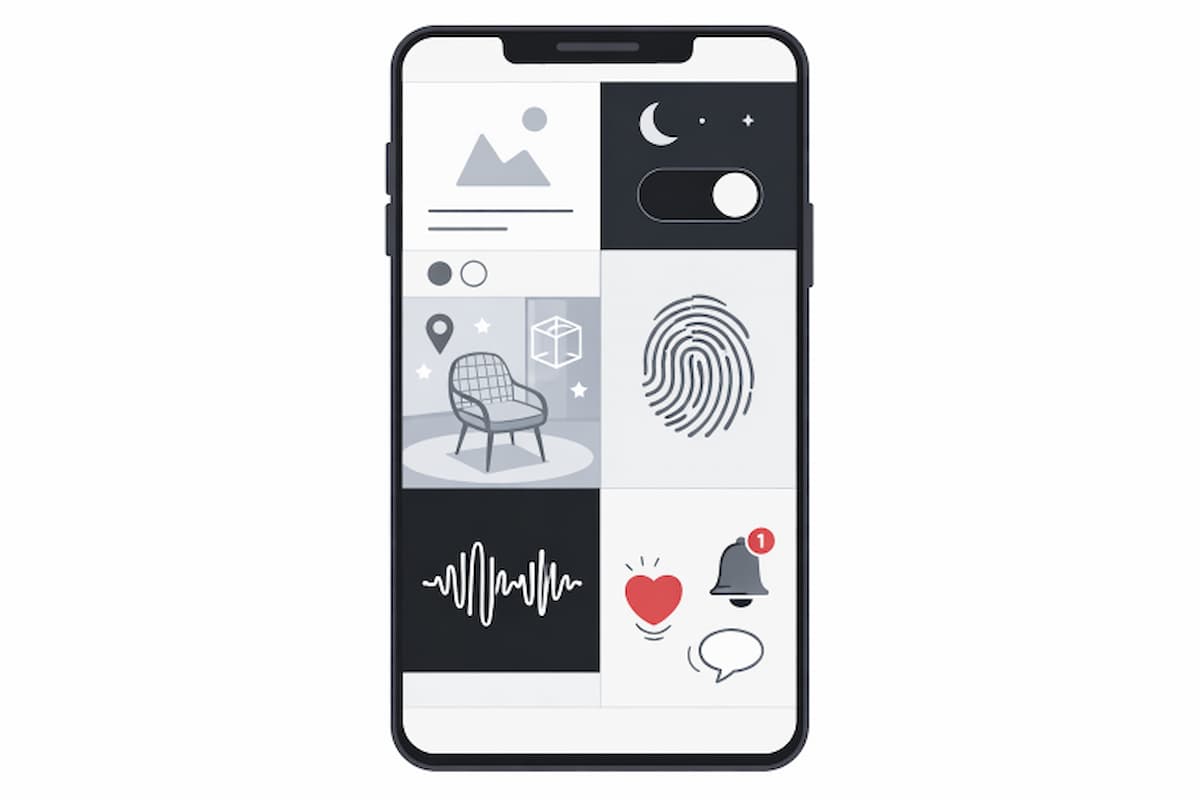
Minimalist design remains a powerhouse trend, marking a shift toward purposeful simplicity. This approach fosters clarity and ease of use, balancing aesthetics with efficient user flows. The foundations of minimalist design include ample white space to reduce cognitive load, restrained color palettes to create visual hierarchy, and the prioritization of a single focal point per screen. These choices direct user attention to key actions while decluttering the interface and boosting performance. Notably, successful apps are adopting elegantly plain typography and non-intrusive patterns to reinforce usability without sacrificing style.
Dark Mode Enhancements
The expansion of dark mode in app design is a milestone for both fashion and function. Enhanced contrast ratios are now standard, ensuring legibility and comfort for prolonged use, especially in dim settings. New levels of customization empower users to tweak hues and contrast for individualized comfort, while dynamic color palettes automatically adjust to variable lighting or user preferences. These refinements reduce eye strain, help conserve device battery life, and enhance the app’s visual appeal. For developers, offering granular theme controls appeals to a broader audience seeking flexibility and control in their mobile experiences.
Augmented Reality Integration
Augmented Reality (AR) is redefining how users interact with mobile apps by merging virtual elements with the real world. From in-app product visualizations and immersive games to advanced navigation and educational aids, AR is enabling interactive, engaging applications. Navigation apps now leverage AR to offer step-by-step guidance by overlaying digital directions onto the user’s environment, making it much easier to navigate unfamiliar locations. Immersive shopping experiences also empower consumers to preview products in their own space before making a purchase. For further insights into AR’s impact on digital innovation, Forbes Tech Council has highlighted top industry perspectives.
Voice User Interfaces
Voice-enabled user interfaces (VUIs) are beginning to rival touch as a primary navigation tool in mobile apps. Driven by continual improvements in natural language processing, apps can now interpret and respond to conversational commands with greater nuance. Voice navigation is especially valuable for people needing hands-free options, such as those working, driving, or requiring accessibility accommodations. Seamless voice controls not only expand app reach but also create more immersive, efficient user journeys. The integration of VUIs underscores a significant digital transformation that will impact app design for years to come.
Biometric Authentication
Security is a core concern in mobile design, and biometric authentication has emerged as the gold standard for validating identity. Technologies like fingerprint sensors, facial recognition, and iris scans are now common, offering a secure yet frictionless login experience. Users can move swiftly between protected screens without complex password protocols, while developers benefit from reduced fraud and stronger data privacy. Biometric methods are rapidly supplanting traditional logins and will likely become ubiquitous as devices and user expectations evolve.
Motion Design and Microinteractions
Motion design and microinteractions bring mobile apps to life by offering visual cues and interactive feedback. Detail-rich animations guide users through flows, highlight actionable elements, and provide subtle confirmations of completed tasks. Microinteractions, such as a button pulsing upon tap or a soft color change, foster delight and intuitiveness. These nuanced touches elevate user satisfaction and reinforce brand identity, making experiences memorable and reassuring users that their interactions are being recognized in real time. Research from Nielsen Norman Group confirms that effective motion design plays a crucial role in modern interface usability.
Personalized User Experiences
Personalization is rapidly transforming mobile apps into responsive digital companions. By leveraging data analytics, apps can dynamically adjust content, recommendations, layouts, and notifications based on user behavior and history. This results in a curated app environment that drives engagement, loyalty, and satisfaction. Advanced personalization can encompass everything from content feeds to interface color preferences, ensuring every user feels uniquely valued and understood.
Inclusive and Accessible Design
Accessibility is becoming a central requirement in app design, as regulatory bodies and user expectations converge. Digital inclusivity means designing for users of all abilities, including those utilizing screen readers, alternative text, and adaptive layouts. Meeting rigorous accessibility standards not only expands audience reach but also reflects a strong ethical and legal commitment. This involves ongoing accessibility testing and proactive enhancements to ensure comprehensive usability for every segment of the population.
Mobile app design in 2026 unites accessible minimalism, heightened interactivity, immersive technology, and personalized engagement. By aligning with these trends, developers can deliver standout experiences that meet user needs and outpace competition.