The eye, they say, is the window to the soul. While this statement may not make too much sense to everyone, we can all, at least, agree that the importance of the eyes cannot be overstated. Imagine not being able to see the world around you, how your spouse looks, your child, car, house, and every other thing we admire around us.
The eyes play a key role in everything we do – work, play, self-improvement and more. Sadly, there are hundreds of millions of people who are forced to live with impaired vision. What’s even more saddening is that some of these conditions could have been treated if they were detected earlier. It is for this reason that vision screening equipment is a critical part of any visual health intervention program.
It is important to create an important distinction between vision screening and a full eye examination. These two are different and must not be confused with each other. While a full eye examination can lead to a proper diagnosis to enable effective treatment, vision screening will only aid in quickly identifying a case that may require further investigation. The ability to quickly screen for possible problems with a person’s vision is crucial.
According to the WHO, a good percentage of visual impairments would have been prevented or treated if they had been detected earlier. You can read more about this here.
What Are Vision Screening Equipment?
This term refers to a wide range of devices and tools that are used to inspect and assess the various aspects of visual function. Some of the aspects assessed include:
- Color blindness
- Refractive errors (Myopia and hyperopia)
- Eye alignment
- Depth perception
- Visual acuity
These devices are specifically designed to be portable, easy to operate, and able to offer quick assessment. Because they are easy to operate, they can easily be handled by non-professionals.
Contrary to what many will think, these tools are often found, not necessarily in eye clinics, but in locations like:
- Community health outreaches
- Schools
- Elderly care facilities
- Pediatric clinics
- Occupational health centers
Having vision screening equipment in these locations, they provide a proactive approach, allowing non-professionals to quickly spot possible vision impairment and refer them to specialist eye doctors for further investigation. Remember that early detection increases the chances of prevention or treatment.
Types of Vision Equipment
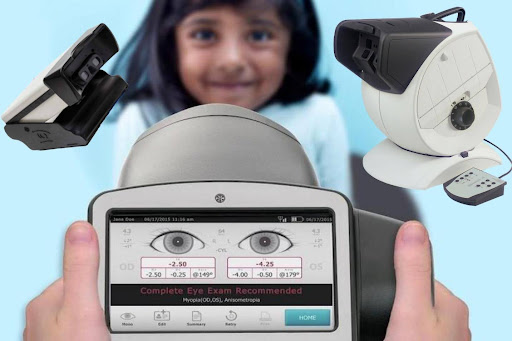
Vision screening equipment come under different categories, with each designed for a specific function. Companies like Depisteo offer different tools that make vision screening simple, quick and efficient. Some common examples include the following:
Visual Acuity Charts
These are among the most common vision screening tools. Examples like LogMAR chart and Snellen chart evaluate how well a person can see objects when placed at different distances. They are simple to use and provide reliable results.
Photoscreeners
These are handheld devices that help detect challenges like eye misalignment, refractive errors, and media opacities. They make use of light reflection and are most commonly used when conducting vision screening on children.
Autorefractors
When screening patients who may not be able to communicate fully (like children), these automatic devices come in handy. They can, without needing any response from the patient, calculate the refractive error present in the eye.
Stereopsis and Depth Perception Tests
These devices are used to determine how well both eyes work together. This affects perception on a number of levels, making it an essential requirement for functions such as sports, driving, and the operation of some types of machinery.
Color Vision Test Tools
As the name suggests, this tool is used to evaluate color blindness. They present colored dots that are used to form patterns. From a patient’s response, the tester can determine which colors they can see and which they can’t see or differentiate.
Vision Screening Challenges and the Future of Vision Screening Equipment
According to WHO, no less than 2.2 billion people have some form of distance vision impairment (near of far sightedness). Of this number, WHO estimates that only about 36% of patients whose distance vision impairment is caused by refractive errors have access to proper treatment, while only about 17% of patients with cataract related vision impairment can access proper care.
Since over 1 billion of these cases could have been prevented or treated with early detection, it is clear that these important vision screening equipment are currently not as widely available as they should.
Access to these modern vision screening tools is still highly limited, especially in developing nations. This is largely due to cost factors. In addition to this, there’s also the issue of poor infrastructure and the absence of trained personnel.
Given these challenges, the future of vision screening equipment will be focused on achieving increased affordability, portability, and ease of use. Once these devices are easily affordable, automated and easy to use, access will increase and early detection will be more wide spread.
You can get more information on vision health issues here: https://www.cdc.gov/vision-health/.
Conclusion
Prevention is always better than treatment and early detection makes treatment easier. Vision screening equipment takes care of these two by aiding early detection. With the W.H.O estimating that the annual global productivity loss arising from vision impairment is about US$ 411 billion, all hands must be on deck to ensure that everyone who needs this care can access it; and it begins with early detection – vision screening.