Table of Contents
- Why the First 30 Days Matter After a Riverview DUI Arrest
- What May Happen at a Traffic Stop in Riverview
- The First Hours After Arrest in Riverview
- The License Suspension Process for Riverview Drivers
- The 10-Day Deadline
- Criminal Case and Administrative Case
- Evidence That May Matter
- Early Court Events and Decisions
- Common Mistakes to Avoid
- Common Questions About Riverview DUI Arrests
- A Simple 30-Day Checklist for Riverview
A DUI arrest in Riverview can create immediate questions about transportation, work, family obligations, and upcoming court dates. For Riverview residents who depend on local roads to reach jobs, schools, medical appointments, or destinations across the Tampa Bay area, speaking with a DUI defense attorney may help clarify the distinct legal and licensing issues that can arise simultaneously.
The first month matters because paperwork issued during or after an arrest may contain time-sensitive information. A calm, organized approach can help a Riverview driver preserve records, identify deadlines, and avoid making decisions based on incomplete information.
Florida DUI matters may involve both a criminal charge and an administrative action affecting driving privileges. These are related processes, but they are not the same proceeding and may move on different schedules.
Every case has its own facts. The location of the stop, whether a crash occurred, the type of testing requested, prior driving history, and the terms printed on official notices can all affect what happens next.
If a collision caused injuries or property damage, the issues may extend beyond the DUI allegation, and a personal injury attorney in Riverview, FL, may address questions involving an injured person’s separate civil claim.
Why the First 30 Days Matter After a Riverview DUI Arrest
License consequences can begin before the first court appearance. Under Florida’s license-suspension review statute, a person who receives a notice of suspension may generally request a formal or informal review within 10 days of the notice’s issuance. The statute also describes a 10-day temporary permit for otherwise eligible drivers. Checking the actual notice is essential because dates control the available window.
What May Happen at a Traffic Stop in Riverview
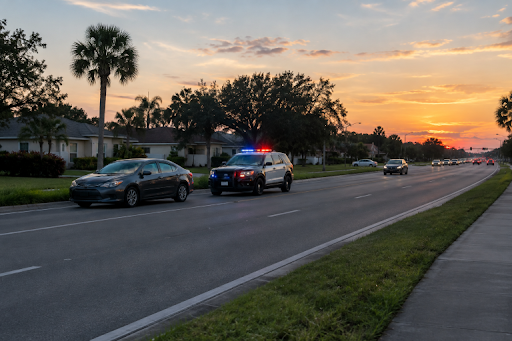
A suspected impaired-driving stop does not follow one fixed script. An officer may ask questions about travel, alcohol, medication, or recent activity; observe driving behavior, speech, balance, and movements; request field sobriety exercises; or request breath, blood, or urine testing. The encounter may end in an arrest, a citation, a release, or another action, depending on the circumstances.
Write Down Details Promptly
As soon as practical, record the location, time, weather, road conditions, names of possible witnesses, statements made, and any nearby businesses or homes that might have video. Memories fade quickly, particularly after a stressful night.
The First Hours After Arrest in Riverview
Keep all paperwork together, including the citation, notice of suspension, release documents, towing or impound records, insurance information, and any court notice. Confirm the arrest date, the date on the suspension notice, any temporary permit expiration date, and the next scheduled court event. Medical or prescription records may also be relevant if they relate to the event.
The License Suspension Process for Riverview Drivers
A driver’s license action may be handled separately from the criminal accusation. Florida law provides for an administrative suspension in circumstances involving an unlawful breath or blood alcohol level or a refusal to submit to certain testing. The physical license may be taken, and the notice supplied by law enforcement can serve as a temporary driving document if the driver is eligible.
Do not assume that general advice online matches the notice in a particular case. Review the printed restrictions carefully before driving anywhere in Riverview or beyond.
The 10-Day Deadline
The 10-day period deserves immediate attention. Review the exact notice date, identify the permit’s expiration date, and determine the current filing method for requesting review. A missed deadline can limit options, while a request for review does not automatically end every driving restriction. Keep copies of any form, confirmation number, payment record, or communication submitted to the state.
Criminal Case and Administrative Case
It helps to track these matters separately:
- Administrative process: Focuses on the person’s driving privilege and is handled through the state licensing system.
- Criminal case: Focuses on the alleged offense and proceeds through the court system.
- Possible outcomes: The administrative matter may result in a suspension or review decision, while the criminal case may result in dismissal, a plea, trial, fines, probation, or other court-ordered consequences.
- Timing: The administrative process can begin quickly, whereas court proceedings may span multiple scheduled events.
Evidence That May Matter
No single item necessarily decides a case. Records that may be important include dashcam or body-camera footage, dispatch and 911 records, breath-test documents, field sobriety instructions, arrest reports, officer notes, witness accounts, photographs, and medical information. A written timeline can help compare the reported stop, test, arrest, and notice times.
Early Court Events and Decisions
Early court events may include a first appearance, an arraignment, a pretrial conference, a motion hearing, or a future trial setting. Before making major decisions, identify the listed charge, whether a crash or injury is alleged, what testing occurred, whether there are separate license deadlines, and which records should be preserved.
Common Mistakes to Avoid
- Waiting for the court date before addressing a license notice.
- Discarding release papers, receipts, or towing records.
- Posting incident details on social media.
- Guessing about deadlines instead of checking the documents.
- Ignoring mail from the court or licensing agency.
- Driving after a temporary permit or restriction ends.
- Giving inconsistent accounts of what happened.
Common Questions About Riverview DUI Arrests
Can someone drive after a DUI arrest in Riverview?
It depends on the notice, temporary permit, eligibility, and any later action by the licensing agency. The paperwork controls, so drivers should not assume they can continue driving normally.
Does a breath result automatically decide the criminal case?
No. The stop, officer observations, testing procedures, video, records, and other facts may all be examined.
Why is impaired driving treated seriously?
Alcohol can affect judgment, coordination, attention, and reaction time. In 2024, 11,904 people died in alcohol-impaired driving crashes in the United States, according to national impaired-driving safety data.
A Simple 30-Day Checklist for Riverview
Within 24 Hours
- Collect paperwork and create an event timeline.
- Save witness contact information and relevant receipts.
- Confirm release conditions and court information.
Within 10 Days
- Review the suspension notice and temporary permit.
- Determine whether a review request is available.
- Preserve confirmation of every filing or contact.
By Day 30
- Track all court dates and deadlines.
- Preserve video, messages, records, and photographs.
- Plan lawful transportation if driving privileges are restricted.
- Keep a written log of notices, calls, and filings.
The first 30 days after a Riverview DUI arrest can feel overwhelming, but organization can reduce preventable problems. Keep every document, verify each date, treat license issues as separate from the criminal case, and seek qualified guidance when the facts or deadlines are unclear.