Table of Contents
- Why Beach Conditions Matter
- How to Read Beach Zones
- Planning Around Tides
- Weather, Storms, and Sand Movement
- Detector Settings and Search Patterns
- Clean Target Recovery
- Local Rules and Responsible Detecting
- Water Safety and Common Questions
Beach metal detecting is shaped by far more than the machine in your hand. Tides, shifting sand, weather, beach traffic, and local access rules can change what is available to find and whether a hunt is safe. Choosing capable beach metal detectors is useful, but reading the shoreline well is what turns an ordinary outing into a productive one.
The same beach can look completely different from one visit to the next. A busy summer afternoon may leave fresh surface targets near towel lines, while a low tide or recent sand movement can expose older material in the wet sand. Good beach detecting starts with a plan, careful recovery habits, and respect for the people, wildlife, and property around you.
Why Beach Conditions Matter
Sand is always moving. Waves push material up the slope of the beach, while retreating water can carry lighter sand away and leave heavier objects behind. That means rings, coins, fishing sinkers, and other dense targets may concentrate in specific areas instead of being spread evenly across the shore.
Dry sand, wet salt sand, and shallow water also affect how a detector behaves. Saltwater can make the ground seem conductive, which may create unstable signals or chatter. Better timing often matters more than hunting longer. A short, well-planned session during favorable conditions can cover more promising ground than hours of random sweeping.
Dry Sand
Start near towel lines, beach entrances, paths, volleyball courts, shaded seating areas, and spots where families tend to gather. These areas often produce recent drops, including coins, jewelry, toy parts, and pull tabs. Search methodically, especially after a busy weekend or holiday.
Wet Sand and the Surf Line
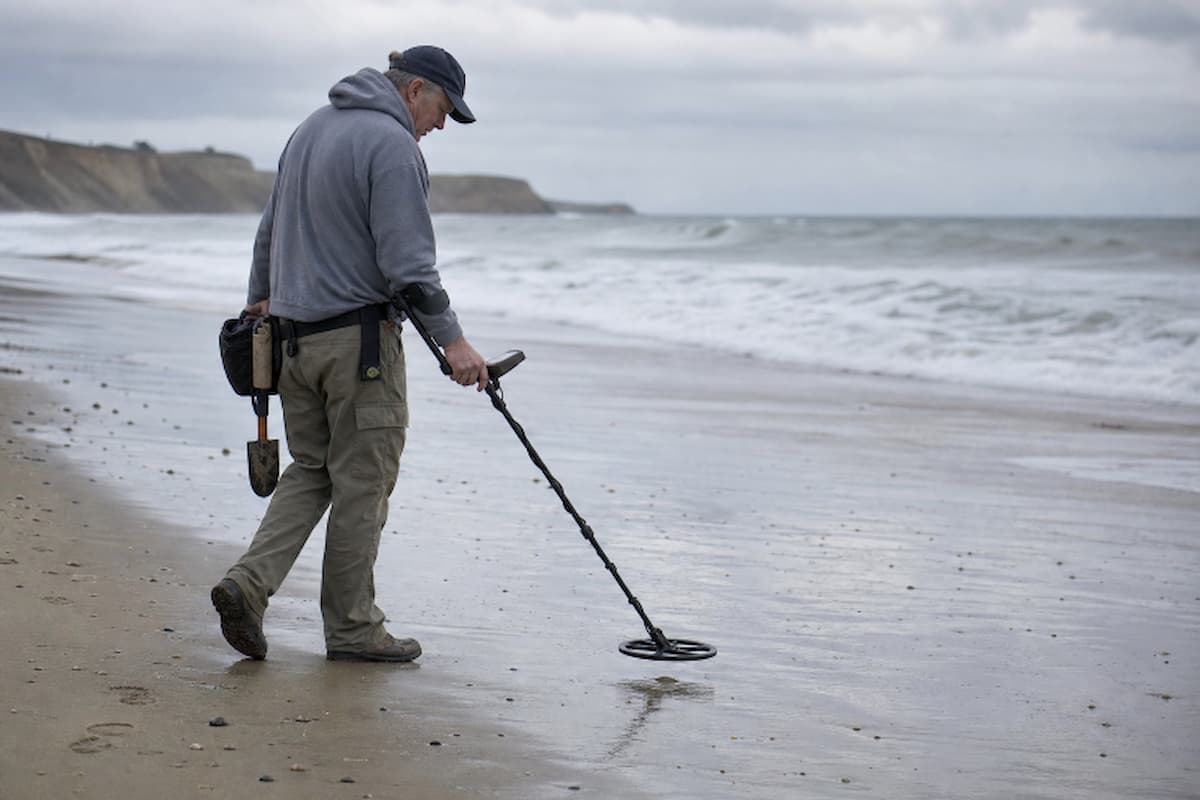
Look for firm, compact sand, darker mineral streaks, shallow cuts, and zones recently uncovered by receding water. The surf line can be productive because moving water may shift heavier targets into low areas. It also demands more attention, since an incoming wave can quickly change footing and visibility.
Shallow Water and Dune Edges
Only enter shallow water with equipment rated for the depth you expect to reach. Watch waves, holes, rocks, and current changes. Treat dunes, vegetation, nesting areas, and marked wildlife zones as off-limits unless rules clearly state otherwise. Those areas are easily damaged and may be protected.
Planning Around Tides
Low tide can expose a wider strip of wet sand and reveal areas that are underwater for much of the day. Before leaving home, use the official NOAA tide and current tools to check local tide predictions, water conditions, and forecast information. Tide timing varies by location, so use a station close to the beach you plan to search.
- Identify the low-tide time and note when water will begin returning.
- Arrive early enough to observe wave action, access points, and the safest route.
- Begin above your planned retreat line, then work lower as conditions allow.
- Set a turnaround time before the rising tide limits your exit.
- Allow extra time for walking through soft sand with gear and finds.
Never let a promising target line pull you into an unsafe position. If water is cutting off the route back, leave immediately and search another section of the beach.
Weather, Storms, and Sand Movement
Strong surf, rain, and storms can rearrange a beach quickly. Erosion may reveal older layers, expose compact sand, or create fresh cuts where targets become easier to reach. However, a productive-looking beach is not automatically a safe one. Stay clear of collapsing banks, flooded paths, unstable cliffs, lightning, and high surf warnings.
After a storm, inspect the shoreline from a safe distance before unpacking. Respect closures and emergency work areas. Storms can change the landscape, but they do not remove rules about protected zones, historic material, or restricted access.
Detector Settings and Search Patterns
In quiet dry sand, moderate sensitivity and a steady sweep speed usually provide clean results. In wet salt sand, lower sensitivity, use a salt-specific mode if available, and slow down. Mineralized patches may require ground balancing and careful repeat checks from different directions. Avoid heavy discrimination in jewelry areas because thin gold items can resemble common trash signals.
Use a simple grid rather than wandering. Pick a visible starting point, sweep straight lines with slight overlap, keep the coil level and close to the surface, then cross the area from a new direction. A detectorist who searches randomly for an hour may miss broad sections. Switching to a grid often produces more finds simply because fewer spaces are skipped.
Recovering Targets Without Damaging the Beach
- Pinpoint the signal before digging.
- Use a sand scoop in loose or wet sand whenever practical.
- Keep holes small and refill them immediately.
- Remove sharp metal, hooks, fishing line, and trash when it is safe to do so.
- Do not disturb living shells, plants, dunes, or wildlife areas.
Neat recovery protects other beach users and helps preserve access for detectorists. A clean area is also easier to search again after the tide or sand surface changes.
Local Rules and Responsible Detecting
Public access does not always mean unrestricted metal detecting. Identify who manages the beach, whether it is a city, county, state, federal agency, or private owner, then check that manager’s current rules. For example, Florida State Parks visitor guidance shows why detectorists should confirm approved areas, restrictions, and policies before searching.
When rules are unclear, call the park office. Obtain written permission for private property. If you uncover an object that appears historic, archaeological, hazardous, or connected to a shipwreck, stop digging, note the location, avoid cleaning it, and contact the appropriate land manager or authority.
Water Safety and Common Questions
Is low tide always best?
Low tide often exposes more ground, but beach shape, surf, weather, access, and safety matter just as much. A calm, manageable tide is usually better than a dangerous low-tide window.
Why does wet salt sand create false signals?
Saltwater conducts electricity, so the detector can react to the ground rather than a buried object. Slower sweeps and appropriate settings help reduce this effect.
Should every target be dug?
Use careful pinpointing and good judgment. Digging recoverable signals helps remove trash and can uncover jewelry, but avoid unnecessary disturbance in sensitive areas.
Keep watching the water, do not turn your back on surf, avoid remote hunts alone, and carry water, sun protection, a charged phone, and protective footwear. The most successful beach detectorist reads the conditions, follows the rules, recovers targets neatly, and leaves the shoreline better than it was found.