Introduction
When underground pipes fail, the disruption can be significant. From a local exhaust pipe company needing to repair their facility’s drains to homeowners facing sewer line issues, traditional excavation methods often lead to costly delays and landscape damage. For residents and businesses in Lubbock, TX, finding efficient solutions for subterranean pipe problems is crucial. This article explores modern trenchless drain repair and plumbing technologies that minimize invasiveness and maximize durability, offering a smarter way to restore essential infrastructure without the typical mess.
Understanding Trenchless Pipe Restoration Technology
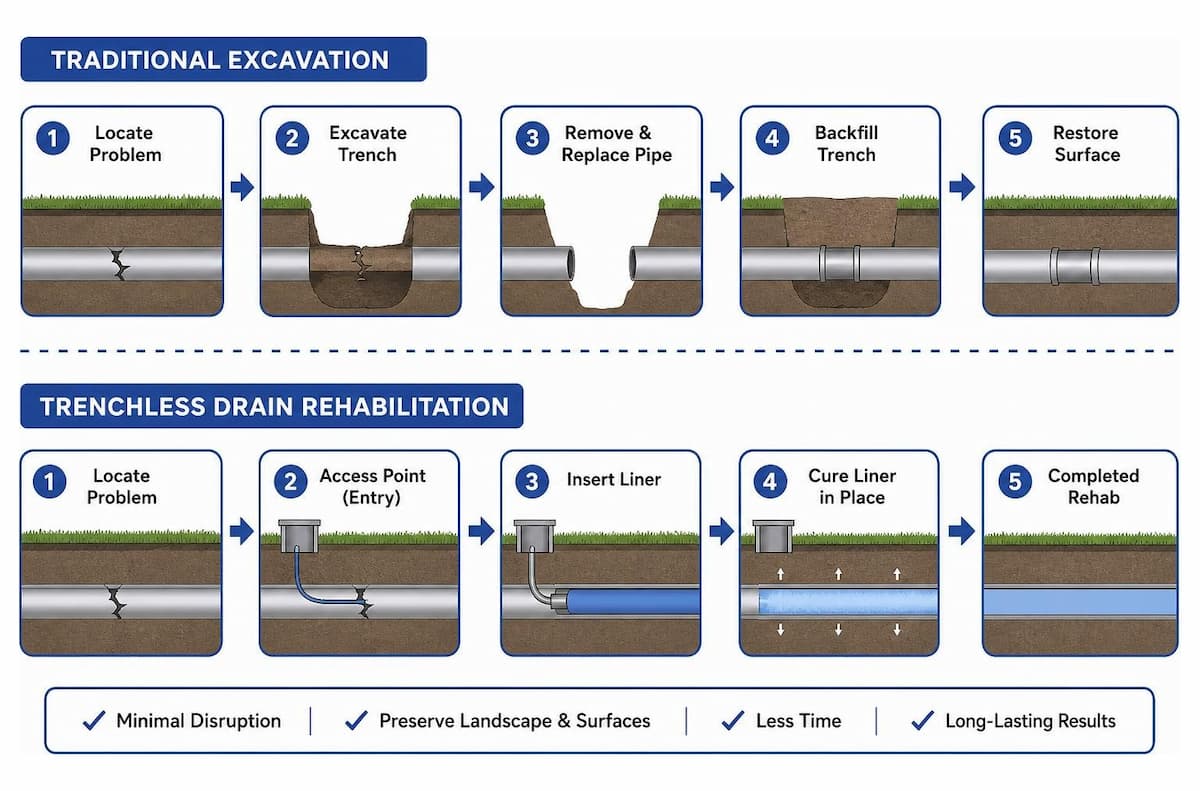
For decades, addressing compromised underground pipes meant extensive digging, often tearing up driveways, landscaping, and even foundations. Today, advancements in plumbing technology have introduced trenchless pipe restoration, a approach that resolves subterranean pipe issues with minimal disruption. Two primary methods stand out: Cured-In-Place Pipe (CIPP) lining and pipe bursting.
CIPP lining involves inserting a flexible, resin-saturated felt sleeve into the existing damaged pipe. This sleeve, often made of polyester or fiberglass, is then inverted or pulled through the old pipe. Once in place, it’s inflated with air or water and cured, typically using heat (steam or hot water) or UV light. As the resin cures, it hardens, forming a new, seamless “pipe within a pipe” that effectively seals cracks, holes, and gaps in the original structure. This method creates a durable, corrosion-resistant, and jointless interior surface, restoring the pipe’s integrity and flow capacity without the need for excavation. Technologies like Perma-Liner are at the forefront of this innovation, providing high-quality materials and proven processes that ensure long-lasting results for various subterranean plumbing challenges.
Pipe bursting, on the other hand, is employed when the existing pipe is too severely damaged or collapsed to be lined. This method involves pulling a new pipe, typically high-density polyethylene (HDPE), through the old one while simultaneously fracturing and expanding the old pipe outwards. A bursting head, attached to the new pipe, is guided through the existing line, breaking it apart and creating space for the new pipe to take its place. This technique not only replaces the damaged pipe but can also upgrade its diameter, improving flow capacity. Both CIPP and pipe bursting offer robust solutions for rehabilitating critical infrastructure, ensuring that properties, whether residential or commercial, benefit from reliable and efficient drainage systems. The seamless liner insertion process, particularly with CIPP, eliminates weak points where roots or debris might typically accumulate, providing a long-term fix.
Key Benefits of Trenchless Drain Repair and Plumbing for Homeowners
The shift towards trenchless drain repair and plumbing offers a multitude of advantages, particularly for homeowners in areas like Lubbock, TX, where maintaining property aesthetics and minimizing inconvenience are paramount. We’ve seen how these modern methods revolutionize the repair process, delivering superior results with less hassle.
One of the most significant benefits is landscape preservation. Traditional pipe repair necessitates digging long, deep trenches across lawns, gardens, and driveways, often destroying mature landscaping, trees, and paved surfaces. With trenchless methods, only small access points are required, usually at the beginning and end of the pipe section being repaired. This means your beautiful front lawn remains intact, your concrete driveway isn’t needlessly torn up, and your carefully cultivated garden is undisturbed. This preservation not only saves homeowners the significant cost and effort of restoring their landscape but also avoids the emotional distress of seeing their property damaged.
Another crucial advantage is rapid installation. Because there’s no extensive digging involved, trenchless repairs can often be completed in a fraction of the time compared to traditional methods. What might take days or even weeks of excavation and backfilling can often be accomplished in a single day with CIPP lining or pipe bursting. This expedited timeline minimizes disruption to daily routines, allowing families to return to normalcy much faster. For businesses, this means less downtime and continued operations, preventing loss of revenue.
Furthermore, trenchless solutions offer long-term pipe strength and durability. The materials used, such as the epoxy resin in CIPP liners or the HDPE pipes in pipe bursting, are incredibly robust, resistant to corrosion, root intrusion, and chemical degradation. These new pipes often have a longer lifespan than the original pipes they replace, providing homeowners with peace of mind for decades to come. The seamless nature of CIPP liners, for instance, eliminates joints where roots typically infiltrate, offering a permanent barrier against future blockages.
Finally, these methods are an eco-friendly repair option. By reducing the need for heavy machinery, trenchless repairs lower carbon emissions associated with excavation and transportation of soil. They also minimize the amount of waste sent to landfills, as the old pipe remains in the ground. This sustainable approach aligns with modern environmental consciousness, offering a responsible way to maintain essential infrastructure. For anyone seeking a less invasive and more efficient way to address underground plumbing issues, exploring options like no-dig drain repair can provide valuable insights and solutions.
Step-by-Step Diagnostic and Rehabilitation Process
Our approach to trenchless pipe repair is meticulously planned and executed, ensuring a thorough and lasting solution for our clients. We follow a clear, sequential process that begins with precise diagnostics and culminates in a structurally sound, rehabilitated pipe system.
- High-Definition Camera Inspection: The first critical step involves a comprehensive internal inspection of the damaged pipe. We insert a high-definition, waterproof camera into the sewer line through an existing access point, such as a cleanout. This camera provides real-time video feedback, allowing our technicians to accurately assess the pipe’s condition, identify the exact location and nature of the damage (e.g., cracks, root intrusion, blockages, collapsed sections), and determine the overall integrity of the system. This visual evidence is crucial for planning the most effective repair strategy.
- Mechanical Hydro-Jetting: Before any lining can occur, the pipe must be thoroughly cleaned. We utilize powerful hydro-jetting equipment, which employs high-pressure water streams to clear out any debris, sludge, mineral buildup, grease, and stubborn root intrusions. This mechanical cleaning ensures that the inner surface of the existing pipe is smooth and free of obstructions, providing an optimal surface for the new liner to adhere to.
- Resin Impregnation: Once the pipe is clean, a specialized felt liner is prepared. This flexible liner is custom-cut to the exact length and diameter of the pipe section requiring repair. It is then thoroughly saturated with a two-part epoxy resin mixture. This resin is carefully measured and mixed to ensure proper curing and maximum strength.
- Epoxy Bladder Inflation (Inversion/Pull-in-Place): The resin-saturated liner is then inserted into the damaged pipe. Depending on the specific application and pipe configuration, this can be done using an inversion method (where air or water pressure inverts the liner through the pipe, pushing the resin-coated side against the host pipe) or a pull-in-place method (where the liner is pulled into position and then inflated). An inflatable bladder inside the liner is then pressurized, pushing the resin-soaked liner tightly against the interior walls of the old pipe, conforming to its shape and sealing off all cracks and holes.
- Seamless Structural Curing: With the liner firmly in place and pressed against the host pipe, the curing process begins. This typically involves introducing heat (steam or hot water) or UV light into the inflated liner. The heat or UV light activates the epoxy resin, causing it to harden and form a rigid, seamless, and jointless new pipe within the old one. This curing process usually takes several hours, depending on the length and diameter of the pipe, as well as the specific resin used.
- Micro-Camera Verification: After the curing is complete and the new liner has fully hardened, the inflatable bladder is removed. A final micro-camera inspection is performed to verify the success of the installation. This inspection confirms that the new pipe is fully sealed, smooth, free of imperfections, and has restored the full flow capacity of the system. This step provides our clients with complete assurance of a job well done.
When to Select No-Dig Methods for Regional Soil Conditions
The unique geological and environmental characteristics of West Texas, particularly around Lubbock, make trenchless plumbing solutions an exceptionally advantageous choice for maintaining underground infrastructure. We understand that local conditions play a significant role in pipe degradation, and our no-dig methods are specifically suited to address these challenges.
One primary concern in our region is shifting clay soil. Lubbock’s expansive clay soils are prone to significant movement due to cycles of wetting and drying. As these soils absorb moisture, they expand, and as they dry out, they contract. This constant shifting exerts immense pressure on underground pipes, leading to stress fractures, misalignments, and eventual breaks in rigid pipe materials like cast iron or PVC. Trenchless liners, being flexible before curing and forming a continuous, jointless structure afterward, are far more resilient to these ground movements. They can withstand the forces of shifting soil without cracking, providing a stable and long-lasting repair.
Severe root intrusion is another common culprit behind pipe damage. Trees and shrubs, in their relentless search for water and nutrients, will inevitably seek out any tiny crack or loose joint in a sewer line. Once inside, roots grow, expand, and create blockages, eventually leading to pipe collapse. Traditional repairs involve cutting roots, which only offers a temporary fix, as roots will grow back. Trenchless CIPP lining creates a seamless, impenetrable barrier that roots cannot penetrate. This not only resolves current root problems but also prevents future intrusions, offering a permanent solution for root-damaged pipes.
Many properties in Lubbock still rely on aging cast iron pipes or other older materials that are simply past their expected lifespan. Over time, these pipes corrode, rust, and become brittle, making them highly susceptible to leaks, breaks, and collapses. Rather than undertaking the costly and disruptive process of replacing an entire aging system, trenchless methods allow us to rehabilitate these pipes from within. The new liner essentially gives the old pipe a brand-new, durable interior, extending its life by decades and bringing it up to modern standards without disturbing the property.
While West Texas is generally dry, we do experience seasonal freeze-thaw cycles, particularly during winter months. When water infiltrates cracks in pipes and then freezes, it expands, exacerbating existing damage and potentially causing further ruptures. The continuous, sealed nature of trenchless liners prevents water from entering the pipe walls, making them highly resistant to freeze-thaw damage. This provides a crucial layer of protection against seasonal weather impacts.
Trenchless methods are ideal for preventive pipe preservation. For homeowners looking to proactively address potential issues before they become emergencies, or for those with older homes who want to avoid future excavation, CIPP lining offers a cost-effective and minimally invasive way to reinforce their plumbing infrastructure. It’s an investment in the longevity and reliability of your home’s drainage system, protecting your property and providing peace of mind.
Frequently Asked Questions About Trenchless Drain Repair and Plumbing
As specialists in modern plumbing solutions, we frequently encounter questions from homeowners and businesses about the efficacy and process of trenchless drain repair. Here, we address some of the most common inquiries to provide clarity and confidence in these advanced methods.
How does trenchless pipe lining restore underground sewer pipes without excavation?
Trenchless pipe lining, specifically Cured-In-Place Pipe (CIPP) lining, is an ingenious method that creates a new pipe inside the old one. The process begins by preparing a flexible felt sleeve, which is then thoroughly saturated with a specialized liquid epoxy resin. This resin-impregnated liner is then inserted into the damaged sewer pipe. The most common insertion technique is called resin inversion, where air or water pressure is used to literally turn the liner inside out as it moves through the existing pipe. This action presses the resin-coated side firmly against the interior walls of the old pipe, conforming to its shape and sealing off all cracks, holes, and missing sections. Once in place, the liner is cured, usually with heat (steam or hot water) or UV light. As the resin hardens, it forms a rigid, continuous structural pipe shell that is seamless, jointless, and completely independent of the original pipe. This new internal pipe coating effectively restores the integrity and flow capacity of the sewer line without ever needing to dig a trench.
How long do trenchless drain repair and plumbing liners typically last?
The durability of trenchless drain repair and plumbing liners is one of their most compelling advantages. High-quality CIPP liners are engineered for exceptional longevity, often boasting a 50-year material rating. This impressive lifespan is attributed to several key factors. Firstly, the resulting jointless interior surface eliminates the weak points found in traditional segmented pipes, where roots commonly infiltrate or debris accumulates. Secondly, the cured epoxy material is inherently root-proof, providing a permanent barrier against future root intrusion, a common cause of pipe failure. Thirdly, these liners are highly resistant to corrosion and chemical degradation, making them virtually corrosion immune from wastewater and soil contaminants. Finally, the new liner provides significant structural reinforcement to the existing pipe, often exceeding the strength of the original pipe material. This combination of robust materials and seamless installation ensures that a trenchless repair is not just a temporary fix, but a long-term investment in your property’s plumbing infrastructure.
Can trenchless drain repair and plumbing fix severely cracked or collapsed sewer lines?
Yes, trenchless drain repair can effectively address even severely cracked or collapsed sewer lines, though the specific method employed may vary. For pipes with extensive cracking, multiple small fractures, or significant root damage but still largely intact, CIPP lining is often the ideal solution. Our initial video camera diagnostic allows us to assess the extent of the damage precisely. However, if a pipe has completely collapsed, has large missing sections, or requires an increase in diameter, a technique known as pipe bursting methodology is typically used. In pipe bursting, a specialized bursting head is launched through the existing damaged pipe. As it moves, it performs mechanical pipe fracturing, breaking the old pipe into pieces and pushing them outwards into the surrounding soil. Simultaneously, a new, continuous HDPE pipe replacement is pulled into the void created by the bursting head. This method not only replaces the severely damaged pipe but can also upsize the new pipe, improving flow capacity. Both CIPP and pipe bursting are powerful tools in our arsenal for comprehensive structural damage assessment and repair, ensuring that even the most compromised sewer lines can be rehabilitated with minimal disruption to your property.
Conclusion
The evolution of plumbing technology has brought forth trenchless pipe innovation, fundamentally changing how we approach underground drain repair. For homeowners and businesses in Lubbock, TX, these modern methods offer a compelling alternative to traditional excavation, providing efficient, durable, and minimally invasive solutions. By preserving landscapes, accelerating repair times, and delivering long-lasting results, trenchless drain repair and plumbing technologies are truly fortifying residential drainage defense. We are committed to providing robust and durable plumbing infrastructure, ensuring that your essential systems function flawlessly for decades to come, all while protecting the integrity and beauty of your property.