Introduction
Maintaining your home’s heating and cooling system is crucial for comfort and efficiency, but homeowners often wonder: do heat pumps need different maintenance than AC units? This common question arises because heat pumps serve a dual role, providing both warmth in winter and cooling in summer, operating year-round. This continuous use naturally raises concerns about increased wear and unique servicing needs compared to traditional air conditioners, which primarily function seasonally. Understanding these differences in heat pump and AC maintenance is key to ensuring your system runs smoothly, efficiently, and reliably for years to come, preventing unexpected breakdowns and high energy bills. For those seeking expert heating and cooling solutions, comparing heat pump vs. AC maintenance is a vital first step.
To learn more about keeping your system in top shape, reach out to us today.
Why Reliable HVAC Maintenance Matters for Modern Heating and Cooling Systems
In today’s homes, where comfort and energy efficiency are paramount, the role of a well-maintained HVAC system cannot be overstated. Whether you rely on a heat pump or a traditional air conditioner, consistent maintenance directly impacts several critical aspects of your home’s environment and your wallet.
Firstly, energy consumption is significantly influenced by the condition of your system. A neglected heat pump or AC unit can consume 10% to 25% more energy than a well-maintained one. This difference translates directly into higher utility bills, eroding any potential savings from having an efficient system in the first place. Regular cleaning, calibration, and inspection ensure that components operate at their peak efficiency, minimizing wasted energy.
Secondly, operational efficiency is about how effectively your system converts energy into heating or cooling. When filters are clogged, coils are dirty, or refrigerant levels are off, the system has to work harder to achieve the desired temperature. This increased effort not only uses more energy but also puts undue stress on vital components, leading to premature wear and tear.
This brings us to component wear. Heat pumps, especially, operate year-round, cycling between heating and cooling modes. This continuous operation means their components, such as compressors and fans, accumulate wear faster than those in a seasonal AC unit. Without regular checks and lubrication, small issues can escalate into major breakdowns, often requiring costly repairs or even premature system replacement. While both heat pumps and AC units typically last between 10 to 15 years, consistent maintenance can significantly extend this operational life, sometimes by several years.
Indoor air quality is another crucial factor. HVAC systems circulate air throughout your home, and dirty filters can become breeding grounds for dust, allergens, and mold spores. Proper maintenance, particularly regular filter changes, ensures that the air you breathe is clean and healthy, contributing to a more comfortable living environment.
Finally, the system lifespan is directly tied to the care it receives. Just like a car, an HVAC system needs routine tune-ups to perform optimally and last for its intended duration. Skipping maintenance might save a small amount in the short term, but it invariably leads to higher energy costs, more frequent repairs, and ultimately, a shorter system life, forcing an expensive replacement much sooner than necessary. Investing in reliable HVAC maintenance is not just about fixing problems; it’s about preventing them, ensuring long-term comfort and cost savings.
Key DIY Tasks for Reliable HVAC Maintenance
While professional servicing is indispensable, homeowners can perform several basic maintenance tasks to keep their HVAC systems running smoothly and efficiently. These DIY efforts not only contribute to the system’s longevity but also help maintain indoor air quality and reduce energy consumption.
One of the most critical and frequently overlooked tasks is air filter changes. We recommend checking your air filter monthly and replacing it every one to three months, or as advised by your manufacturer, especially if you have pets or allergies. A dirty filter restricts airflow, forcing your system to work harder and reducing its efficiency by up to 25%. It’s a simple, inexpensive task that yields significant benefits.
Outdoor coil rinsing is another important step. The outdoor unit’s coils can accumulate dirt, dust, leaves, and other debris, particularly during spring and summer. A buildup of grime on the coils impedes heat transfer, making your system less efficient. We suggest gently rinsing the outdoor coils with a garden hose every couple of months or when visibly dirty. Always ensure the power to the unit is off before cleaning.
Beyond rinsing, debris clearing around the outdoor unit is essential. Maintain a clear perimeter of at least 18 to 24 inches around the unit, removing any grass, weeds, leaves, or other obstructions. This ensures proper airflow, which is vital for the system’s efficient operation. Also, ensure the unit is level and, in colder climates, elevated 4-8 inches above ground to prevent snow and ice buildup.
For systems with a condensate drain line, condensate drain care is important, especially during the cooling season. This line removes moisture from your home, and it can become clogged with algae or mold. Pouring a cup of diluted vinegar down the drain line periodically can help prevent blockages, which could otherwise lead to water damage or system shutdowns.
Lastly, ensure register clearance throughout your home. Make sure that furniture, rugs, or drapes are not blocking supply and return air vents. Blocked registers impede airflow, creating uneven temperatures and making your system work harder to distribute conditioned air. Regularly cleaning the registers to remove dust also contributes to better air quality.
By consistently performing these straightforward DIY maintenance tasks, you can significantly enhance your HVAC system’s performance, extend its life, and contribute to a healthier, more comfortable home environment.
Heat Pumps vs. Air Conditioners: Core Servicing Differences
The fundamental distinction between heat pumps and air conditioners lies in their operational cycles, which, in turn, dictates their maintenance requirements. While both systems utilize a refrigeration cycle to cool a space, heat pumps possess a unique dual heating and cooling capability. This means they can reverse the flow of refrigerant to either extract heat from indoors and release it outside (cooling mode) or extract heat from outdoors and release it inside (heating mode).
This year-round operation is the primary driver of differing maintenance needs. A traditional air conditioner typically operates only during the warmer months, remaining dormant for a significant portion of the year. In contrast, a heat pump is actively working in both summer and winter. This continuous functionality leads to a faster wear accumulation on its components. The compressor, fan motors, and other moving parts are subjected to more hours of operation annually, necessitating more frequent attention.
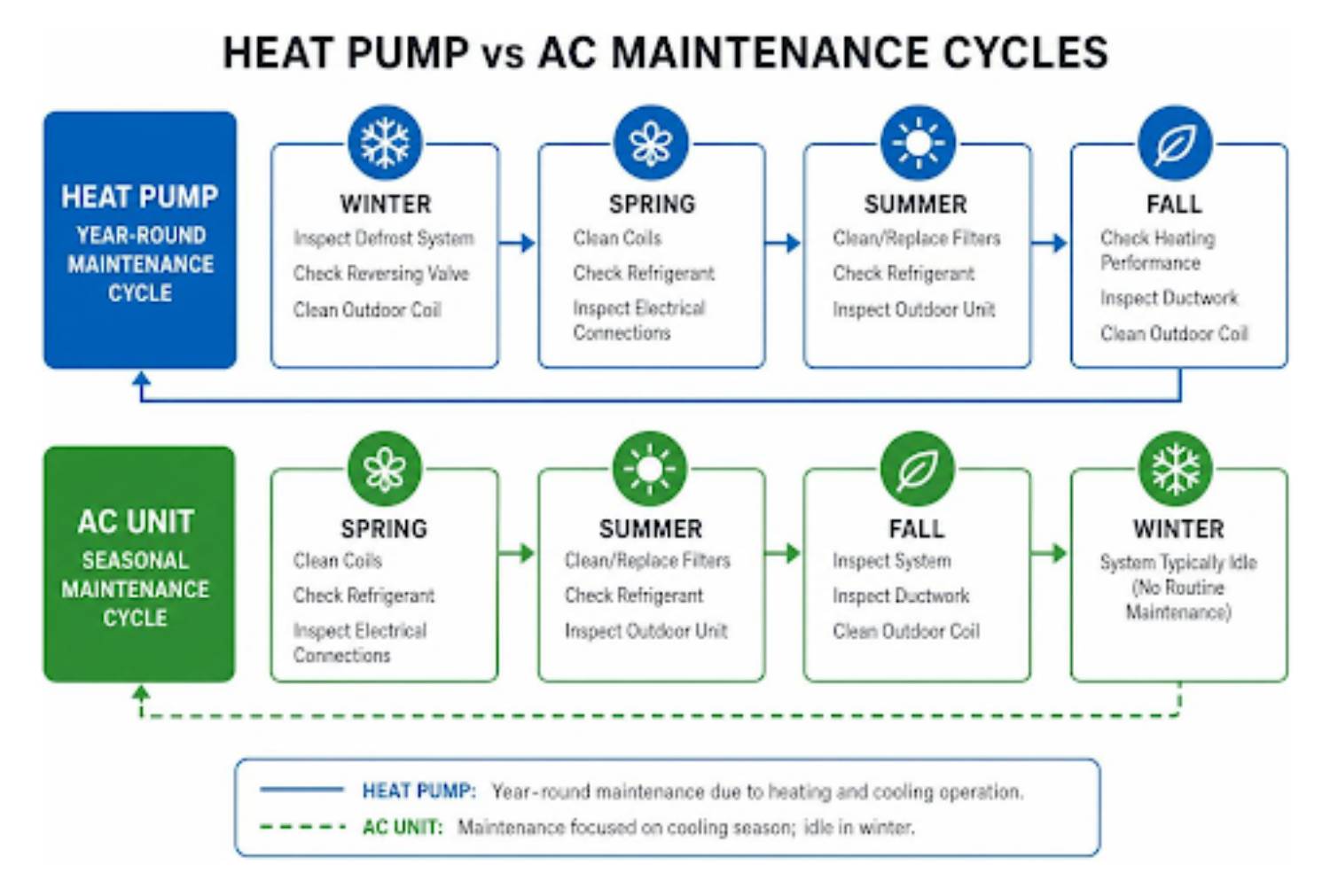
Consequently, the service frequency for heat pumps is generally higher. While an annual professional tune-up is recommended for most AC units, many HVAC experts suggest that heat pumps benefit from two professional service visits per year – one in the spring before the cooling season and another in the fall before the heating season. This biannual approach ensures that the system is optimized for both its primary functions and can handle the seasonal demands placed upon it.
The continuous operation also means that the energy consumption gap between a well-maintained and a neglected heat pump can be more pronounced over a year. Since it’s working longer, any inefficiency caused by dirty coils, low refrigerant, or electrical issues will compound, leading to higher energy bills across both heating and cooling seasons. For example, a dirty filter in an AC unit impacts cooling efficiency for a few months, but a dirty filter in a heat pump affects both heating and cooling efficiency for much longer, potentially year-round.
While the core refrigeration technology is similar, the heat pump’s dual-functionality and year-round workload demand a more rigorous and frequent maintenance schedule to ensure optimal performance, efficiency, and longevity compared to a seasonal air conditioner.
Professional Standards for Reliable HVAC Maintenance
When it comes to the intricate workings of modern HVAC systems, professional maintenance is not just a recommendation; it’s a necessity. Certified technicians bring a level of expertise and specialized tools that go beyond what a homeowner can typically achieve, ensuring the system operates safely, efficiently, and reliably.
For heat pumps, in particular, biannual inspections are often recommended. A spring tune-up prepares the system for the cooling season, while a fall inspection ensures it’s ready to handle winter’s heating demands. For traditional AC units, an annual check-up, typically in the spring, is usually sufficient. During these visits, technicians perform a comprehensive array of checks.
One critical task is refrigerant charge verification. Both heat pumps and AC units rely on the precise amount of refrigerant to transfer heat efficiently. Too little or too much can drastically reduce efficiency, increase energy consumption, and put undue strain on the compressor. Professionals use specialized gauges to measure refrigerant levels and check for any leaks, which are then repaired.
Electrical testing is another vital component of professional maintenance. Technicians inspect all electrical connections for tightness and cleanliness, measure voltage and amperage of motors, and check capacitors. Loose or corroded wiring can lead to system malfunctions, safety hazards, and reduced efficiency.
Duct leak detection is also often part of a thorough inspection. Leaky ducts can waste a significant amount of conditioned air, leading to higher energy bills and uneven temperatures throughout the home. Professionals can identify and seal these leaks, ensuring that air reaches its intended destination.
Finally, the importance of technician certification cannot be overstated. We recommend choosing technicians who are NATE-certified (North American Technician Excellence). This certification signifies that a technician has met rigorous industry standards for knowledge and skill, ensuring they are well-versed in the complexities of various HVAC systems, including heat pumps and air conditioners. Relying on certified professionals guarantees that your system receives the highest standard of care, preventing costly repairs and extending its operational life.
Comparing System Requirements
Understanding the distinct maintenance needs of heat pumps and traditional air conditioners is crucial for homeowners aiming for optimal system performance and longevity. While both systems share some common maintenance principles, their operational differences lead to unique requirements.
Let’s consider a comparison of their maintenance needs:
- Service Frequency:
- Heat Pumps: Due to their year-round operation for both heating and cooling, heat pumps generally benefit from biannual professional servicing. This includes one visit in the spring to prepare for cooling and another in the fall to get ready for heating. This dual check-up addresses the increased wear and tear from continuous use.
- Traditional AC Units: Since they primarily operate only during the warmer months, traditional air conditioners typically require annual professional maintenance. This is usually scheduled in the spring to ensure the unit is ready for the cooling season.
- Operational Cycles:
- Heat Pumps: Experience continuous operational cycles, switching between heating and cooling modes. This means components like the compressor, fan motors, and reversing valve are active for more hours throughout the year.
- Traditional AC Units: Have seasonal operational cycles, working only when cooling is required. Their components rest during the colder months, leading to less overall operational time per year.
- Key Component Checks:
- Shared Checks (for both Heat Pumps and AC Units):
- Air Filters: Regular inspection and replacement (DIY).
- Coils (Indoor & Outdoor): Cleaning to ensure efficient heat exchange (DIY for outdoor, professional for indoor).
- Refrigerant Levels: Professional verification of charge and leak detection.
- Electrical Connections: Inspection for tightness and corrosion (professional).
- Condensate Drain: Clearing to prevent clogs (DIY/professional).
- Blower Motor: Inspection and lubrication (professional).
- Thermostat Calibration: Ensuring accurate temperature readings (professional).
- Unique Heat Pump Checks:
- Reversing Valve: Inspection and testing to ensure seamless transition between heating and cooling modes. This critical component is absent in AC-only systems.
- Defrost Cycle: Verification of proper operation, especially before winter, to prevent ice buildup on outdoor coils in cold weather.
- Auxiliary Heat System: Checking the functionality of supplementary heating elements, which often kick in during very cold temperatures.
- Balance Point Settings: Adjusting the temperature at which the auxiliary heat engages for optimal efficiency.
In summary, while both systems require diligent care, the heat pump’s dual functionality and continuous workload necessitate a more frequent and specialized maintenance regimen to uphold its efficiency and extend its lifespan.
Unique Components and Seasonal Upkeep Requirements
The dual-functionality of heat pumps introduces several unique components and specific maintenance considerations that are not typically found in traditional air conditioning units. Understanding these differences is key to proper heat pump care.
Foremost among these is the reversing valve. This crucial component is what allows a heat pump to switch between heating and cooling modes. In cooling, it directs refrigerant to absorb heat from indoors; in heating, it reverses the flow to absorb heat from outdoors. During professional maintenance, technicians specifically check the reversing valve’s operation to ensure it switches smoothly and effectively, preventing issues like blowing cold air in heating mode or failing to cool adequately.
Another heat pump-specific feature is the defrost cycle. When outdoor temperatures drop, moisture in the air can freeze on the heat pump’s outdoor coil, impeding its ability to absorb heat. To counteract this, the system periodically enters a defrost mode, temporarily reversing the refrigerant flow to melt the ice. This is a normal operation, often accompanied by steam from the outdoor unit. However, a malfunctioning defrost cycle can lead to excessive ice buildup, significantly reducing efficiency or even damaging the unit. Professionals will test the defrost control and ensure proper drainage during colder months.
Auxiliary heat, often in the form of electric resistance coils, is another component specific to heat pumps in many climates. This supplementary heat source kicks in when outdoor temperatures are too low for the heat pump to efficiently extract heat, or when there’s a sudden demand for a large temperature increase. Maintenance involves verifying that the auxiliary heat engages when needed and, importantly, that it doesn’t run unnecessarily, as it’s typically less efficient than the heat pump itself. This ties into balance point settings, which dictate at what outdoor temperature the heat pump transitions to using auxiliary heat. Proper calibration ensures the most efficient operation.
Finally, the outdoor unit elevation is more critical for heat pumps, especially in regions prone to snow or significant rainfall. Elevating the unit 4-8 inches above ground level helps prevent snow and ice from accumulating around the base or interfering with the fan’s operation. It also ensures proper drainage of condensate during cooling and defrost cycles. Technicians will ensure the unit is stable and correctly positioned to avoid these issues.
These unique components and their associated maintenance tasks highlight why heat pumps require a more nuanced and often biannual approach to professional servicing compared to AC-only systems.
Seasonal Transition Inspections
The year-round operation of heat pumps makes seasonal transition inspections particularly vital. Unlike air conditioners that only need a pre-summer check, heat pumps require attention before both the cooling and heating seasons to ensure optimal performance and prevent breakdowns.
Spring tune-ups are designed to prepare your heat pump for the cooling demands of summer. During this inspection, technicians will focus on:
- Coil Cleaning: Ensuring the indoor evaporator coil and outdoor condenser coil are free from dirt and debris for efficient heat absorption and rejection.
- Refrigerant Charge: Verifying the correct amount of refrigerant and checking for leaks, which is crucial for effective cooling.
- Electrical Components: Inspecting wiring, capacitors, and contactors for wear or damage.
- Fan Operation: Checking the outdoor fan motor and blades for proper function and balance.
- Condensate Drain: Clearing any blockages to prevent water overflow and potential damage.
As summer transitions to fall, fall maintenance becomes essential to ready your heat pump for winter’s heating challenges. This service includes:
- Reversing Valve Check: Confirming the valve can smoothly switch the system into heating mode.
- Defrost Cycle Verification: Testing the defrost mechanism to ensure it can prevent ice buildup on the outdoor coil in cold weather.
- Auxiliary Heat Inspection: Checking the functionality of the supplementary heating elements to ensure they engage when outdoor temperatures drop below the heat pump’s efficient operating range.
- Outdoor Unit Clearance: Ensuring the area around the unit is free of leaves and debris that could impede airflow or accumulate moisture.
Throughout winter, while professional checks are less frequent, homeowners should monitor for signs of trouble, particularly concerning winter defrosting. It’s normal to see steam rising from the outdoor unit during a defrost cycle, but persistent ice buildup that doesn’t melt away could indicate a problem requiring professional attention. Proper coil protection during all seasons, such as keeping the outdoor unit free of obstructions and ensuring it’s elevated, helps maintain efficiency.
Here is a list of seasonal heat pump tasks that professionals typically undertake:
- Spring (Pre-Cooling Season):Clean outdoor condenser coil.
- Inspect and clean indoor evaporator coil.
- Check refrigerant levels and pressures.
- Test compressor and fan motors.
- Inspect electrical connections.
- Clear condensate drain line.
- Calibrate thermostat.
- Fall (Pre-Heating Season):Test reversing valve operation.
- Verify defrost cycle functionality.
- Inspect and test auxiliary heat strips.
- Check outdoor unit for proper elevation and clearance.
- Lubricate moving parts as needed.
- Inspect ductwork for leaks.
- Perform a complete system performance check in heating mode.
These thorough seasonal inspections are vital for maximizing your heat pump’s efficiency, ensuring reliable year-round comfort, and extending its operational lifespan.
Airflow and Filtration Impact
The efficiency and performance of both heat pumps and AC systems are profoundly influenced by proper airflow and filtration. While the basic principles apply to both, certain nuances can be more critical for heat pumps due to their continuous operation.
Air filters are the first line of defense against dust, allergens, and debris entering your HVAC system and circulating throughout your home. The MERV rating (Minimum Efficiency Reporting Value) indicates a filter’s ability to capture airborne particles. For most residential systems, a MERV rating of 8-11 offers a good balance between filtration effectiveness and airflow. While higher MERV ratings (e.g., MERV 13) can significantly improve indoor air quality, especially for allergy sufferers, they can also restrict airflow more. It’s crucial to consult your system’s manufacturer recommendations, as using a filter with too high a MERV rating can increase static pressure within the ductwork, forcing the system to work harder and potentially causing damage.
For heat pumps, which operate year-round, the impact of a dirty or overly restrictive filter is magnified. Reduced airflow affects both heating and cooling efficiency continuously, leading to higher energy bills and increased wear on components. Regularly changing filters (every 1-3 months) is perhaps the most impactful DIY maintenance task a homeowner can perform.
Return air vents play a critical role in ensuring adequate airflow. These vents draw air from your home back into the HVAC system for conditioning. If they are blocked by furniture, rugs, or debris, the system cannot pull in enough air, leading to reduced efficiency and potential strain on the blower motor. Ensuring these vents are clear and clean is essential for both heat pumps and AC units.
The overall impact on indoor air quality is directly tied to the filtration system. A well-maintained filter and proper airflow ensure that your HVAC system effectively removes contaminants from the air, contributing to a healthier living environment. For heat pumps, this benefit is continuous, providing clean air year-round. Conversely, neglected filters can harbor pollutants, recirculating them throughout your home.
In summary, paying close attention to filter selection (appropriate MERV rating), regular filter changes, and ensuring unobstructed return air vents are fundamental maintenance practices that significantly enhance the efficiency, longevity, and indoor air quality performance of both heat pumps and AC systems.
Frequently Asked Questions
How often do heat pumps require professional maintenance compared to AC units?
Heat pumps, due to their dual function of providing both heating and cooling, typically require more frequent professional attention than traditional air conditioning units. We generally recommend biannual servicing for heat pumps. This means scheduling one professional check-up in the spring (often referred to as a spring checkup) to prepare the system for the cooling season, and another in the fall (a fall inspection) to ensure it’s ready for the heating demands of winter. This proactive approach addresses the increased wear and tear from year-round operation. In contrast, traditional AC units, which primarily operate seasonally for cooling, usually only need annual AC maintenance, typically scheduled in the spring before the summer heat arrives.
What specific maintenance tasks are unique to heat pumps?
Heat pumps have several unique components and operational modes that require specialized maintenance checks not found in AC-only systems. These include:
- Reversing Valve Testing: Professionals will inspect and test the reversing valve, the component that allows the heat pump to switch between heating and cooling modes, ensuring it operates smoothly and efficiently.
- Defrost Control Checks: During colder weather, heat pumps periodically enter a defrost cycle to melt ice from the outdoor coil. Technicians will verify that this system is functioning correctly to prevent ice buildup that can hinder performance.
- Auxiliary Heating Verification: Many heat pumps have supplementary electric resistance heat (auxiliary heat) that kicks in during very cold temperatures. Maintenance involves checking that this system engages when necessary and that its settings are optimized for efficiency.
- Unit Elevation Check: Especially in snowy climates, ensuring the outdoor unit is properly elevated (typically 4-8 inches) above ground level is crucial to prevent snow and ice from interfering with operation and drainage.
These specific checks ensure the heat pump can effectively handle both heating and cooling demands throughout the year.
Can poor maintenance void an HVAC manufacturer warranty?
Yes, neglecting routine maintenance can potentially void your HVAC manufacturer warranty. Most manufacturers include clauses in their warranty agreements that require homeowners to perform regular maintenance to keep the warranty valid. This is because proper care is essential for the system to operate as intended and for its components to last.
To ensure warranty compliance, it’s crucial to adhere to the manufacturer’s recommended maintenance schedule. While missing a single maintenance appointment might not automatically void the warranty, a pattern of neglect or the inability to provide proof of service can certainly weaken any warranty claim you might need to make. We strongly advise keeping detailed annual maintenance records, including dates of service, the tasks performed, and the name of the servicing technician or company. These records serve as evidence that you’ve upheld your end of the warranty agreement, protecting your investment and ensuring component protection should a covered part fail. Always review your specific warranty documentation for precise requirements.
Conclusion
Understanding the distinct maintenance needs of heat pumps compared to traditional air conditioners is paramount for every homeowner. While both systems benefit immensely from consistent care, the year-round, dual-functionality of heat pumps necessitates a more rigorous approach. From biannual professional tune-ups that address unique components like the reversing valve and defrost cycle, to diligent DIY tasks such as regular filter changes and outdoor unit clearance, every effort contributes to the system’s overall health.
The benefits of prioritizing regular maintenance are clear: enhanced system reliability, significantly reduced long-term energy savings, improved indoor air quality, and an extended operational lifespan for your valuable HVAC equipment. By investing in proper care, you’re not just preventing costly breakdowns; you’re ensuring your home remains comfortable, efficient, and healthy for years to come. We encourage all homeowners to partner with qualified HVAC professionals to establish a comprehensive maintenance plan tailored to their specific system and regional climate.