Key Takeaways
- Article 15 is a non-judicial punishment (NJP) that can significantly impact a servicemember’s career, even if it does not result in a criminal conviction.
- The process can be intimidating and confusing, especially for those unfamiliar with military law.
- There are rights and options service members have, but many do not fully understand how to protect themselves.
- Proactive legal representation and informed decision-making are crucial in minimizing long-term consequences.
Table of Contents
- What Is Article 15?
- The Reality of Non-Judicial Punishment
- Service Members’ Rights Under Article 15
- Common Misconceptions
- How Article 15 Impacts Military and Civilian Life
- Responding To An Article 15
- Support, Advocacy, and Resources
- Conclusion
What Is Article 15?
Article 15 of the Uniform Code of Military Justice (UCMJ) is a process commanders use to address minor disciplinary infractions without resorting to a court-martial. This form of non-judicial punishment allows the chain of command to maintain good order and discipline, but those outside the military community often misunderstand the details and repercussions. For many, just the word “punishment” can evoke confusion, fear, and uncertainty, especially given that a proper defense may not always be explained. The consequences of an Article 15 can be far-reaching, influencing everything from future assignments to promotion prospects and even post-service opportunities. If you are facing an Article 15 or want to learn more, resources like defendyourservice.com provide a starting place for understanding your options and rights.
The Reality of Non-Judicial Punishment
Non-judicial punishment is not a criminal conviction, but it is still recorded in service members’ personnel files. Punishments often include restriction, extra duty, loss of pay, and reduction in rank, consequences that can alter the trajectory of a military career. Because these proceedings do not take place in a formal courtroom and the burden of proof is lower, service members often feel pressure to accept punishment without fully understanding the process or the possible defenses available. Unlike civilian legal systems, where an accused individual has the right to a trial by jury, the Article 15 process often vests all control in a commanding officer. This can foster a sense of helplessness and uncertainty for the accused, making experienced legal advice essential. For a comprehensive breakdown of how Article 15 impacts servicemembers, see the information provided by the Military Times.
Service Members’ Rights Under Article 15
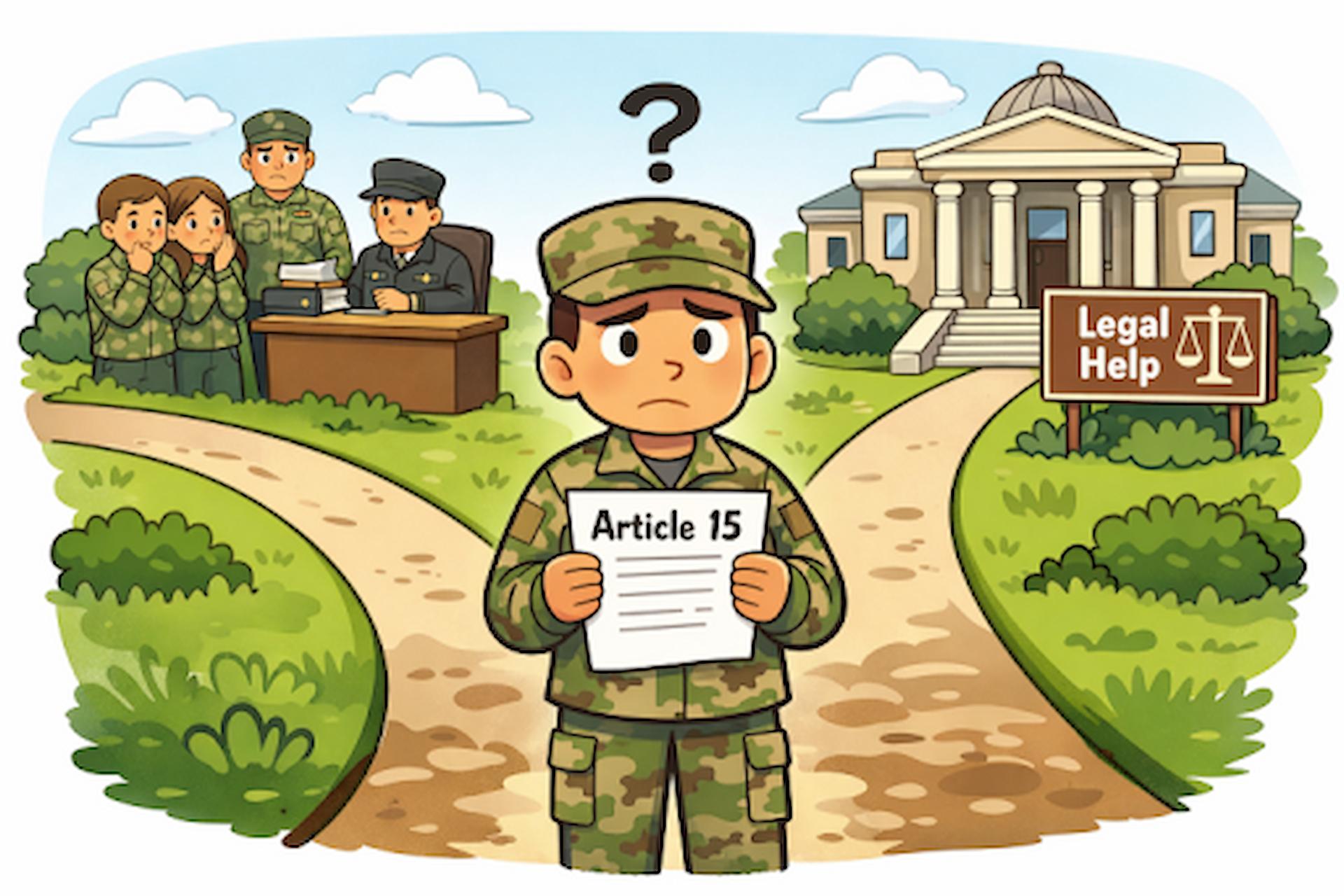
Many do not realize they have the right to decline Article 15 proceedings and instead request a court-martial, which brings greater procedural protections. While this may seem daunting, it makes sense in certain cases, particularly if the facts are in dispute or the punishment appears excessive. Service members are also entitled to consult with legal counsel before making a decision. However, many describe feeling rushed or pressured to quickly accept the Article 15 to “get it over with,” advice that may not always serve their best interests.
Common Misconceptions
One of the most pervasive misconceptions is the idea that accepting Article 15 punishment will “make it go away.” Though it is not a felony conviction, it still carries unofficial consequences, including stigma among peers and supervisors, and can limit future advancement. Another misconception is that service members have no recourse once the Article 15 is imposed. In reality, there are often procedures to appeal, particularly if proper protocols were not followed or the punishment exceeds regulatory limits.
How Article 15 Impacts Military and Civilian Life
Beyond what happens on paper, the repercussions of an Article 15 can follow a service member for years. Reduction in rank, loss of pay, and negative performance evaluations may lead to early separation or bar the member from reenlistment. These outcomes can significantly affect a veteran’s ability to secure federal jobs, security clearances, and educational benefits. Long term, a non-judicial punishment can create a gap in the service record explanations required by employers and licensing authorities, complicating reintegration into civilian life.
Responding To An Article 15
Those facing an Article 15 should take immediate steps. First, consult with a military defense attorney or an outside counsel experienced in military justice. Understand exactly what is being alleged, obtain information about possible defenses, and avoid waiving rights or making statements without representation. Consider whether to accept Article 15 or demand a court-martial. This decision should be based on the specifics of the case and legal counsel’s advice, not on pressure from peers or supervisors. If Article 15 is accepted, prepare a strong written or verbal statement, seek character statements from supervisors or peers, and gather evidence that speaks to your character and service record. The appeal process should be pursued if there are grounds to believe the punishment was unjustified or that important information was overlooked.
Support, Advocacy, and Resources
Facing an Article 15 can be isolating, but legal advocacy and peer support can help safeguard your career and reputation. Turn to resources like military legal assistance offices, veterans’ advocacy organizations, and private attorneys who specialize in military law. Connecting with others who have navigated the process can provide emotional support and practical advice throughout the ordeal. Do not hesitate to seek guidance from services designed to protect your rights and preserve your long-term aspirations.
Conclusion
Article 15 punishment in the military is complex, rife with misconceptions, and carries long-lasting consequences. The process is designed to enforce discipline, but it also requires that each service member understand and defend their rights to minimize damage to both their military career and future civilian life. Anyone facing an Article 15 should seek advice, use available resources, and take an active stance in their defense to ensure the most favorable outcome possible.