In 325 AD, a room full of bishops changed how over two billion people would mark their calendars — forever. The First Council of Nicaea didn’t just settle a theological debate; it embedded Sunday so permanently into the Christian calendar that nearly 1,700 years later, not one major church has dared to move it. No other holiday in human history has been so precisely anchored by a single meeting.
Easter Sunday — formally known as Resurrection Sunday — is the most theologically significant date in Christianity, commemorating the resurrection of Jesus Christ. Unlike Christmas, which falls on a fixed date, Easter is a movable feast, shifting each year between March 22 and April 25. The reason it moves, the reason it always lands on a Sunday, and the reason no government or church has successfully changed that in seventeen centuries — all of it traces back to a blend of biblical narrative, ancient astronomical calculation, and one landmark council decision that still governs your Easter weekend today.
The Biblical Roots: Why Sunday?
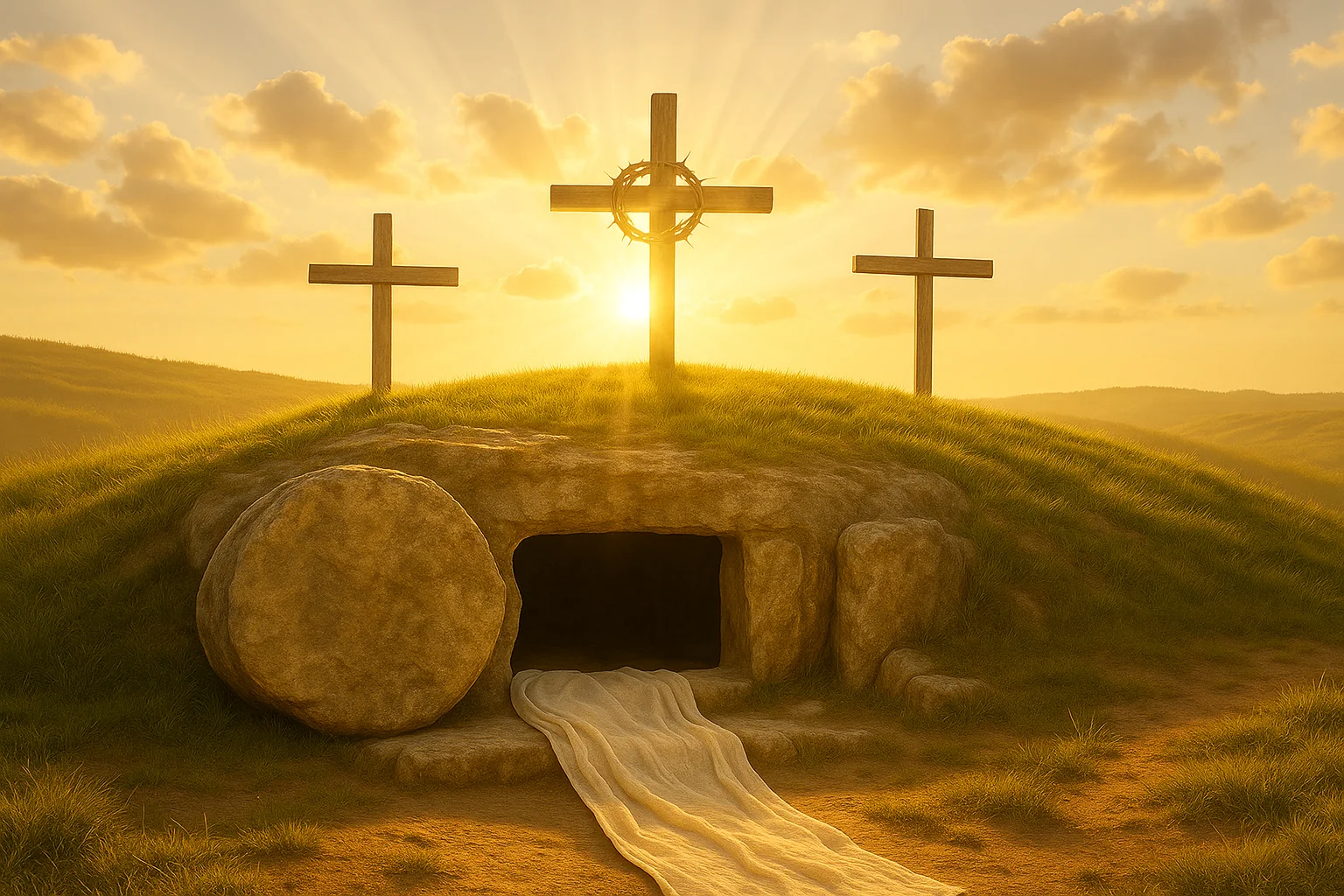
Easter’s connection to Sunday is deeply tied to the New Testament accounts of Jesus’ resurrection. According to the Gospels, Jesus rose from the dead on the first day of the week—Sunday—following his crucifixion on Good Friday. This pivotal event, the Resurrection, became the cornerstone of Christian faith, symbolizing victory over death and the promise of eternal life.
- Resurrection Timing: In Western Christianity, the Resurrection was celebrated on Sunday because it was the day Jesus “showed Himself alive after three days in the tomb,” as recorded in biblical narratives (e.g., Matthew 28:1–10).
- Symbolic Significance: Sunday, as the first day of the week, represents renewal and new beginnings, making it a fitting day to commemorate the Resurrection.
Early Christians wanted to honour this sacred moment, and by the 2nd century, Sunday became the established day for Easter celebrations in most Christian communities.
“Sunday was never an arbitrary choice for Easter. For the early Church, it was theologically loaded — the first day of creation, the day of resurrection, and the beginning of a new age all collapsed into one.” — Dr. N.T. Wright, Biblical Scholar and former Bishop of Durham
The Council of Nicaea: Standardizing Easter’s Date
While the choice of Sunday was rooted in scripture, determining which Sunday Easter would fall on was less straightforward. Up to the 8th century AD, there was no uniform method for setting Easter’s date, leading to variations across Christian communities [Royal Museums Greenwich]. Some early Christians in Asia Minor tied Easter to the Jewish Passover, which could fall on any day of the week, while others insisted on Sunday to reflect the Resurrection.
In 325 AD, the First Council of Nicaea, convened by Emperor Constantine, sought to unify Christian practices. The council established a standardized rule for Easter’s date, ensuring all Christians celebrated it on the same day:
- The Rule: Easter would be observed on the first Sunday after the first full moon (known as the Paschal Full Moon) following the spring equinox, fixed as March 21 for ecclesiastical purposes.
- Why Sunday?: The council prioritized Sunday to align with the biblical account of the Resurrection, settling debates with groups like the Quartodecimans, who favored celebrating Easter on the 14th day of Nisan (Passover), regardless of the day of the week [Britannica].
This decision cemented Easter as a Sunday celebration and introduced the movable feast concept, with Easter falling between March 22 and April 25 in the Gregorian calendar used by Western Christianity.
“The Council of Nicaea was not merely an administrative decision — it was an attempt to give the entire Christian world a shared rhythm of worship, a common heartbeat centred on the Resurrection.” — Eusebius of Caesarea, Church Historian (c. 260–340 AD)
The Role of the Lunar Calendar
Easter’s date isn’t fixed like Christmas because it’s tied to the lunar calendar, much like the Jewish Passover. The Council of Nicaea linked Easter to the Paschal Full Moon, which is calculated using the Metonic cycle (a 19-year period aligning lunar and solar calendars). This creates a date range of March 22 to April 25, as the full moon’s timing varies yearly.
“The method for computing Easter is one of the most remarkable intersections of astronomy, theology, and ecclesiastical tradition in Western history.” — Dr. Duncan Steel, Astronomer and author of Marking Time: The Epic Quest to Invent the Perfect Calendar
- Ecclesiastical vs. Astronomical: The church uses an artificial equinox (March 21) and an ecclesiastical full moon (based on tables, not actual lunar events) to simplify calculations [Royal Museums Greenwich]. This means the Paschal Full Moon can differ by up to two days from the astronomical full moon.
- Historical Context: The lunar connection reflects Easter’s ties to Passover, as Jesus’ crucifixion and resurrection occurred during Passover week, according to the Gospels.
This lunar-based system explains why Easter moves yearly but always lands on a Sunday, preserving the Resurrection’s weekly rhythm.
Western vs. Eastern Christianity: A Calendar Divide
While Western Christianity (Roman Catholics and Protestants) uses the Gregorian calendar, Eastern Orthodox churches rely on the Julian calendar, leading to different Easter dates. However, both traditions agree on celebrating Easter on a Sunday.
- Gregorian Calendar (Western): Easter falls between March 22 and April 25, calculated using the Gregorian calendar’s more accurate leap-year system [Wikipedia].
- Julian Calendar (Orthodox): The Julian calendar, 13 days behind the Gregorian, places Orthodox Easter between April 4 and May 8 in the Gregorian calendar. Despite the date difference, the Sunday rule remains consistent [Britannica].
Occasionally, Western and Orthodox Easter align (e.g., April 20, 2025), but the Sunday tradition holds firm across both.
“The difference between Orthodox and Western Easter is not a theological disagreement — it is a calendrical one. Both traditions are doing the same calculation; they simply start from different baselines.” — Rev. Dr. John Behr, Dean of St. Vladimir’s Orthodox Theological Seminary
Why Not Fix Easter to a Specific Date?
There have been proposals to fix Easter to a specific Sunday (e.g., the second or third Sunday of April) for convenience, such as the UK’s Easter Act 1928, which was never implemented [Wikipedia]. However, churches have shown little willingness to abandon the traditional lunar-based calculation.
- Preserving Tradition: The current system, rooted in the Council of Nicaea, maintains historical and theological ties to Passover and the Resurrection.
- Potential for Division: A secular fixed date could lead to “two Easters”—one official and one ecclesiastical—causing confusion and diluting the holiday’s significance.
The World Council of Churches proposed a reform in 1997 to align Easter dates using modern astronomical data, but it hasn’t gained traction, leaving the Sunday tradition intact.
“Fixing Easter to a civil calendar date would sever it from its roots in Jewish Passover and lunar tradition. For many believers, that connection is not incidental — it is the point.” — Dr. Diarmaid MacCulloch, Professor of the History of the Church, University of Oxford
Modern Easter: A Sunday of Joy and Tradition
Easter Sunday is a vibrant celebration that blends religious and cultural elements today. Christians attend sunrise services, exchange Paschal greetings (“He is risen!” “He is risen, indeed!”), and decorate churches with lilies symbolizing resurrection [timeanddate.com]. Secular traditions, like Easter egg hunts and the Easter Bunny, add joy, especially for children.
- Religious Observance: Sunrise services echo the Gospel account of Mary Magdalene finding the empty tomb at dawn, reinforcing Sunday’s significance.
- Cultural Blend: Many Easter customs, like egg decorating, have pagan roots but align with the theme of new life celebrated on Sunday.
Whether you’re attending a church service or hunting for chocolate eggs, Easter Sunday remains a day of hope and renewal.
FAQs About Easter
Why is Easter always celebrated on a Sunday?
Easter is always on a Sunday because Jesus rose from the dead on the first day of the week, according to the Gospels. The First Council of Nicaea (325 AD) made this official, ruling that Easter must fall on the first Sunday after the Paschal Full Moon following the spring equinox — locking Sunday in permanently.
Why does Easter fall on a different date every year?
Easter moves annually because it follows the lunar calendar, not a fixed date. It is calculated as the first Sunday after the first full moon (Paschal Full Moon) on or after March 21. Since full moons shift yearly, Easter can fall anywhere between March 22 and April 25 in the Gregorian calendar.
What is the Paschal Full Moon and how does it affect Easter?
The Paschal Full Moon is the ecclesiastical full moon used by the Church to calculate Easter’s date each year. It is based on a 19-year lunar cycle called the Metonic cycle, not the actual astronomical full moon. This means the Paschal Full Moon can differ by up to two days from what you see in the sky.
Why do Eastern Orthodox and Western Christians celebrate Easter on different dates?
Orthodox Christians celebrate Easter on a different date because they follow the Julian calendar, while Western Christians use the Gregorian calendar. The Julian calendar runs 13 days behind, pushing Orthodox Easter to between April 4 and May 8 (Gregorian dates). Both traditions agree, however, that Easter must always fall on a Sunday.
Why isn’t Easter fixed to a set date like Christmas?
Easter isn’t fixed because it’s tied to the lunar calendar and the biblical timing of Passover — a tradition upheld since the Council of Nicaea in 325 AD. Proposals like the UK’s Easter Act 1928 attempted to fix it to a specific Sunday in April, but no major Christian denomination has been willing to abandon the traditional calculation.
What is the earliest and latest date Easter can fall?
Easter can fall as early as March 22 and as late as April 25 in the Western (Gregorian) Christian tradition. This 35-day window is determined by the variable timing of the Paschal Full Moon each year. March 22 is exceptionally rare — the last time Easter fell on that date was 1818, and it won’t happen again until 2285.
What did the Council of Nicaea decide about Easter?
The First Council of Nicaea in 325 AD standardised Easter’s date for all Christians. It ruled that Easter would be celebrated on the first Sunday after the Paschal Full Moon following the spring equinox (fixed ecclesiastically as March 21). This resolved a major dispute with the Quartodecimans, who celebrated Easter on the 14th of Nisan regardless of the day of the week.
Final Thoughts: A Timeless Sunday Tradition
Easter’s consistent Sunday celebration is a testament to its biblical roots and historical evolution. From the Resurrection’s first-day significance to the Council of Nicaea’s unifying decree, Sunday has been the heart of Easter for nearly two millennia. Its movable date, tied to the lunar calendar, adds complexity but ensures Easter remains a dynamic, meaningful holiday across Christian traditions.
Next time you celebrate Easter, take a moment to appreciate the ancient calculations and debates that make it a Sunday affair. Whether it falls on March 22 or April 25, Easter Sunday inspires faith and joy worldwide. Happy Easter!
Written by the Megri Content Team
The Megri Content Team is a collective of writers, researchers, and editors with expertise spanning history, travel, business, lifestyle, culture, and more. With experience contributing to and editing multiple blogs and magazines, the team brings well-researched, reader-first content to every topic they cover.