Key Takeaways
- Dental implants offer stability and permanence, functioning almost identically to natural teeth.
- Traditional dentures typically cost less initially but may require replacement and additional maintenance.
- Implants maintain jawbone density, protecting facial structure and oral health.
- Evaluating costs, ease of use, and long-term health is essential when choosing the right tooth replacement.
Table of Contents
- Understanding Dental Implants
- The Basics of Traditional Dentures
- Comparing Comfort and Functionality
- Impact on Oral Health
- Cost Considerations
- Maintenance and Longevity
- Making the Right Choice for You
When deciding whether to replace missing teeth, understanding the differences between dental implants and traditional dentures is crucial. The choice has lasting effects on function, comfort, and your overall oral health. For those seeking a stable, long-lasting solution, full mouth dental implants are becoming an increasingly popular alternative that can closely replicate the experience of natural teeth. Weighing these options carefully will help determine which best matches your health needs and lifestyle.
Dental implants and dentures each offer unique benefits and drawbacks. Treatment selection should be informed by consulting a dental professional and considering your priorities. While dentures often win points for affordability and simplicity, implants can provide life-changing stability and long-lasting health benefits.
Deciding isn’t just about aesthetics. Factors such as jawbone preservation, daily maintenance, long-term costs, and ongoing comfort can significantly influence your decision-making process. In the end, your goal is to restore not only your smile but also your confidence and long-term oral health.
Understanding Dental Implants
Dental implants involve surgically inserting a titanium post into the jawbone to act as an artificial tooth root. Over time, this titanium post fuses with the surrounding bone in a process called osseointegration. This anchoring ensures that the replacement tooth is solid, stable, and functions exactly like a natural tooth. Because of this direct integration with the jawbone, implants deliver reliable chewing strength and stability that can transform your daily life.
The Basics of Traditional Dentures
Traditional dentures are custom-made, removable appliances designed to restore a patient’s smile and chewing ability. Crafted from acrylic or porcelain, they rest on top of the gums and fill the gaps left by missing teeth. Typically, dentures rely on suction or a dental adhesive for retention. While they instantly improve appearance, they sometimes slip or shift during eating or speaking, especially as jaw shape changes over time. For some, this can result in social discomfort and challenges with certain foods.
Comparing Comfort and Functionality
The greatest functional difference between dental implants and dentures is comfort. Implants are anchored to the jaw, which provides confidence in biting, chewing, and speaking. There is little risk of movement, which means no need for messy adhesives or frequent adjustments to relieve sore spots. You can enjoy the full spectrum of foods, from crisp apples to steak, without worry.
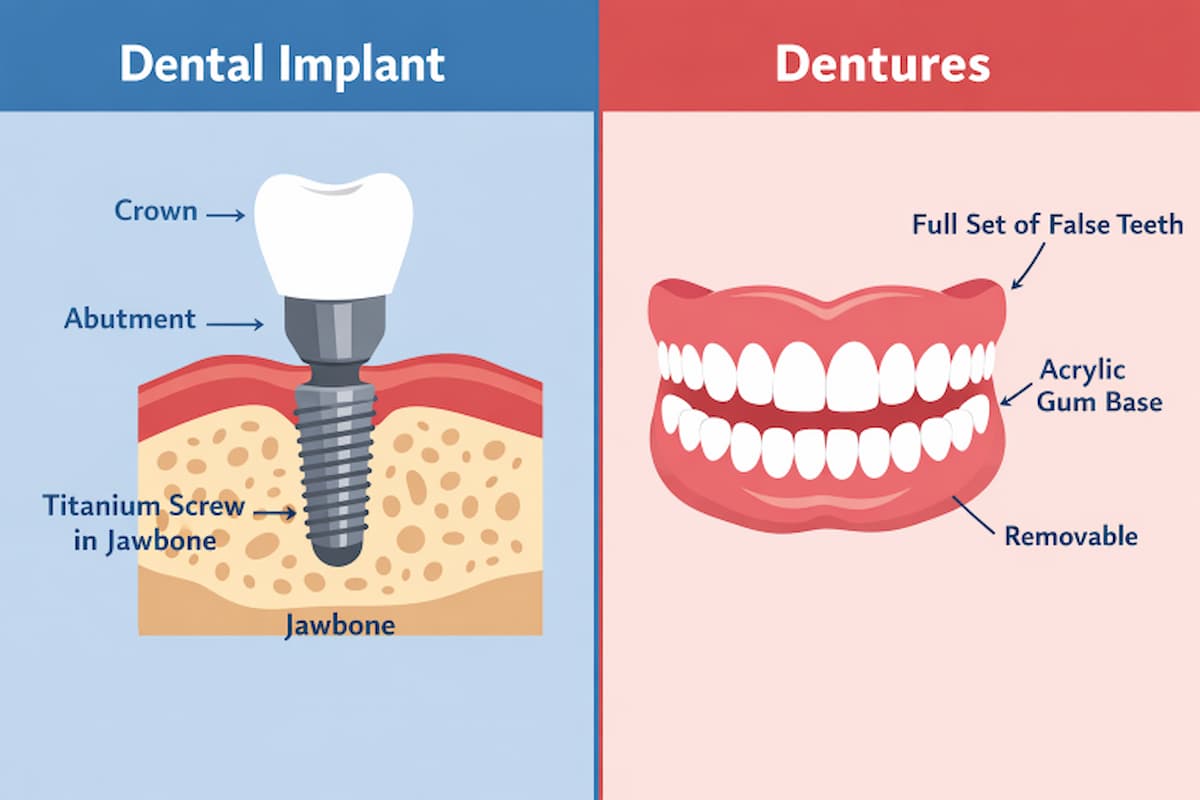
Dentures, while more accessible and initially comfortable, may become increasingly bothersome as gum tissue and bone naturally change over time. Slippage and sore spots are common complaints, and patients may need to be cautious with certain foods, limiting their diet. As a result, conversations and meals can sometimes feel less natural.
Impact on Oral Health
The choice between implants and dentures significantly affects oral health beyond appearance. When a tooth is lost, the body absorbs the bone that once supported it, resulting in gradual bone loss in the jaw. This bone shrinkage can alter facial structure and complicate future tooth replacements. Dental implants halt this process by stimulating the bone, much like a healthy tooth root, helping to preserve facial shape and gum health.
Dentures, unfortunately, do not provide this continuous stimulation. Over the long term, people with dentures may notice sagging facial features, increased wrinkles, and a loosening of the denture fit, requiring more frequent adjustments or replacements.
Cost Considerations
At first glance, traditional dentures appear to be the more budget-friendly option. Initial costs are indeed typically much lower than those of dental implants. However, the longevity and performance of implants can make them a more cost-effective investment over time. Implants often last for decades or a lifetime with good oral hygiene and regular dental visits. Dentures, by comparison, may need adjustments, relines, or replacement every 5 to 10 years.
It is important to factor in the potential need for ongoing repairs and relining, as well as the limitations dentures can place on quality of life, which can influence lifetime costs and personal satisfaction.
Maintenance and Longevity
Dental implants require the same daily care as natural teeth. Brushing twice daily, flossing, and regular professional cleanings contribute to their long-term success. Implants are not subject to cavities, but keeping the surrounding gum tissue healthy is essential to prevent peri-implant diseases.
Traditional dentures require daily removal, soaking, and thorough cleaning. In addition, as bone and gum tissue change over time, dentures may become loose or uncomfortable, requiring regular dental appointments for adjustments. The need for adhesives and occasional relining or replacements means higher maintenance over the years.
Making the Right Choice for You
There is no universal answer for whether dental implants or dentures are right for you. The decision should involve a candid discussion with your dental provider about your health history, long-term goals, and financial situation. Some patients may benefit from the stability and health benefits of implants, while others may find dentures better meet their needs.
Ultimately, the best tooth replacement solution will restore your smile, improve your ability to eat and speak, and protect your long-term oral health for years to come.