Key Takeaways
- Choosing the right siding material can significantly enhance your home’s energy efficiency, leading to lower utility bills.
- Upgrading your siding not only improves curb appeal but also increases your property’s market value.
- Proper installation and maintenance of siding are crucial for maximizing its benefits.
Table of Contents
- Siding and Energy Efficiency
- Top Energy-Efficient Siding Materials
- Siding and Home Value
- Installation and Maintenance
- Conclusion
Siding and Energy Efficiency
Homeowners often overlook the impact that siding can have on their property’s overall energy efficiency. Siding is not merely about aesthetic appeal; it acts as a barrier against the outside elements, fundamentally shaping how much heat enters or leaves the home. By selecting high-quality siding and ensuring proper installation, you can improve your home’s insulation and reduce energy bills year-round. For many homeowners, upgrading to the best siding replacement is a strategic investment that yields both immediate and long-term benefits.
When siding effectively minimizes heat transfer, your HVAC system works less to keep your house comfortable, lowering energy consumption and costs. According to the U.S. Department of Energy, exterior renovations such as new siding can play a crucial role in tightening a home’s thermal envelope. This improvement reduces unwanted drafts and prevents hot or cold air from escaping, offering a notable boost in indoor comfort.
The choice of siding also impacts the fairness of your home’s temperature throughout the seasons. In addition to comfort, reducing energy waste helps extend the lifespan of heating and cooling equipment. Some materials offer integrated insulation and superior sealing characteristics, further optimizing performance and sustainability. Home energy audits often identify outdated siding as a major contributor to unnecessary energy loss, underscoring the value of choosing a modern, energy-efficient upgrade. Aside from tangible savings on monthly bills, improved insulation increases overall property resilience, offering protection from wind, precipitation, and extreme temperatures. Modern siding solutions are engineered to block moisture penetration, which has the added benefit of safeguarding interior wall structures from potential rot and mold growth.
Top Energy-Efficient Siding Materials
When it comes to picking the best siding for energy efficiency, several options stand apart. The effectiveness of any material depends on how well it insulates while maintaining durability and visual appeal.
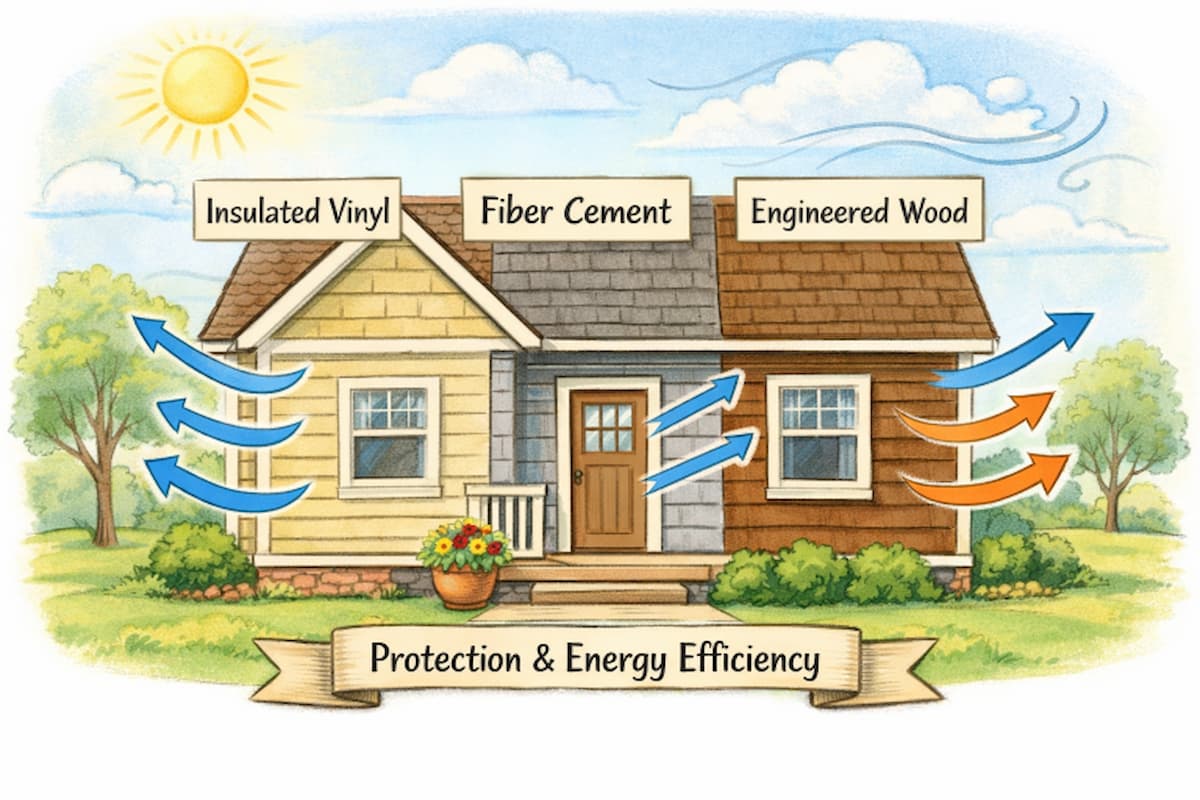
- Insulated Vinyl Siding: This widely used option features built-in foam insulation that increases its R-value as compared to traditional vinyl. The foam layer forms a continuous barrier against heat transfer and reduces thermal bridging, the points where energy loss is greatest. As a result, homeowners who upgrade to insulated vinyl siding often see energy bill reductions ranging from ten to twenty-five percent.
- Fiber Cement Siding: Made from a mixture of cement, sand, and cellulose fibers, fiber cement siding offers tremendous durability and good insulation when paired with additional rigid foam or house wrap underneath. This material not only stands up to harsh weather but also helps prevent drafts and temperature swings inside your home.
- Engineered Wood Siding: This option mimics the look of natural wood but is manufactured to resist damage from insects, rot, and weathering. Many engineered wood products feature integrated insulation, further enhancing the energy performance of exterior walls. For those seeking a more traditional design with modern benefits, engineered wood is an excellent choice.
Each of these siding materials offers unique benefits in terms of both appearance and energy performance. Deciding which is best for your home will depend on your area’s climate, architectural preferences, and budget.
Siding and Home Value
Updating your siding is an investment that pays off when it comes time to sell your home. Fresh, modern siding dramatically improves curb appeal, one of the top factors in a buyer’s first impression. Most buyers gravitate toward homes with exteriors that appear well-maintained and contemporary. According to Remodeling Magazine’s annual Cost vs Value Report, siding replacement recoups about seventy to eighty-five percent of its resale cost, a figure that can be even higher in hot real estate markets with competitive buying environments.
In addition to a higher resale value, new siding signals to potential buyers that your home is well-protected and energy-efficient. These attributes make your listing more attractive, helping it stand out from others in your neighborhood. Enhanced energy performance adds another layer of value by promising new owners reduced utility costs from the moment they move in, making your home a smart investment for everyone involved.
Installation and Maintenance
No matter how energy-efficient the siding material is, improper installation can negate many of its benefits. For optimal performance, the siding must be expertly installed with tight seams and no gaps where air or water could enter. Incorrect installation or the use of low-quality fasteners can result in warping, buckling, or premature wear, impacting the home’s insulation and structural protection.
Regular maintenance is equally important. Regularly cleaning and inspecting your siding for damage helps ensure it remains functional and visually attractive for years. Addressing issues such as cracks, loose panels, or moisture intrusion early will prolong the siding’s lifespan and maintain its insulating capabilities.
Conclusion
Your siding choice has far-reaching effects on your home’s energy efficiency and overall value. Modern siding materials, such as insulated vinyl, fiber cement, and engineered wood, offer superior insulation and longevity. Combined with professional installation and consistent care, these upgrades deliver significant savings, enhanced curb appeal, and greater comfort year-round. Making an informed decision about your siding is one of the most reliable ways to future-proof your home while enjoying its benefits every day.