Key Takeaways
- Cutting-edge technologies are driving efficiency and enhancing safety across the aviation industry.
- Sustainability is at the heart of new air travel solutions, ranging from electric planes to greener airports.
- Passenger demands for personalization, health security, and convenience are shaping the industry’s direction.
Table of Contents
- AI Integration in Air Travel
- Urban Air Mobility and Air Taxis
- Sustainable Aviation Technologies
- Biometric and Contactless Technology in Airports
- Supersonic Travel: The Return of High-Speed Flights
- Autonomous Aviation
- Enhanced Passenger Experience with AI and IoT
- Advanced Air Traffic Management Systems
On-demand air travel is entering a transformative era, fueled by rapid technological leaps, ambitious sustainability goals, and evolving traveler expectations. As the aviation sector rediscovers itself, the ability to access a private jet for rent is becoming synonymous with luxury, convenience, and the future of mobility. Technologies once considered futuristic—from AI-driven personalization to all-electric aircraft—are now poised to redefine the passenger experience and overhaul urban transportation.
Consumers no longer want to get from one place to another; they seek efficiency, safety, and a more personalized journey. Automations in ticketing, security, and even in-flight comfort are swiftly becoming the new normal. As both business travelers and tourists shift their behaviors post-pandemic, they’re prioritizing health precautions, seamless transit, and reduced environmental impact. These trends suggest that the future of air travel will be characterized by agility, sustainability, and a deep understanding of individual preferences.
AI Integration in Air Travel
The integration of artificial intelligence in aviation is transforming airlines from behind the scenes to the passenger experience itself. AI systems now sift through vast datasets to predict maintenance needs, optimize fuel consumption, and even streamline flight operations. Passengers interact with AI through sophisticated chatbots and virtual assistants, which provide real-time flight updates, tailored recommendations, and even automated rebooking during disruptions. According to Forbes, major airlines increasingly rely on AI to anticipate traveler preferences and personalize services.
Urban Air Mobility and Air Taxis
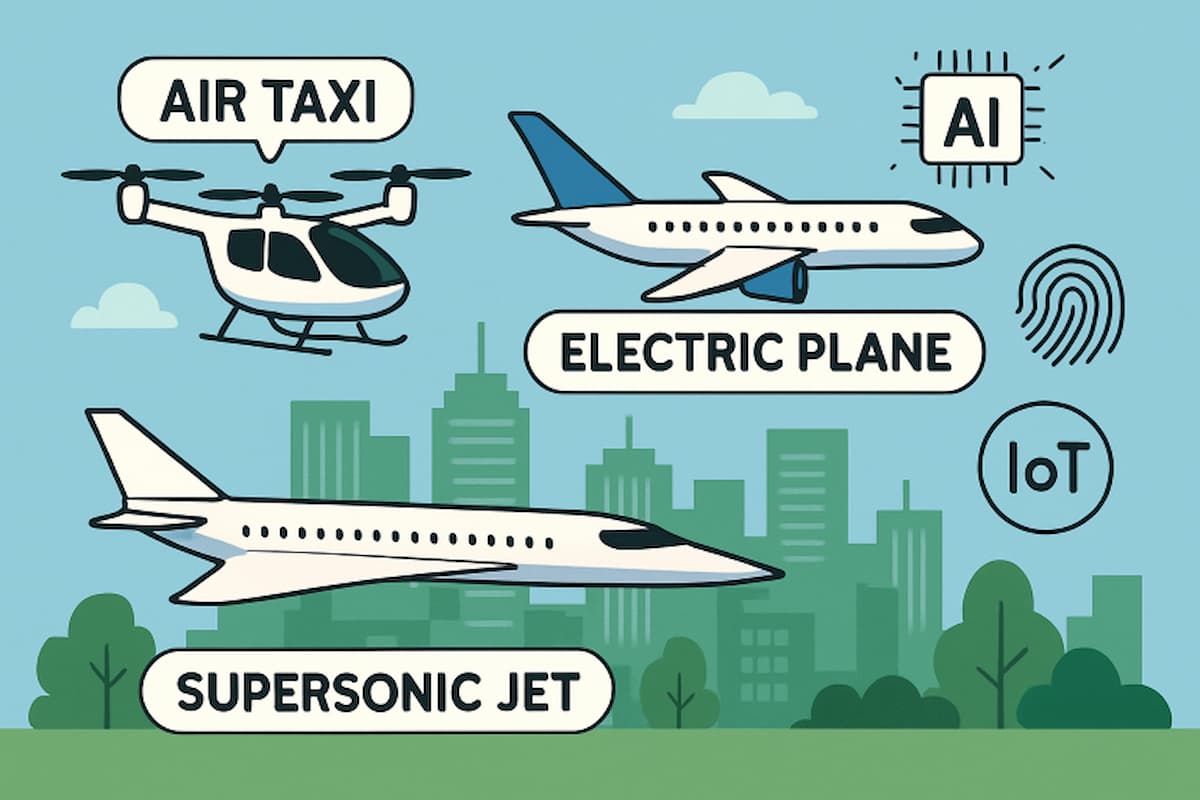
Urban Air Mobility (UAM) solutions, such as air taxis and electric VTOL (Vertical Take-Off and Landing) aircraft, are rapidly shifting from concept to reality. Cities like Dubai and Los Angeles are piloting UAM programs aimed at cutting down on gridlock and providing last-mile transport options that are both fast and eco-friendly. Innovators, including Joby Aviation and Lilium, are at the forefront, aiming to democratize short-hop aerial transport and eventually make it as common as hailing a cab. The electrification of these vehicles not only lowers emissions but also reduces noise, addressing two of urban travel’s biggest challenges.
Sustainable Aviation Technologies
The aviation industry is making substantial strides toward sustainability. Electric and hybrid-electric planes, ideal for short-haul flights, are now progressing through advanced testing. These aircraft are quieter and produce fewer emissions than their traditional counterparts, supporting the industry’s long-term climate goals. Many airports are also transitioning to sustainable practices, including the installation of solar panels, the upgrade to energy-efficient lighting, and the integration of electric vehicles into their fleets. According to The New York Times, sustainable aviation fuel (SAF) and green innovations will be central to the industry’s efforts to meet net-zero targets by 2050.
Biometric and Contactless Technology in Airports
Biometric and contactless technologies are revolutionizing the airport experience by facilitating quicker and safer passage through terminals. Travelers now benefit from facial and iris recognition systems for check-in and boarding, which drastically reduce lines and enhance security. The pandemic has accelerated the adoption of touchless verification, reducing contact points and alleviating concerns about crowded spaces. Airports around the world are rapidly introducing these features, making contactless, paperless travel the new standard for tomorrow’s journeys.
Supersonic Travel: The Return of High-Speed Flights
Supersonic air travel is poised for a comeback, promising to halve transcontinental flight times. Companies like Boom Supersonic and NASA are designing new-generation aircraft that avoid the excessive noise and environmental issues of the historic Concorde. Their innovations could soon make New York-to-London commutes feasible in just over three hours, catering to both the business elite and those seeking ultra-fast global travel experiences. Notably, Boom Supersonic’s XB-1 demonstrator achieved its first supersonic flight in January 2025, marking a significant milestone in the development of commercial supersonic travel.
Autonomous Aviation
Autonomous flight technology is rapidly progressing, with several companies developing aircraft that can taxi, take off, and even land without direct human intervention. While fully pilotless commercial aviation remains several years away, current advancements already allow for safer and more efficient operations. These breakthroughs promise not only cost savings but also a reduction in human error, further enhancing travel safety.
Enhanced Passenger Experience with AI and IoT
The modern traveler expects a seamless, highly personalized journey—and AI, alongside IoT (Internet of Things) technologies, is making this a reality. Airlines now use smart sensors for real-time baggage tracking, dynamic seat adjustments, and even mood-based lighting. Passengers benefit from tailored in-flight entertainment, automated meal selection based on their preferences, and instant notifications regarding gate changes or turbulence. These innovations ensure flying feels far more accommodating and less stressful, meeting the heightened expectations of today’s tech-savvy flyers.
Advanced Air Traffic Management Systems
The anticipated spike in on-demand and autonomous flights creates intense pressure on existing air traffic management systems. The integration of AI-driven predictive analytics and decentralized automation enables more intelligent routing, reduced delays, and enhanced in-air safety. Real-time data feeds allow air traffic controllers to respond proactively to hazards. As outlined by the BBC, modernizing air traffic control will be crucial for accommodating a new era of air taxis, electric planes, and supersonic jets.
Air travel is rapidly transitioning into a transformative new era defined by advanced technologies, sustainable aviation practices, and greater flexibility for passengers. As cities become more congested and environmental concerns rise, on-demand air mobility is emerging as a practical and forward-thinking solution. Innovations such as electric vertical takeoff aircraft, intelligent routing systems, and cleaner propulsion methods are paving the way for safer, greener, and more efficient transportation. This shift empowers travelers with more personalized options, reduced travel times, and a significantly lower carbon impact, signaling a future where air travel better aligns with modern needs and values.