Key Takeaways
- Engage early with regulatory bodies to prevent delays and misunderstandings.
- Thorough environmental and social impact assessments are essential for project approval and long-term success.
- Leverage technology and robust compliance management systems to streamline monitoring and reporting.
- Continuous team training and periodic audits help sustain a compliance-focused culture.
- Stay informed about regulatory updates to maintain a proactive compliance strategy.
Understanding Regulatory Compliance in the Energy Sector
Navigating regulatory compliance in energy projects is a crucial process that demands a comprehensive understanding of various legal frameworks at the local, national, and international levels. Proper compliance ensures not only legal operation but also environmental stewardship, worker safety, and public trust. The complexity of these regulations, coupled with frequent updates, makes it crucial for organizations to be vigilant from the earliest stages of project development. For businesses seeking a comprehensive compliance partner, Radiangen.com offers tailored solutions to manage evolving regulatory requirements effectively.
Non-compliance can result in costly penalties, project delays, and long-term reputational risks. Moreover, regulatory expectations in the energy sector are progressively tightening as governments and international organizations push for cleaner, safer, and more transparent operations. Establishing a strong compliance culture from the outset is therefore not just about avoiding risk, but also about building a foundation for sustainable and ethical project delivery.
Early Engagement with Regulatory Bodies
Initiating communication with regulatory authorities as soon as a project moves from concept to preliminary planning significantly increases the chances of timely approvals. Proactive engagement helps identify statutory hurdles before they can compromise the project schedule. Engaging early allows developers to tailor project designs to align with regulatory standards and to address stakeholder concerns before formal assessments or public hearings. This practice can greatly facilitate smoother project execution.
Agencies often provide valuable feedback on technical requirements or potential compliance gaps, enabling companies to modify their plans accordingly. Early, respectful engagement and a demonstrated willingness to work within legal boundaries help foster trust between project developers and regulators, lowering the likelihood of disputes or costly rework later in the process.
Comprehensive Environmental and Social Impact Assessments
A robust Environmental and Social Impact Assessment (ESIA) is at the core of most energy project approval processes. ESIAs assess the potential ecological, social, and economic impacts of a proposed project and outline actionable mitigation strategies. This transparency is critical for gaining both regulatory approval and community acceptance. For instance, compliance with legislation such as the National Environmental Policy Act (NEPA) in the United States is often mandatory for large-scale projects. According to the U.S. Environmental Protection Agency, comprehensive assessments lead to better project outcomes and greater environmental protection.
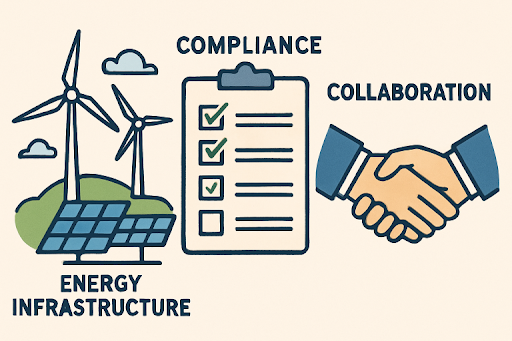
Integrating social considerations alongside environmental ones can help energy companies avoid conflicts with local populations and other stakeholders. Stakeholder engagement as part of the ESIA process ensures that the concerns and inputs of affected communities are taken into account, improving the overall credibility and sustainability of the project.
Implementing Robust Compliance Management Systems
Technology plays an indispensable role in modern regulatory compliance. Advanced compliance management systems streamline the tracking of legal requirements, automate documentation, and facilitate timely reporting to regulatory agencies, ensuring adherence to regulations. Real-time monitoring tools, such as IoT sensors and Supervisory Control and Data Acquisition (SCADA) systems, are increasingly used to manage environmental performance, safety measures, and operational efficiency. The adoption of digital platforms reduces manual errors and enhances transparency across the project lifecycle. As highlighted by McKinsey & Company, data-driven compliance solutions help energy organizations remain both agile and accountable in a rapidly evolving industry.
Automated compliance tools can also facilitate internal auditing and early identification of potential non-conformance, empowering organizations to resolve issues before they escalate and result in regulatory action.
Regular Training and Awareness Programs
A well-informed workforce is fundamental to effective regulatory compliance. Regular training sessions ensure that every team member understands their specific responsibilities and the broader regulatory framework affecting their work. Continuous education enables employees to stay current with the latest legal developments and promotes a proactive compliance culture. Such training should extend to contractors and subcontractors to ensure the entire project ecosystem operates to the same high standard.
Beyond minimizing the risk of violations, regular training instills a sense of ownership and accountability among staff, further reinforcing regulatory best practices at every organizational level.
Continuous Monitoring and Periodic Audits
Establishing a systematic routine for ongoing monitoring and scheduled internal audits enables companies to detect and address compliance gaps quickly. Many organizations use a combination of automated monitoring systems and manual audits to verify compliance across multiple operational areas. This dual approach not only provides reassurance to regulators during external inspections but also creates a feedback loop for continuous improvement.
Audits should be documented thoroughly, with follow-up actions tracked to completion. A strong audit trail demonstrates due diligence and helps organizations defend their compliance record if challenged.
Staying Informed About Regulatory Changes
The regulatory landscape in the energy sector is constantly evolving due to changes in government policy, technological advancement, and increasing public scrutiny. Companies must stay up-to-date by monitoring official publications, engaging with industry groups, and participating in relevant conferences and workshops.
Proactive compliance management ensures organizations always operate ahead of shifting regulations, reducing the risk of project disruptions and positioning them as industry leaders in responsible development.
Final Thoughts
Achieving and maintaining regulatory compliance in energy projects is a dynamic and multidimensional endeavor. Successful organizations proactively engage with authorities, invest in cutting-edge compliance systems, prioritize environmental and social due diligence, maintain ongoing staff education, and regularly monitor changes. By implementing these best practices, energy companies can deliver safe, lawful, and sustainable projects in even the most challenging regulatory environments.